
Enterprise Perimeter Protection Systems for Southern California
Rapid-deployment electro-hydraulic rising bollards, crash-certified anti-ram barriers, and commercial vehicle gates calibrated for Los Angeles corporate, municipal, and multi-tenant assets.
The Los Angeles Urban Fabric & Perimeter Protection Paradigm
A metropolitan matrix defined by extreme vehicular dependency, critical port logistics corridors, dense entertainment venues, and rigorous structural compliance standards.
Urban Architectural Vulnerabilities in Greater LA
The Greater Los Angeles metropolitan region presents a multifaceted operational environment for physical security architects, urban civil engineers, and facility risk managers. Spanning over 4,800 square miles of urban agglomeration, the Los Angeles basin blends world-class entertainment clusters (Hollywood, Century City, Downtown LA Live), expansive intermodal freight distribution channels (Port of Los Angeles and Port of Long Beach), and critical aviation infrastructure surrounding Los Angeles International Airport (LAX).
Unlike vertically consolidated global financial centers like Tokyo or London, Los Angeles relies overwhelmingly on arterial road networks and dense vehicular throughput. This configuration heightens the risk of both intentional vehicular ramming attacks (Hostile Vehicle Mitigation - HVM) and accidental high-velocity encroachments into pedestrian-dense sidewalks, open-air shopping plazas, and government municipal installations.
Consequently, property owners and commercial asset operators face strict municipal building mandates, increased insurance liability considerations, and mandatory perimeter hardening directives from local authorities, including the Los Angeles Police Department (LAPD) Counter-Terrorism and Special Operations Bureau.
Seismic Zone 4 Engineering & Environmental Factors
Deploying sub-surface automated machinery within Los Angeles County necessitates compliance with California Building Code (CBC) seismic provisions. Underground hydraulic and electromechanical bollard foundations must absorb dynamic soil displacement, ground shearing, and lateral tectonic loads without compromising post-event emergency lowering capabilities.
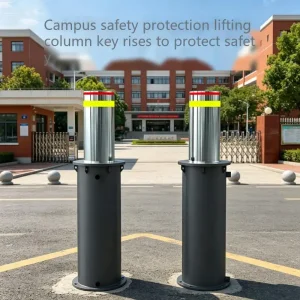
Furthermore, coastal installations along Santa Monica Bay, Marina del Rey, and Long Beach Harbor face continuous exposure to marine chloride attack and aggressive subterranean saline moisture. Our rising bollards engineered for the Southern California market feature grade 304 or optional 316L austenitic stainless steel cylinders, cathodic passivation coatings, and IP68-rated sealed motor-pump units capable of enduring subterranean water accumulation caused by localized flash floods along concrete storm basins.
Kinetic Impact Dynamics, Drive Architectures & Global Standards
Comparative mechanical breakdown of electro-hydraulic, electromechanical, and pneumatic drive mechanisms under extreme physical shock loading.
Electro-Hydraulic Integral Units
The definitive industry benchmark for continuous duty cycles. Integrating a miniaturized hydraulic pump and motor manifold directly within each bollard cylinder eliminates external fluid line runs, minimizes pressure drop, and prevents fluid freeze or leakage under heavy traffic vibrations. Ideal for 2,000+ daily cycle applications.
Pneumatic Compressed Air Arrays
Commonly specified in legacy governmental installations requiring centralized compressor banks. While capable of ultra-rapid lifting cycles, pneumatic architectures present significant maintenance overhead in coastal California due to moisture condensation in pneumatic lines, valve freezing, and lower holding torque under static vertical pressure.
Brushless DC Electromechanical
Engineered for low-to-medium security commercial sites where hydraulic fluid isolation is mandated for environmental LEED green building points. Driven by high-torque brushless DC motors and precision planetary screw actuators, offering smooth linear displacement, zero fluid risks, and silent indoor or garage basement operation.
| Mechanical Parameter | Self-Contained Electro-Hydraulic | Centralized Hydraulic Station | Direct Electromechanical |
|---|---|---|---|
| Lifting Time (Standard / EFO) | 3.5s / 1.2s (EFO Mode) | 4.0s / 1.5s (EFO Mode) | 4.5s / Non-EFO |
| ASTM F2656 Rating Scope | M30 / M50 P1 Certified | M30 / M50 P1 Certified | ASTM C40 / M30 P2 Capable |
| Daily Duty Cycle | Continuous (100% ED, 3000+ ops/day) | High-Duty (2500 ops/day) | Moderate (800–1200 ops/day) |
| Submersion Resistance | IP68 Hermetically Sealed Pod | IP67 Cylinder Only | IP66 Mechanical Shell |
| Civil Trenching Impact | Minimal (Power & Control Conduit only) | High (Hydraulic Hoses + Pressure lines) | Minimal (Standard AC/DC Conduit) |
| Power Interruption Fail-Safe | Manual Release / UPS Auto-Lowering | Manual Valve Release | Mechanical Spring / Battery Return |
Regulatory Framework, City of LA Approvals & Local Integrator Support
Adhering to California Title 24, Cal/OSHA safety protocols, LADBS requirements, and NFPA 101 life-safety access criteria.
LADBS Permitting & Trenching
Installation of deep subterranean foundations in Los Angeles requires compliance with the Los Angeles Department of Building and Safety (LADBS). Our pre-engineered foundation reinforcement cages and certified structural calculation packets streamline civil blueprint sign-off by California licensed Professional Engineers (PE).
Emergency First Responder Override
In accordance with LAFD (Los Angeles Fire Department) access standards, rising bollard networks must integrate rapid Knox Box dry contacts, pre-emption opticom receivers, and auto-down fail-secure circuitry during municipal grid brownouts or active fire alarm activations.
Local Spares & Rapid Field Logistics
We supply Southern California security integrators, general contractors, and low-voltage distributors with direct factory technical support, CAD/BIM drawing files, PLC firmware updates, and critical replacement hydraulic manifold seals to guarantee maximum system uptime.
Southern California Real-World Architectural Implementations
Tailored physical perimeter configurations protecting critical assets, mass transit hubs, commercial real estate, and industrial intermodal terminals.
Century City & DTLA Commercial Towers
Class-A high-rise commercial banking towers and diplomatic consulates along Grand Avenue and Avenue of the Stars require inconspicuous architectural elegance coupled with anti-ram deterrence. Flush-to-ground hydraulic bollards equipped with ambient LED perimeter halos provide discreet protection that complements granite plaza finishes.
Hollywood Entertainment Studios & Arenas
Venues like Crypto.com Arena, SoFi Stadium, and major Hollywood studio soundstages encounter massive pedestrian crowds intermixed with production transport vehicles. High-speed synchronized bollard arrays allow authorized broadcast trailers while creating an impassable barrier against hostile vehicles during major concerts and global galas.
Port of LA & Inland Logistics Depots
Container consolidation yards and customs-bonded logistics depots in San Pedro, Wilmington, and the Inland Empire handle tens of thousands of heavy commercial trailers daily. Anti-ram M50-rated bollard installations safeguard automated gate inspection portals and customs processing checkpoints from gate-running intrusions.
Technical Roadmap: Autonomous V2X Handshake & AI Edge Telemetry
Pioneering the convergence of physical perimeter hardware, industrial IoT edge computing, and smart city traffic autonomy.
Vehicle-to-Infrastructure (V2I/V2X) Cryptographic Handshake
As autonomous fleet deployments expand across Los Angeles, physical vehicle barriers must transition from passive access control to proactive digital negotiation. Our upcoming controller line incorporates dedicated short-range communications (DSRC) and C-V2X protocols, enabling authorized autonomous delivery fleets, municipal buses, and emergency responders to securely negotiate lane access without stopping, reducing urban bottlenecking.
- Zero-latency microsecond cryptographic handshake via IEEE 802.11p
- Dynamic bollard clearance verification transmitted directly to vehicle telemetry
- Redundant millimeter-wave radar presence detection to prevent vehicle undercarriage strikes
Predictive Cavitation & AI-Driven Health Diagnostics
Eliminating downtime through edge-computing sensor packs integrated into hydraulic manifold chambers. Onboard machine learning models evaluate fluid viscosity degradation, motor current phase anomalies, micro-vibrations, and cavitation indicators in real time, alerting facility managers to schedule preventive maintenance long before mechanical failure occurs.
- Cloud-synchronized Modbus TCP/IP and BACnet MS/TP building management integration
- Real-time pressure transient tracking to detect underground seal degradation
- Automated de-icing and fluid thermal regulation for extreme operational cycles
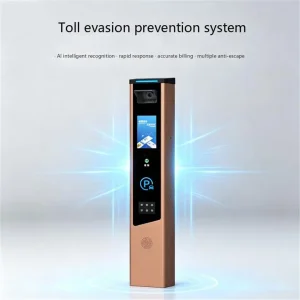
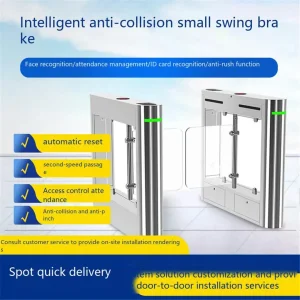
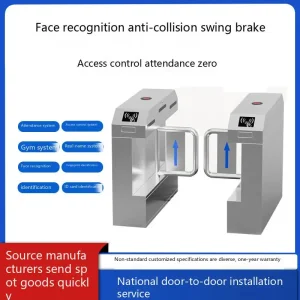
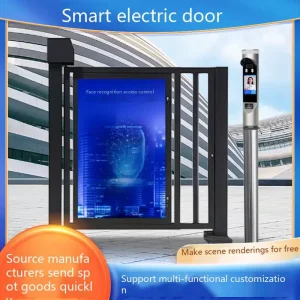
Integrated Vehicle & Pedestrian Access Equipment Catalog
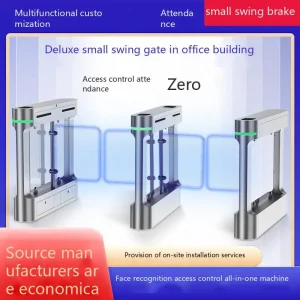
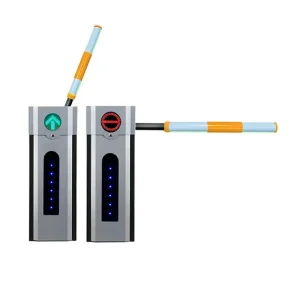
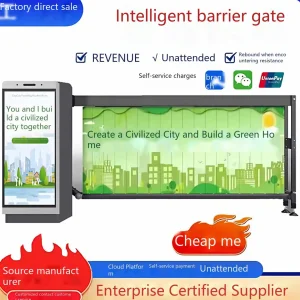
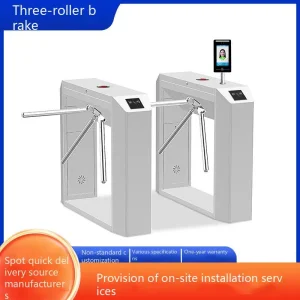
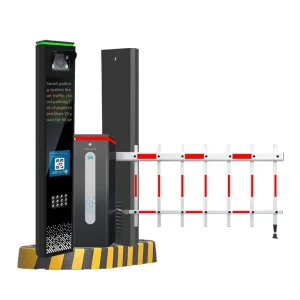
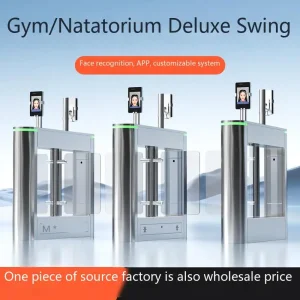
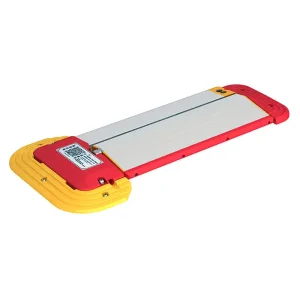
Manufactured to work seamlessly with our rising bollards: commercial barrier arms, speed gates, parking locks, and license plate recognition terminals.
Frequently Asked Questions: Los Angeles Rising Bollard Procurement
In-depth responses for architectural specifiers, general contractors, and physical perimeter security engineers.
What crash ratings are recommended for high-profile installations in Los Angeles?
How do rising bollard systems accommodate Southern California seismic requirements?
What is Emergency Fast Operation (EFO) and how quickly does it deploy?
Can these automated bollards interface with City of LA Fire Department (LAFD) override systems?
How do self-contained electro-hydraulic bollards resist coastal salt air and groundwater intrusion?
What are the lead times and delivery logistics for Los Angeles projects?
Are these systems compatible with third-party LPR and access control management platforms?
Secure Your Los Angeles Perimeter Infrastructure Today
Connect directly with our senior application engineering team to receive full CAD foundation drawings, ASTM crash test reports, wiring schematics, and custom factory-direct quotations for your upcoming project.