
Integrated Entrance Ecosystem
High-Performance Access Control & OEM Ground Lock Hardware
Explore our foundational smart parking line-up engineered directly inside Shenzhen Anrui’s 8,000 m² clean-room production ecosystem, built for reliable unattended continuous operation.
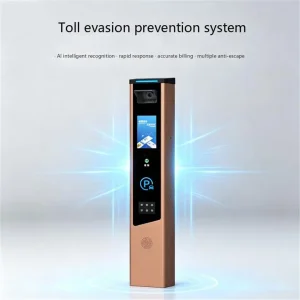
Durable High definition license plate recognition integrated - AnRuitong II Exporters, In Sales
View Product
China City Parking Product Manufacturer, Price
View Product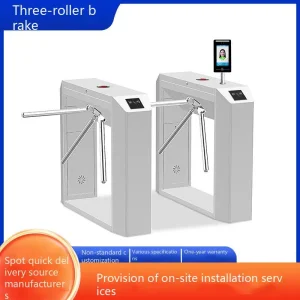
Cheap Factoryoem/ODM Durable Smart Fast Speed Swing Automatic Used Industrial Gym Turnstile Gate Manufacturer, Factory
View Product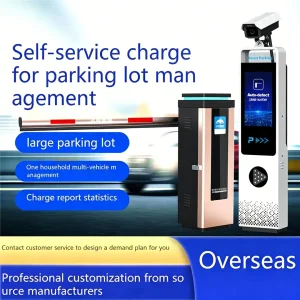
Durable High-def license plate recognition machine Dolphin I model Supplier, Exporters
View Product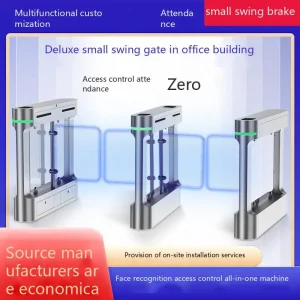
Durable Swing Gate Image Reference Manufacturer, Pricelist
View Product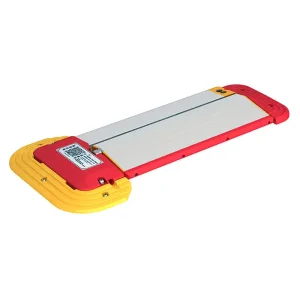
Advanced Scan to pay charging pilecommunity parking lock automatic sensing,electric shared scanning paymentanti-oil car occupying parking space Supplier, Factory
View Product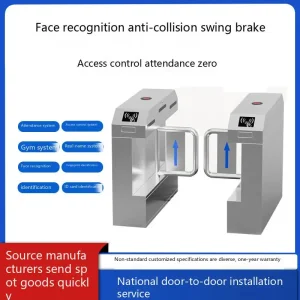
OEM Bridge Type Sloped Swing Gate Manufacturer, Quotation
View Product
Executive White Paper
The Global Shift: OEM Parking Space Floor Locks in Urban Mobility
A rigorous industrial perspective on how individual parking space control hardware is revolutionizing curbside automation, preventing EV charger monopolization, and creating verifiable digital revenue streams.
Across the global smart transportation sector, the traditional perimeter-only access control paradigm is experiencing a fundamental structural shift. While entrance barrier gates and automated ticket dispensers have historically managed gross vehicular inflows across multi-acre lots, they inevitably leave internal parking stall distribution entirely unregulated. As a result, critical municipal bays, reserved VIP executive stalls, residential leased spaces, and high-capital electric vehicle (EV) charging stations face constant unauthorized occupation, lost revenues, and elevated operational friction.
To solve this last-meter parking challenge, engineering attention has turned to the parking space floor lock (also designated in industrial tenders as automatic ground parking locks, smart parking bollards, or flap locks). When deployed at scale, these electromechanical ground units transform static concrete bays into addressable, digitally supervised IoT endpoints capable of real-time telemetry, automated dynamic tariffing, and zero-touch reservation orchestration.
Industrial Consensus: Market intelligence indicates that global deployments of micro-controlled parking space barriers are expanding at an estimated CAGR exceeding 14.8%. This accelerating trajectory is predominantly fueled by municipal on-street curbside automation programs and the explosive worldwide rollout of DC fast-charging plazas that require hardware-enforced anti-ICEing (Internal Combustion Engine vehicle intrusion) prevention.
Current Commercial Realities: North America, Europe, APAC & Middle East
In North America, OEM floor locks are increasingly integrated into micro-mobility hubs and destination charging networks. EV charging network operators (CPOs) lose thousands of dollars per stall annually when non-charging gasoline vehicles park in EV charging bays, or when fully charged vehicles overstay complimentary grace periods. Heavy-duty, vehicular-load-bearing automatic floor locks physically bar unauthorized vehicles until digital credentialing or pre-authorization via mobile payment apps unlocks the bay.
In the European Union, stringent municipal urban zoning and historical city centers mandate zero-emission zones and strictly designated resident parking. Municipal procurement focuses intensely on low visual disruption, battery-conserving LoRaWAN and NB-IoT protocols, and low-profile surface installation that eliminates subsurface civil excavation while guaranteeing compliance with CE and IP68 environmental resilience standards.
Within the Asia-Pacific (APAC) basin—spearheaded by high-density metropolises like Shenzhen, Tokyo, and Singapore—shared parking applications predominate. Floor locks linked to cloud-based micro-services allow commercial office complexes to automatically lease unused daytime stalls to adjacent retail patrons or nighttime commuters, achieving near-perfect space utilization and instantaneous peer-to-peer micro-billing.
In the Middle East (GCC Region), high ambient thermal stress (exceeding 55°C) and pervasive fine airborne particulate matter mandate specialized mechanical sealings and military-grade die-cast enclosures. The focus is placed squarely on high-reliability planetary motor assemblies, ultra-capacitor energy buffers, and solar monocrystalline surface harvesters that negate grid-trenching requirements across vast outdoor desert campuses.
8,000+
Factory Floor Space (m²)
80+
Countries Deployed
5.0t
Dynamic Compression Rating
100+
Currencies & Payment Systems
Supply Chain Supremacy
Shenzhen Manufacturing Precision: The OEM / ODM Advantage
Why multinational integrators, infrastructure contractors, and global security distributors anchor their supply chains within Shenzhen Anrui’s specialized manufacturing ecosystem.
Turnkey DFM & Rapid Rapid Tooling
With co-located industrial design, SMT high-speed circuit placement, and die-casting facilities in Guangming District, Anrui compresses design-for-manufacturability (DFM) verification from industry-standard quarters down to 14 working days. From custom chassis molds to bespoke linkage kinematics, prototypes transition immediately into serial production.
Hyper-Localized Hardware Clustering
Shenzhen represents the highest concentration of mechatronics suppliers globally. Motor windings, planetary gear reducers, military-spec Bluetooth low energy (BLE) transceivers, and silicon gaskets are sourced within a 30-kilometer logistical radius. This hyper-local supply density insulates overseas OEM partners from geopolitical bottlenecks and component shortfalls.
Strict Automated Quality Control (QA)
Every floor lock sub-assembly undergoes automated end-of-line verification, including static 5-ton hydraulic crush testing, IP68 vacuum immersion leak tests, salt-spray corrosion resistance benchmarking (exceeding ASTM B117 standards), and continuous 100,000-cycle mechanical actuator stress runs before shipping.
Engineering Deep-Dive
Technical Architecture: Structural Mechanics, Sensing & Telemetry
A comprehensive structural overview comparing traditional manual barriers against industrial-grade, cloud-orchestrated OEM parking space locks.
A mission-critical parking space floor lock is a hybrid convergence of heavy mechanical structural engineering, low-power edge computing, and bidirectional telemetry. The mechanical subsystem must tolerate intentional or accidental run-over incidents by Class 1 to Class 3 passenger and commercial vehicles without deformation or internal transmission gear stripping. Concurrently, the internal control PCB must survive sub-zero freezing, submerged street flooding, and extreme thermal cycling without oscillator drift or wireless packet loss.
Anrui integrates a dual-stage planetary reduction gearbox coupled to an ultra-efficient brushless DC motor (BLDC). This mechatronic architecture incorporates an innovative mechanical clutch: if a vehicle reverses over an upright locking arm, an internal spring-damped slip clutch disengages the drivetrain, triggering an instantaneous acoustic alarm (100dB) and an automated MQTT distress packet to the central management platform, while guarding internal gears against shearing.
| Evaluation Parameter | Legacy Manual Bollard | Commercial Consumer Lock | Anrui Enterprise IoT Floor Lock |
|---|---|---|---|
| Load Resistance | Static 1.0 Ton (Bends on impact) | Dynamic 2.0 - 2.5 Tons | Dynamic 5.0+ Tons Die-cast A380 Aluminum / Q235 Alloy |
| Wireless Protocol | None (Manual Padlock) | Infrared or 433MHz RF Remote | BLE 5.2 Mesh NB-IoT LoRaWAN 4G Cat-1 |
| Vehicle Presence Sensing | Visual / Manual Inspection | Single-beam Infrared (Weather prone) | Dual 24GHz Millimeter-Wave Radar + Geomagnetic Induction |
| Ingress Protection | Unrated (Rusts externally) | IP65 (Prone to condensation) | Hermetic IP68 Submersion Tested + Anti-Corrosive E-Coating |
| Power Management | Zero power required | Alkaline D-Cells (Replace every 3 mos) | Monocrystalline Solar Panel + 18650 LiFePO4 (2+ Years Standby) |
| Cloud API / SDK Support | Non-applicable | Proprietary Closed App Only | RESTful JSON APIs MQTT Telemetry Open Webhooks |
Implementation Blueprints
High-Value Deployment Scenarios: Across Municipal & Enterprise Domains
Field-proven floor lock configurations engineered to resolve authentic access conflicts across specialized infrastructure.
1. EV Supercharger Anti-ICEing Protection
Installed directly in front of DC Fast Charging dispensers, Anrui floor locks interface with charging pile controllers via RS485 or BLE beacon. The arm remains raised to block gasoline cars. When an authentic EV scans the charger QR code, the lock automatically descends. If an EV remains plugged in post-charge, progressive idle-fee timers trigger to prevent station hogging.
2. Grade-A Corporate & VIP Space Reservation
Multinational headquarters and commercial towers utilize Anrui floor locks synchronized with license plate recognition (LPR) cameras or tenant access management platforms. As an executive vehicle clears the main perimeter barrier, the cloud server commands the specific reserved ground floor lock to lower, ensuring absolute stall availability without manual parking marshal staffing.
3. Municipal On-Street Curbside Automation
Urban curbside spaces are notoriously difficult to monetize without costly mechanical meters. Surface-mounted Anrui IoT flap locks rise automatically 60 seconds after millimeter-wave radar detects a parked vehicle. Drivers settle parking charges via app, mini-program, or ticket terminal, prompting the flap to lower flush with the pavement for a smooth departure.
Strategic Sourcing
Global Enterprise Procurement Framework: Evaluating OEM Suppliers
A comprehensive technical audit guideline for international tender committees, electrical contractors, and security master distributors selecting an OEM floor lock partner.
Procuring parking space floor locks at institutional scale entails risks that diverge sharply from ordinary consumer electronics purchases. A defective batch of residential smart locks involves minor inconvenience; a batch of municipal or EV station floor locks with premature battery depletion, water ingress, or radio frequency collisions can cripple an entire city district’s parking revenue and incur disastrous onsite truck-roll replacement costs. Engineering procurement teams must rigorously assess potential OEM manufacturers against four core criteria:
1. Sub-Assembly Mechanical Integrity & Pressure Tolerances
Reject suppliers who utilize stamped sheet-metal covers or brittle plastic gear trains. Require certified third-party testing proving that the chassis withstands a minimum of 5,000 kg (5.0 metric tons) dynamic rolling wheel load. Structural components must use high-strength die-cast A380 aluminum alloy or hot-dip galvanized structural carbon steel treated with fluorocarbon anti-UV powder coating to resist road deicing salts, brake dust, and direct hydrocarbon spillage.
2. Firmware Extensibility, Edge Intelligence & Open APIs
Ensure the manufacturer owns its firmware IP and maintains in-house embedded software teams. Hardware that relies on proprietary, hardcoded communication servers creates catastrophic platform lock-in. Shenzhen Anrui supplies comprehensive API documentation, open MQTT payload descriptions, and mobile SDKs (iOS/Android), enabling system integrators to bind floor lock hardware directly into their custom cloud platforms, billing gateways, and native mobile apps.
3. Environmental Hermeticity & Submergence Validation
Parking locks live in road drainage channels. Puddles, torrential downpours, and power washers are everyday realities. Verify authentic IP68 ingress protection certs backed by negative pressure vacuum chamber test logs. Internal battery enclosures, radar transceiver modules, and mainboards must be silicone potted to eliminate internal condensation and capillary corrosion over a multi-year service life.
Knowledge Repository
Frequently Asked Questions: OEM Parking Space Floor Locks
Engineering and logistical insights directly addressing the most frequent queries from procurement directors and integration partners worldwide.
What differentiates Shenzhen Anrui as an OEM/ODM parking space floor lock supplier?
Shenzhen Anrui is a direct manufacturer operating an 8,000+ m² facility with self-owned SMT assembly lines, die-casting toolshops, and dedicated mechatronic test chambers. Unlike trading intermediaries, we offer complete firmware-level customization, private labeling, custom metal mold development, and complete open API/SDK documentation for zero-friction cloud integration.
How does the parking space lock detect vehicles accurately without false triggers from pedestrians?
Anrui’s enterprise-grade floor locks employ a dual-sensing fusion array combining 24GHz millimeter-wave (FMCW) radar with high-sensitivity 3-axis geomagnetic fluxgate sensors. This dual-verification algorithm reliably distinguishes between actual chassis metal mass and passing pedestrians, pets, stray shopping carts, or blowing debris, delivering a verified 99.8% detection reliability rating.
What occurs if an unauthorized vehicle forcibly runs over the raised arm of the floor lock?
Our locking arms incorporate an internal 180-degree two-way spring-damped clutch. If an encroaching vehicle forces the arm down, the clutch disengages the planetary gearbox instantly, preventing gear breakage or motor burn-out. An internal piezo siren emits a 100dB tamper alarm while an alert packet is transmitted via cellular or LoRaWAN to cloud monitoring dispatchers. Once the vehicle withdraws, the arm returns automatically to its upright stance.
What are the power options for locations without trenching or mains electricity?
We provide multiple power architectures: 1) High-capacity LiFePO4 / lithium thionyl chloride battery packs delivering 18 to 24 months of autonomous operation under standard duty cycles; 2) High-durability monocrystalline solar panels embedded flush in the chassis surface for indefinite off-grid deployment; and 3) Low-voltage DC 12V/24V hardwired connections for EV charging plaza integrations.
Can Anrui floor locks interface with third-party parking reservation apps and payment processors?
Yes. All our IoT devices support open HTTP RESTful APIs, JSON payloads over MQTT, and WebSocket event hooks. System integrators and mobility operators can bind lock lowering, raising, state heartbeats, and tamper alarms directly into their existing municipal portals or EV charging applications supporting over 100 localized payment mechanisms worldwide.
How do the units withstand freezing weather, snowplows, and street flooding?
Each unit features an IP68 hermetically sealed housing sealed with automotive-grade EPDM gaskets and fluorosilicone compound potting around the main PCB. The mechanical components operate reliably across an operating thermal range of -35°C to +75°C. For sub-arctic installations, internal low-power heating elements and snow-mode radar profiles are available.
What is the average lead time for custom OEM/ODM production runs?
Standard branded OEM sample batches (custom colorways, laser-etched corporate logos, pre-configured RF frequencies) ship within 5 to 7 working days. High-volume serial production runs (1,000 to 10,000+ units) typically conclude within 20 to 25 business days, backed by our streamlined Shenzhen supply chain cluster.
What warranties and international certifications do you furnish for tender compliance?
Anrui provides a standard 24-month comprehensive hardware warranty with extended SLA options. Our production lines and products adhere to ISO9001 quality standards and maintain verified CE (LVD/EMC), FCC Part 15, RoHS, and IK10 impact absorption certifications, ensuring complete compliance with international public and private tender specifications.
Complementary Infrastructure
Coordinated Access Control, Barrier Gates & Perimeter Systems
Complete your turnkey entrance security perimeter with Anrui’s globally proven barrier gates, speed lanes, and high-definition license plate identification solutions.

Durable Intelligent Barrier Gate Model D03 Manufacturer, Suppliers
View Product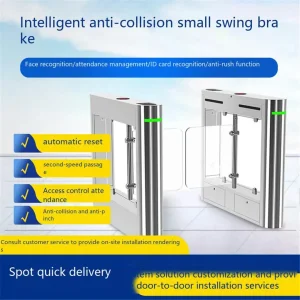
China Swing Gate Supplier, Quotation
View Product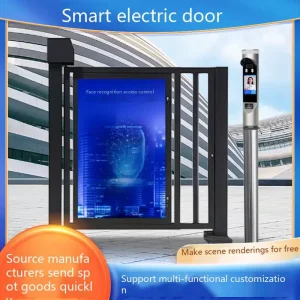
OEM Intelligent pedestrian advertising gate Factories, Price
View Product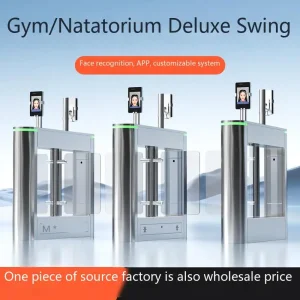
Durable Office Building Entrance Attendance Security Access Control Turnstiles Gate Swing Barrier Speed Gate Manufacturers, Supplier
View Product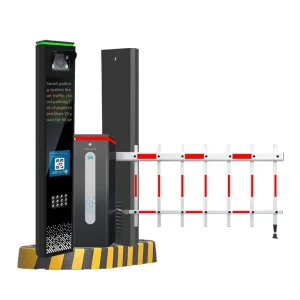
Buy Discount Car Parking And Toll Access Control Automatic Articulated DC Parking Boom Barrier Gate With Long Range Rfid Reader Manufacturer, Price
View Product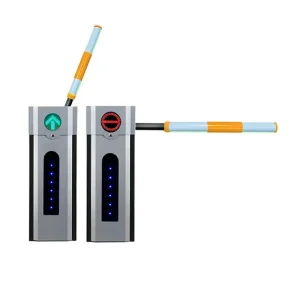
Newest Intelligent Barrier Gate Model D11S Factory, Factories
View Product
Advanced Scan to Pay Charging Pile Community Automatic Parking Lock System
View Product