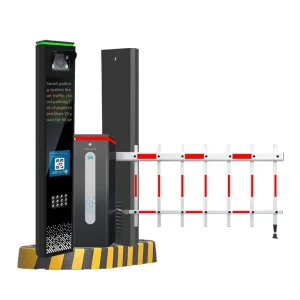
Precision Perimeter & Entry Control Hardware
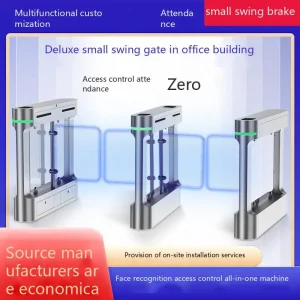
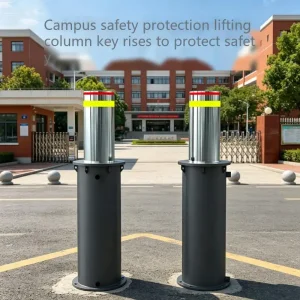
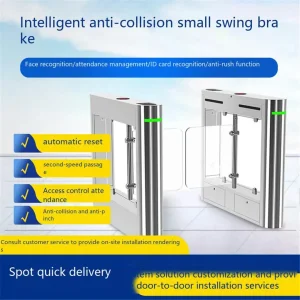
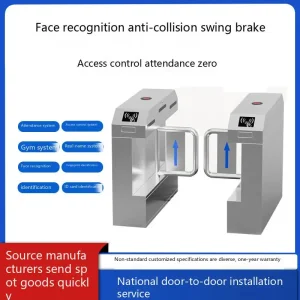
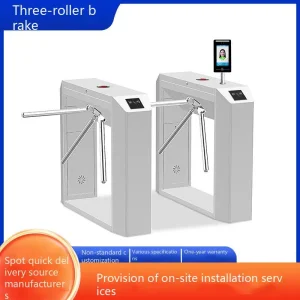
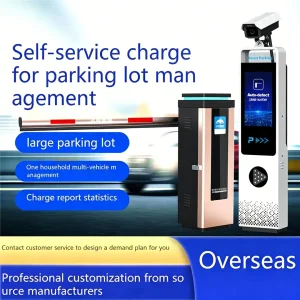
Explore high-duty gate mechanisms, heavy-duty intelligent boom barriers, and bi-directional speed control portals designed to coordinate seamlessly with exterior sliding entrance infrastructure.
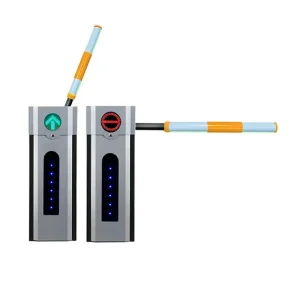
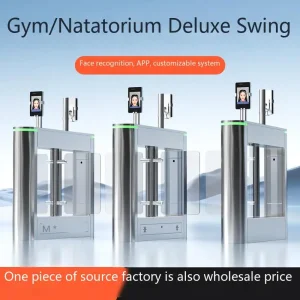
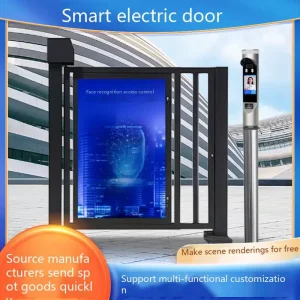
Global Enterprise Demands for Exterior Sliding Door Engineering
Procurement directors, general contractors, and structural consultants operate within tight operational tolerances. Sourcing exterior sliding door systems requires balancing structural integrity, dynamic wind load resistance, duty cycles, and automated edge intelligence.
Total Cost of Ownership (TCO) & MTBF
Global corporate infrastructure investments prioritize Mean Time Between Failures (MTBF) exceeding 5,000,000 continuous cycles. Industrial sliding doors require brushless direct-current (BLDC) servo drivetrains and wear-resistant polymer track rollers that eliminate lubricant contamination, reducing scheduled maintenance intervals to an annual cadence and safeguarding multi-year capital deployment.
Architectural Customization (ODM Depth)
Standard off-the-shelf assemblies routinely fail to satisfy diverse regional envelope requirements. Leading B2B buyers require deep ODM customization encompassing high-tensile extruded 6063-T6 aluminum alloys, thermally-broken multi-chamber profiles, stainless steel track foundations, customized clear-span widths from 4m to 28m, and modular acoustic or bullet-resistant infill variations.
Extreme Dynamic Wind Load Resistance
Exterior installations across coastal terminals, distribution logistics hubs, and open plains face aggressive structural strain. Enterprise RFPs mandate EN 12424 Class 4/5 or ASTM E330 structural testing, certifying zero structural deflection and uninterrupted operational clearance under gust velocities surpassing 140 km/h via reinforced cantilever guide towers.
Unified Edge Network Protocols
Modern enterprise portals are no longer isolated mechanical assets. They operate as intelligent IoT end-nodes. Procurement demands direct native integration via RS-485 Modbus, TCP/IP, and Wiegand interfaces, facilitating deterministic telemetry exchanges between sliding gate actuators, license plate recognition (LPR) cameras, infrared anti-entrapment arrays, and centralized SCADA platforms.
| Engineering Parameter | Commercial Grade (Light Industrial) | Industrial High-Duty Grade | Critical Infrastructure / Mission-Critical |
|---|---|---|---|
| Drive Mechanism | AC Induction Worm Gear (0.55 kW) | Brushless DC Direct Drive (0.75-1.5 kW) | Dual Redundant BLDC Servo + Closed-Loop Magnetic Encoder |
| Operating Speed Range | 0.15 - 0.25 m/sec | 0.30 - 0.65 m/sec | Up to 1.0 m/sec with Dynamic Soft-Start & Soft-Stop Curves |
| Wind Load Rating | EN 12424 Class 2 (Up to 70 km/h) | EN 12424 Class 4 (Up to 120 km/h) | EN 12424 Class 5 / Hurricane Certified (>150 km/h) |
| Anti-Corrosion Surface Finish | Standard Electrostatic Powder (60-80 μm) | Architectural Qualicoat Class 2 / HDG | C5-M Marine Environment Fluorocarbon (PVDF >35 μm) |
| Duty Cycle Classification | 50% Intermittent Duty | 80% High-Frequency Duty | 100% Continuous S1 Duty Rating (24/7 Unattended) |
Full-Spectrum Macro Solutions: Harmonizing Perimeter Ingress & Egress
In modern industrial master plans, an exterior sliding door does not stand alone. It represents the outer structural perimeter barrier within a multi-tiered security defense-in-depth framework. Shenzhen Anrui Intelligent Equipment engineers comprehensive access topologies where high-span exterior sliding gates synchronize with vehicle barrier gates, biometric speed turnstiles, rising hydraulic bollards, and intelligent machine-vision systems.
By coordinating automated sliding portal motion with secondary verification zones, facility managers optimize traffic throughput, mitigate unauthorized vehicle tailgating, and maintain zero-trust physical security postures without requiring human intervention on site.
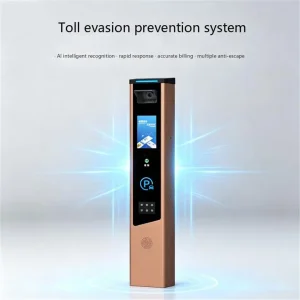
- Pre-Clearance Interlocking: High-definition LPR cameras verify vehicle registration numbers 15 meters prior to arrival, initiating automated sliding leaf retraction for frictionless passage.
- Anti-Tailgating Trap (Airlock): Sequential interlocked perimeter sliding gates paired with fast-action boom barriers isolate unverified commercial haulers in a secured scanning enclosure.
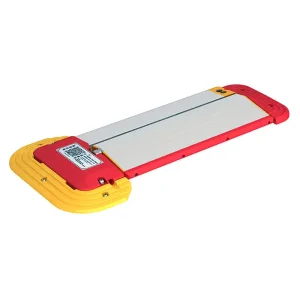
- Multi-Modal Safety Redundancy: Dual-channel monitored active infrared photobeams, dynamic optoelectronic safety edges, and pneumatic impact sensors meet strict ISO 13849-1 safety standards.
Edge Architecture Overview
System telemetry schematic illustrating seamless convergence from exterior sliding gates to inner building turnstiles.
Commercial & Industrial Realities Across Global Territories
Deploying high-performance exterior sliding barriers requires localized structural adaptation. Climatic parameters, regulatory obligations, and operational profiles vary fundamentally between continental markets.
Middle East & GCC (Hyper-Arid / Desert Heat)
Installations across Qatar, Saudi Arabia, and the UAE experience ambient temperatures exceeding 52°C, solar radiation surface temperatures reaching 75°C, and particulate sand intrusion. Anrui ODM solutions incorporate internal convection cooling, IP66-sealed electronic enclosures, heavy-duty brushless motors without thermal derating, and abrasive-tolerant dual nylon wipers.
Northern & Eastern Europe (Sub-Zero Cryo-Duty)
Projects deployed in Poland, the Baltic corridor, and Scandinavia confront seasonal freezing, packed ice accumulations, and salt-mist corrosion. Standard ground tracks cause severe operational stoppage; Anrui cantilever sliding gates utilize enclosed internal roller bogies suspended inside structural tracks, combined with thermostatically controlled silicone heating elements around drive gears.
Southeast Asia & Oceania (Tropical & Marine)
In high-humidity and saline climates such as the Philippines, Indonesia, and coastal Australia, galvanic corrosion degrades substandard metals rapidly. Exterior sliding gate frames must undergo hot-dip galvanization to ASTM A123, followed by a multi-stage chromate conversion wash and architectural-grade thermosetting powder finishes resistant to 2,000-hour salt spray tests.
Technical Roadmap: The Next Era of Perimeter Automation
The perimeter portal industry is undergoing a paradigm shift from pure mechanical automation to predictive, digitized, and energy-neutral intelligence.
AI-Powered Predictive Maintenance
Embedding high-frequency vibration sensors, real-time current profile analyzers, and thermal sensors directly on drive shafts allows our onboard microprocessors to detect micro-friction spikes. Edge algorithms calculate component fatigue well before structural failures occur, sending predictive telemetry alerts to facility maintenance squads.
Energy Regeneration & Solar Autonomy
High-mass commercial sliding leaves (ranging between 800 kg and 3,500 kg) accumulate immense kinetic energy during operation. Next-generation servo drivers capture regenerative braking current, storing power in ultra-capacitor banks to feed secondary sensors or support 100% off-grid operation via integrated solar photo-voltaic canopies.
BIM Level 3 & Digital Twin Synchronization
All ODM models are engineered with native Industry Foundation Classes (IFC) and Autodesk Revit parametric models. Real-time gate cycle positions, cycle wear diagnostics, and access credential logs synchronize bidirectionally into the building's 3D Digital Twin, empowering security officers with complete digital oversight.
International Compliance & Field Localization Support
Navigating global electro-mechanical safety standards is critical for overseas engineering contractors. We deliver fully certified assemblies, technical documentation, and comprehensive lifecycle engineering assistance.
Harmonized Safety Certification
Our automation systems comply strictly with European Machinery Directive 2006/42/EC, EN 12453 (Safety in use of power operated doors), EN 12604 (Mechanical aspects), and North American UL 325 / ASTM F2200 standards. Dynamic crush force limiting protocols guarantee instantaneous motor stop and reverse upon meeting any obstacle during travel.
Field Engineer Commissioning & SDK Access
We provide bilingual (English/Chinese) technical support teams available 24/7 for real-time video commissioning, electrical wiring verification, and PLC programming guidance. Comprehensive RESTful APIs and C++ SDK packages are provided for rapid third-party integration into native physical access control platforms.
Strategic Spare Parts & Global Logistics
To mitigate downtime across overseas operations, all standard modular wearing parts (drive belts, optical encoders, control boards, roller bearings) are cataloged under universal SKUs. We maintain standardized modular packaging designed for containerized ocean freight, with express air courier dispatches for priority field replacements.
Frequently Asked Questions for Project Engineers & Contractors
Authoritative guidance on mechanical selection, custom manufacturing, lead times, and system integration parameters.
What are the structural differences between Cantilever and Tracked exterior sliding door systems?
How does Shenzhen Anrui Intelligent support ODM exterior gate automation requirements?
Can Anrui perimeter barrier and sliding gate controllers interface with existing third-party access control software?
What anti-collision and pedestrian safety protocols are engineered into your automated gate assemblies?
What is the standard production timeline and testing protocol for international export orders?
Complementary Perimeter & Vehicle Access Solutions
Explore the complete spectrum of Anrui intelligent entrance automation, including automated rising bollards, articulated DC boom barriers, license plate cameras, and shared parking space controls.