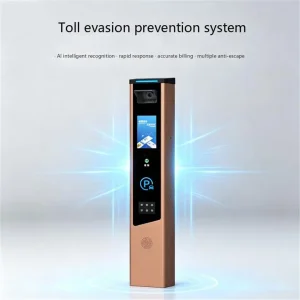
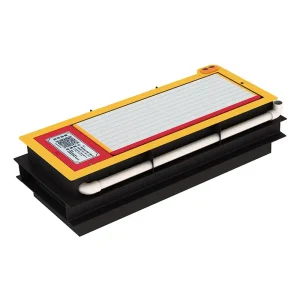
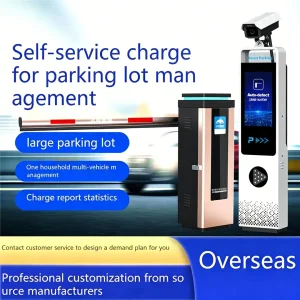
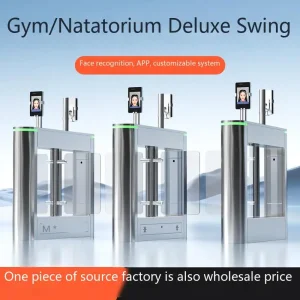
Engineered Parking Guidance & Access Hardening Systems
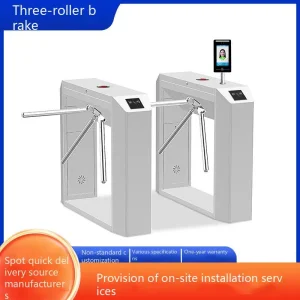
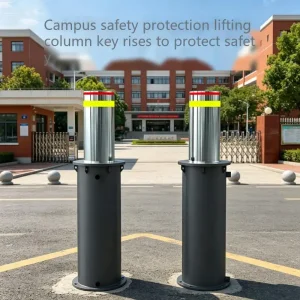
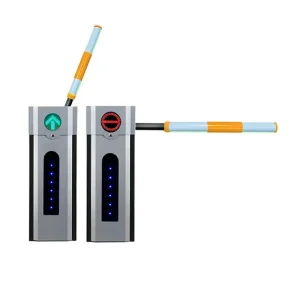
Factory-calibrated automated barrier gates, precision toll control mechanisms, and pedestrian access units built inside our Shenzhen assembly facilities.
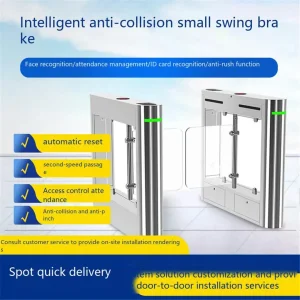
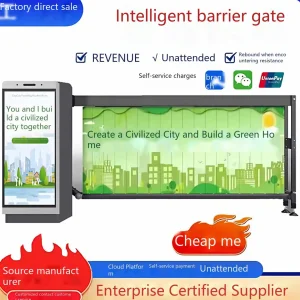
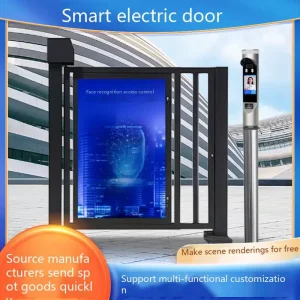
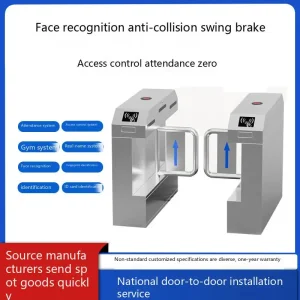
Global Enterprise Procurement: The Modern APGS Imperative
Decarbonization, urban density, and frictionless mobility demand a fundamental shift from static car parking structures toward algorithmic spatial optimization.
Mitigating Carbon Latency
Statistical models reveal that up to 30% of inner-city cruising congestion originates from drivers searching for empty bays. Implementing AI-driven Automated Parking Guidance Systems (APGS) cuts search times by 64%, slashing idle fuel emissions directly aligned with ESG Scope 1 targets.
- 64% Average transit reduction
- Quantifiable Scope 1-3 emission offsets
Space Utilization Yield Dynamics
Commercial real estate, airport authorities, and mega shopping centers achieve dynamic asset yield management via real-time occupancy heat-mapping. Unattended bay monitoring eliminates phantom vacancies and expands peak parking turnover by up to 22.4% without civil footprint expansion.
- +22.4% Asset turnover optimization
- Real-time dynamic parking tariffing
Total Cost of Ownership (TCO)
Migrating from manual toll gates and dislocated hardware loops toward unified edge-node architectures reduces maintenance down-time and overhead expenditures. Direct ODM sourcing enables native field swappability and unified protocol governance across entire parking portfolios.
- Multi-vendor software decoupling
- MTBF extended beyond 100,000 hrs
Comparing Industrial APGS Sensor Topologies
Evaluating detection modalities across cost parameters, latency benchmarks, optical occlusion limits, and vehicle license plate recognition (LPR/ANPR) synergies.
| Detection Technology | Typical Accuracy | Latency / Refresh | Environmental Tolerance | LPR Integration | Deployment Assessment |
|---|---|---|---|---|---|
| Dual-Lens Optical AI Sensor | 99.6% Precision | < 150 ms (Edge) | High (Dynamic Exposure HDR) | Native Onboard | Best for Tier-1 Malls, Airports & Multi-Bay Coverage (Up to 6 bays) |
| Single-Bay Ultrasonic Sensor | 98.1% Precision | < 300 ms | Susceptible to Thermal Drift | None (Occupancy Only) | Budget installations, legacy indoor decks with low headroom |
| Millimeter Wave (mmWave) Radar | 99.2% Precision | < 50 ms | Extreme (Dust/Steam/Fog proof) | External Trigger Only | Severe outdoor lots, sub-zero open spaces, wash bays |
| Sub-Surface Geomagnetic Nodes | 96.8% Precision | 1.2 - 2.5 sec | High (Underground Hermetic) | None (BLE / LoRaWAN) | On-street municipal curbside, preservation zones, zero-wiring retrofits |
Engineering Robustness Inside Shenzhen Anrui Industrial Hub
From surface-mount technology (SMT) pick-and-place lines to multi-axis mechanical CNC tooling, our facilities maintain strict IP67 dust/water ingress verification and ISO 9001 compliance.
Full-Stack Firmware Customization
We supply customizable SDK/API protocols across TCP/IP, MQTT, RS485, and RESTful web sockets. Systems support deep white-labeling, board redesigns, and rapid kernel adapting for regional sovereign data policies.
- Open API / JSON / MQTT payloads
- Custom housing paint & private silk-screen
Rigorous Accelerated Stress Validation
Every barrier drive mechanism, brushless DC motor, optical lens, and guidance display undergoes extreme environmental chamber stress ranging from -35°C to +80°C alongside salt-fog corrosion screening.
- 10,000,000 cycle mechanical duty tests
- IP67 hermetic ingress sealed housings
Supply Chain Redundancy
Integrated strategic silicon sourcing shielded by dual-sourcing pipelines ensures project timelines stay uncompromised during macroeconomic component shortages, securing delivery windows for contractors.
- 8,000+ m² dedicated assembly footprint
- 80+ export territories supported
Engineering Roadmap: Towards Autonomous Valet & V2X
Automated parking guidance systems are evolving beyond passive LED indicators into active, bidirectional micro-navigational nodes interfacing directly with connected vehicles.
Ultra-HD AI Video Sensing
Multi-bay camera modules running lightweight neural nets (YOLO/MobileNet derivatives) classifying bay availability, reading retroreflective plates, and indexing color/make.
EV Charging Bay Harmony
Seamless integration with inductive and DC fast charging piles. Smart cameras penalize non-charging vehicle squatting through automatic variable billing.
Autonomous Valet Parking (AVP)
V2X / ISO 23374 infrastructure-to-vehicle standard pairing. Ceiling camera nodes calculate collision-free trajectories for driverless SAE Level 4 vehicles directly to empty stalls.
Decentralized Mesh & Edge AI
Self-healing mesh topology without on-prem central computing racks. Sensors dynamically reallocate routing signage and distribute throughput during network segment drops.
Global Regulatory Compliance & Regional Certification
Exporting hardware to 80+ nations mandates stringent alignment with international electromagnetic, mechanical, and data privacy frameworks.
Electromagnetic & Safety Directives
All barrier gates, turnstiles, and guidance controllers carry CE (EN 61000-6-1/3 EMC; EN 60335 safety) and FCC Part 15 Class A certifications. Barrier gear mechanisms integrate dynamic torque rebound safeties to eliminate pedestrian crush hazards.
- CE, FCC, RoHS certified builds
- Anti-smash radar & loop detector sync
Data Privacy: GDPR & CCPA Ready
Camera-based guidance systems deployed across the EU and North America feature automated on-chip facial and non-relevant vehicle plate pixelization. Video streams can process strictly at the edge without saving raw footage, ensuring full compliance with privacy acts.
- Edge-level real-time redaction
- Zero non-essential video caching
Local Localization & 7×24 Support
Anrui provides continuous global technical engineering support across multiple time zones. From CAD bay wiring schematic validations to firmware character recognition adjustments for diverse font systems (Arabic, Cyrillic, Thai, Latin).
- Comprehensive plate syntax libraries
- Remote commissioning support
Frequently Asked Architectural Questions
Essential design, procurement, and deployment answers for transport consultants, EPC contractors, and system engineers.
How does an ODM factory model benefit national distributors compared to buying off-the-shelf branded systems?
What is the latency threshold when syncing video bay sensors with external LED wayfinding displays?
Can the automated barrier systems interface with foreign license plate recognition engines?
How are harsh lighting transitions (glare/headlights) handled in open-deck rooftop parking?
What failure fallbacks exist if the central parking server goes offline?
Integrated Vehicle Vision & Intelligent Gate Assemblies
Excellence in high-definition recognition, intelligent parking space reservation locks, and pedestrian speed gates ready for immediate industrial export.