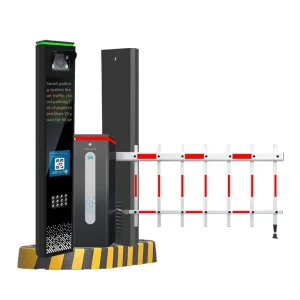
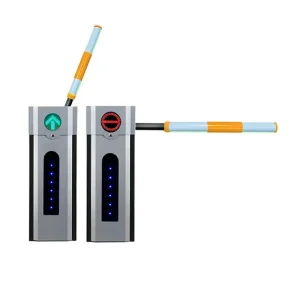
High-Efficiency Vehicle Lane Gate Arms & Integrated Turnstiles
Explore our industrial baseline product offerings designed for seamless integration with high-speed automated parking platforms.

Engineering Economics: Parking Garage Gate Arm Quotation Analysis
A rigorous cost breakdown detailing capital expenditure (CapEx), operational expenditure (OpEx), and component selection metrics.
Motor Mechanics & Duty Cycle
The distinction between conventional AC motors and Brushless DC (BLDC) or Torque Motors constitutes up to 35% of the initial CapEx. BLDC drives offer variable speeds (0.6s to 3.0s), 100% duty cycles, and MTBF exceeding 5 million cycles, substantially reducing lifetime maintenance costs.
Cabinet Enclosure Metallurgy
Environmental longevity dictates cabinet pricing. While standard cold-rolled steel with electrostatic powder coating suffices for indoor lots, maritime and heavy-industrial facilities require SUS304 or SUS316 stainless steel with an IP54 to IP65 ingress rating to prevent chassis corrosion.
Boom Geometry & Articulation
Standard straight aluminum octagonal boom arms range from 3 to 6 meters. In multi-level parking garages with ceiling constraints below 2.4 meters, specialized 90° or 180° articulated mechanical folding linkages are required, which influences the drive spring calibration and unit base cost.
| System Classification | Typical Drive Mechanism | Actuation Latency | Target Site Environment | Indicative Ex-Factory Band |
|---|---|---|---|---|
| Commercial Baseline | Torque Motor / AC Continuous | 3.0s – 6.0s | Low-traffic commercial lots, residential gates | $450 – $850 / Unit |
| High-Throughput BLDC | 24V/48V Brushless DC Servo | 1.2s – 2.5s | Shopping malls, corporate office parks, hospitals | $850 – $1,600 / Unit |
| Rapid Expressway / Articulated | High-Precision Planetary Servo | 0.6s – 1.0s | Underground low-clearance garages, highway tolls | $1,600 – $2,800 / Unit |
| Enterprise Integrated Turnkey | Servo Drive + Embedded ANPR/Radar | Sub-second Dynamic | Smart municipal airports, border checkpoints | $2,800 – $5,200+ / Unit |
Macro Ecosystem: The Shift to Edge-AI and Ticketless Operations
Examining modern vehicle control architecture shifts from standalone relays to centralized, API-first smart city nodes.
Edge ANPR / ALPR Convergence
Modern parking garage gate arms no longer operate in operational silos. High-definition license plate recognition (ANPR) systems process deep learning optical models directly on edge cameras, triggering optocoupler signals to lift the gate within 200 milliseconds, eliminating consumable paper tickets and magnetic token dispensers.
Active Safety Sensing Arrays
Traditional ground loop detectors requiring labor-intensive pavement cutting are increasingly supplemented by 77GHz microwave millimeter-wave radar sensors and digital anti-smash pressure bars. These sensors detect both metallic vehicle masses and pedestrians, dynamically halting arm descent to prevent chassis damage and liability claims.
Monetization & Cloud Telemetry
Operators now convert barrier arm real estate into active revenue engines via digital signage and programmatic advertising gates. Concurrently, IoT-enabled mainboards transmit telemetry including operating temperatures, cycle counts, and torque irregularities via MQTT to cloud maintenance consoles.
Localized Scenarios & Tailored Hardware Configurations
Specific hardware modifications and deployment topologies configured for challenging operational realities across varied commercial verticals.
Underground Garages with Strict Height Limits
Designed for low-clearance basement parking structures (2.0m - 2.4m heights). Utilizes calibrated dual-pivot articulated mechanical arms that fold smoothly at a 90-degree angle without striking ceiling utility conduits, sprinkler infrastructure, or overhead HVAC ducts.
High-Density Retail & Logistics Hubs
Demanding environments processing thousands of vehicular movements per day. These systems deploy high-torque 24V DC brushless servo motors with electronic soft-stop and anti-rebound algorithms, preventing mechanical transmission wear during peak vehicle entry rushes.
Extreme Climatological Zones
Custom-built for harsh environmental conditions. Engineered with internal thermostatically controlled PTC heating units for severe sub-zero environments (down to -40°C in Northern Europe), alongside IP65 sealed enclosures with UV-resistant coatings for high-temperature desert applications (up to +75°C in the Middle East).
Regulatory Compliance, Electrical Safety & On-Site Support
Ensuring system integrators and EPC contractors adhere to stringent regional safety standards, life-safety fire protocols, and long-term supply chain SLAs.
CE, UL 325 & International Standards
Our barrier mechanisms align with European Machinery Directive 2006/42/EC and UL 325 vehicle barrier safety profiles. Systems integrate auto-reversal mechanisms upon encountering 15kg of resistance, minimizing operational hazard risks across public properties.
Emergency Egress & Fail-Safe Logic
Compliant with international fire safety egress mandates, our systems feature dry-contact linkages to main fire control centers. In the event of building utility power loss, the internal clutch automatically disengages or a reserve supercapacitor swings the arm to an upright open position.
Comprehensive Life-Cycle Support
We provide localized integrators with modular replacement assemblies, full SDK/API protocol documentation, wiring schematics, and round-the-clock remote diagnostic support to guarantee system continuity across global deployments.
Technological Roadmap: The Evolution to Autonomous Smart Hubs
Exploring upcoming technical paradigms in vehicle access, edge intelligence, and distributed transport ecosystems.
V2X Communication & UWB Integration
Transitioning beyond visual license identification, vehicle gate arms are beginning to adopt Ultra-Wideband (UWB) and Vehicle-to-Infrastructure (V2I) micro-protocols. Vehicles authenticate securely via encrypted short-range radio signals, enabling non-stop passage at speeds up to 25 km/h.
Predictive Vibration Telemetry
Next-generation gate mainboards leverage onboard MEMS accelerometers and current-sensing chips to evaluate motor torque fluctuations in real time. Anomalies in bearing resistance trigger predictive maintenance notifications well before on-site component failures occur.
Solar-Microgrid Edge Topologies
Advancements in ultra-low standby power BLDC controllers allow gate installations to operate entirely on 24V solar-battery microgrids, dramatically reducing civil excavation and electrical conduit trenching expenses for expansive surface parking facilities.
Frequently Asked Questions on Gate Arm Quotations & Engineering
Clear, direct technical answers regarding project lead times, customizations, interface protocols, and lifetime ownership considerations.
What variables most directly determine the final barrier gate quotation?
Pricing is governed primarily by motor mechanics (standard AC vs. high-cycle Brushless DC), boom structure (straight, round, fence, or articulated), cabinet metallurgy (cold-rolled steel vs. SUS304/SUS316), and the integration depth of embedded peripheral components such as ANPR cameras, 77GHz radar sensors, and multi-currency payment terminals.
How does an articulated boom arm function in low-clearance garages?
Articulated arms feature internal mechanical linkage tie-rods that pivot the boom horizontally or vertically as the primary arm ascends. A typical 3-meter arm will fold at a calibrated 90° or 180° angle, maintaining total elevated height below standard 2.2-meter basement ceilings while maintaining a clear vehicle lane.
Can our engineering team interface third-party access software with the gate?
Yes. Our controller mainboards provide standardized optically isolated dry-contact input/output terminals, Wiegand 26/34 interfaces, and RS485 (Modbus-RTU) interfaces. We supply complete SDK and API documentation, enabling system integrators to network custom parking management or building automation platforms seamlessly.
What happens during power outages or emergency life-safety events?
All barrier gates feature a manual mechanical clutch key release that allows ground staff to easily raise the arm manually. Additionally, units can be specified with an integrated DC backup battery system or fire-alarm dry contact that automatically opens the barrier when utility power is interrupted.
Advanced Parking Locks, Intelligent Bollards & Urban Systems
Review additional automated access control products engineered to seamlessly complement vehicle barrier arm deployments.