
Featured Gate Access Control Series
High-throughput physical security barriers, brushless DC servo mechanisms, optical swing lanes, and edge recognition hardware engineered to CE, FCC, and ISO industrial benchmarks.
-
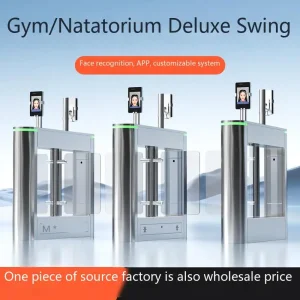
Durable Office Building Entrance Attendance Security Access Control Turnstiles Gate Swing Barrier Speed Gate Manufacturers, Supplier
View Specifications -
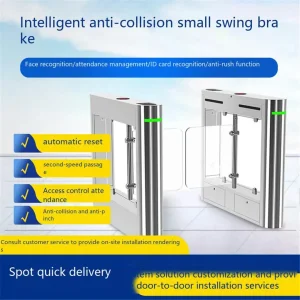
China Swing Gate Supplier, Quotation
Request Factory Quotation -
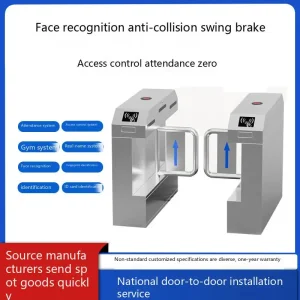
OEM Bridge Type Sloped Swing Gate Manufacturer, Quotation
View Specifications -
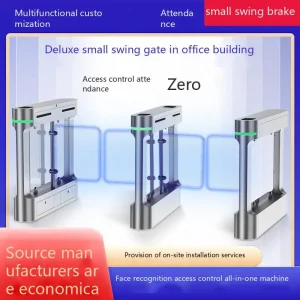
Durable Swing Gate Image Reference Manufacturer, Pricelist
View Pricelist -
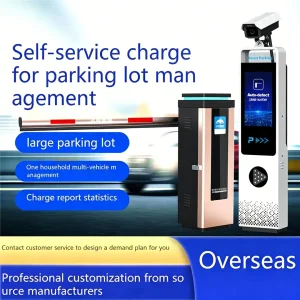
Durable High-def license plate recognition machine Dolphin I model Supplier, Exporters
Exporters Quotation -
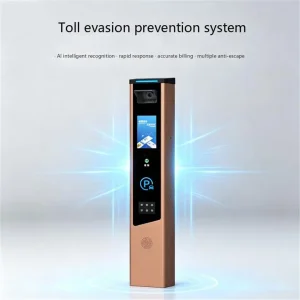
Durable High definition license plate recognition integrated - AnRuitong II Exporters, In Sales
View Specifications -
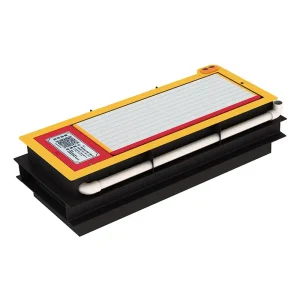
China City Parking Product Manufacturer, Price
Direct Factory Price -
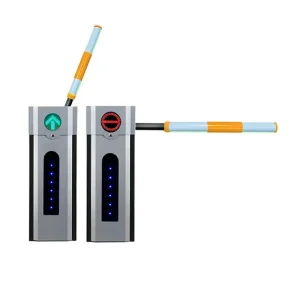
Newest Intelligent Barrier Gate Model D11S Factory, Factories
Request Factory Quotation
Global Commercial & Industrial Landscape of Gate Access Control
The international access management sector has moved beyond isolated mechanical turnstiles and simple electromagnetic boom barriers. Today’s industrial ecosystem combines edge machine vision, zero-trust cloud orchestration, and unified physical identity verification.
Market Capitalization & Edge Migration
Valued at over USD $11.8 Billion globally, automated entrance management is driven by smart municipal infrastructure, commercial mixed-use developments, and unattended logistics yards. Mechanical gate units are transitioning into intelligent edge nodes capable of running 50ms embedded neural inference on license plates and face biometric credentials without cloud round-trip latency.
- Compound annual growth exceeding 8.4% through 2030
- Edge processing eliminates bottleneck risks during outages
Converged Vehicle & Pedestrian Control
Commercial facilities now demand unified controllers bridging vehicular boom gates, speed gates, and hydraulic bollards. Legacy systems created fragmented security architectures with separate databases. Modern facility managers deploy unified edge controllers running Wiegand, OSDP v2.2, and MQTT, synchronizing vehicle ANPR entries with pedestrian lobby turnstiles under a single security ledger.
- Unified audit trails and anti-passback verification
- Lower CAPEX through consolidated edge gateways
Factory Sourcing & Procurement Shifts
Procurement directors are bypassing regional repackagers and sourcing directly from high-volume manufacturing hubs like Shenzhen, China. Direct factory collaboration gives system integrators access to deep mechanical customization (IP67 coatings, custom RAL powder finishes, low-noise brushless DC servo drives), full SDK access, and transparent tiered BOM cost structures.
- Direct OEM/ODM firmware integration
- Typical 35%–50% procurement cost reduction
Technological Trends Reshaping Physical Access Systems
From digital brushless DC (BLDC) servo motors to deep learning OCR plate identification and zero-trust perimeter telemetry, modern gate systems deliver uncompromised mechanical longevity and sub-second authentication throughput.
Brushless DC Servo Drives
Legacy AC induction motors are being replaced by 24V/36V digital BLDC servo motors. These systems deliver programmable acceleration/deceleration S-curves, eliminating gearbox shock and extending mechanical life past 10 million cycles with silent operation.
Edge ANPR / LPR Neural Models
Onboard NPU processors handle plate capture, character segmentation, and regional syntax recognition inside the camera enclosure. This provides sub-200ms verification and 99.6% accuracy under direct headlight glare or severe rainfall without external servers.
Anti-Tailgating Sensor Matrices
Modern pedestrian speed gates combine up to 24 pairs of military-grade infrared light curtains with time-of-flight (ToF) sensors. The system identifies tailgating, reverse entry, and baggage passage down to 5mm precision without false alarms.
OSDP v2.2 & End-to-End Encryption
Wiegand protocol is being replaced due to its vulnerability to sniffing attacks. Modern installations require Open Supervised Device Protocol (OSDP) v2.2 with AES-128 encryption, continuous communication supervision, and remote firmware flashing directly to lane hardware.
Factory Cost Analysis, Quotation Breakdown & Sourcing TCO
Accurate procurement requires understanding the bill of materials (BOM), duty cycle thresholds, surface treatments, and volume pricing. The data below outlines representative manufacturing metrics for professional evaluators.
| System Category | Core Drive / Sensor Tech | Duty Cycle & MTBF | Unit Quotation Range (FOB) | Ideal Deployment Scenarios | Key Integrations |
|---|---|---|---|---|---|
| DC Servo Boom Barrier Gate | Brushless DC 24V Servo, Planetary Gear, Sine-Wave Vector Control | 100% Continuous Duty, 8M–10M Cycles MTBF | $280 – $750 / Unit | Commercial plazas, highway tolls, high-density residential parking | LPR/ANPRRadar/LoopRFID |
| Louver Advertising Barrier | High-Torque DC Servo, Synchronized Mechanical Louver Display | 80% Duty Cycle, 5M Cycles MTBF | $550 – $1,200 / Unit | Retail malls, revenue-generating commercial bays, luxury hotels | LED AdvertisingANPRPayment |
| Embedded ANPR / LPR Station | 2MP–4MP Starlight Sensor, Integrated 1.5 TOPS NPU, Dual OS | 24/7 Outdoor Continuous (IP67, Heater/Fan) | $320 – $890 / Lane | Automated parking entry, ticketless tolling, gated communities | Cloud APIWiegand/OSDPRelay Out |
| Optical Swing Speed Gate | Digital BLDC Motor, SUS304 / SUS316 Steel, 16–24 IR Sensors | 100% Continuous, 10M Cycles MTBF | $850 – $2,400 / Lane | Corporate HQs, airport security corridors, government buildings | Face/BiometricQR TicketingFire Trip |
| Hydraulic Rising Bollard | Integrated Micro-Hydraulic Drive, Hard Chrome Piston, K4/PAS68 Rating | Severe Impact Resistant, 5,000 kJ Stopping | $650 – $1,800 / Unit | Embassies, perimeter checkpoints, pedestrian plazas, banks | Emergency Fast RiseTraffic Light |
| Automated Parking Space Lock | 180° Anti-Collision Arm, Ultrasonic / Radar Vehicle Sensing | 500,000 Cycles, Solar / Battery Dual Power | $65 – $160 / Unit | EV charging bays, VIP reserved parking, municipal curb spaces | BLE / ZigbeeCloud AppNB-IoT |
Key Cost Drivers in Gate Quotations
When evaluating vendor quotes, system integrators must assess the complete specification matrix rather than unit price alone:
- Motor Mechanism: Brushless DC servo drives with planetary gearboxes cost 25% more upfront than brush-type motors, but deliver 300% longer operating life and eliminate gearbox maintenance.
- Cabinet Metallurgy: High-end 2.0mm SUS304 or cold-rolled electro-galvanized sheet steel with AkzoNobel fluorocarbon powder coatings protects against coastal salt-fog corrosion.
- Safety Sensing: Millimeter-wave radar detectors prevent boom gate strikes on vehicles and pedestrians, removing the need for concrete saw-cutting for inductive ground loops.
Direct Factory OEM/ODM Sourcing Advantages
Partnering with direct production facilities in Shenzhen delivers operational and financial benefits for global projects:
- Custom Fabrication: Tailored boom lengths (1.5m to 6m), articulated arms for low-ceiling underground garages, and branded LED chassis illumination.
- Firmware Customization: Localized ANPR algorithm training for non-standard license plate formats (e.g., dual-line, Arabic script, South American syntax).
- Lifecycle Support: Direct availability of modular spare parts (motherboards, servo drives, gearboxes, arm holders) with worldwide express dispatch.
Localized Application Scenarios & Environmental Engineering
Perimeter access hardware must operate reliably across diverse climatic and operational environments worldwide. Shenzhen Anrui manufactures configurations tested for extreme operating conditions across 80+ nations.
Middle East: Desert Heat & Particulates
Operating in regions like Qatar, UAE, and Saudi Arabia demands thermal resilience up to +70°C and IP65 dust-tight enclosures. Systems feature brushless drive motors with positive air-pressure internal fans, reflective powder coatings, and sealed optoelectronic sensors that resist fine sand buildup.
Southeast Asia: High Humidity & Heavy Rain
Deployments across the Philippines, Indonesia, and Vietnam operate in 95% relative humidity and heavy monsoon rainfall. Electronics utilize multi-layer conformal-coated PCBA circuitry, IP67 camera housings with hydrophobic glass, and anti-corrosive electro-coating on baseplates.
Eastern Europe: Sub-Zero Freeze Cycles
Installations in Poland and Scandinavia experience freezing temperatures down to -35°C. Systems incorporate low-temperature synthetic lubricants, thermostatically controlled PTC heating elements, and cold-resistant silicone seals to prevent gear-train lockup during cold starts.
Technology Roadmap: 2026 to 2030 Evolution
The intersection of edge artificial intelligence, millimeter-wave spatial tracking, and frictionless payment architectures is redefining modern access automation.
Unified Multi-Biometric Fusion
Integration of multispectral face recognition with palm vein sensing directly within speed gate enclosures, achieving sub-100ms passage without requiring travelers to stop.
LiDAR 3D Lane Reconstruction
Solid-state micro-LiDAR replaces ground induction loops and photocells, providing volumetric 3D point-cloud classification to distinguish vehicles from cyclists and pedestrians with zero blind spots.
Autonomous Vehicle V2X Handshakes
Direct 5G-V2X (Vehicle-to-Everything) micro-transactions between connected vehicles and gate edge controllers, enabling barrier-free passage without optical cameras or paper ticketing.
Self-Healing Edge Meshes
Edge controller mesh nodes featuring on-device predictive vibration diagnostics, bearing wear monitoring, and automated failover to prevent unscheduled lane downtime.
Macro Enterprise Solution: The End-to-End Autonomous Gateway
A complete access control deployment synchronizes four functional tiers: Physical Actuation, Edge Sensing, On-Site Controllers, and Central Cloud Billing.
Tier 1: Physical Actuation
High-speed barrier mechanisms, optical turnstiles, and hydraulic bollards engineered for responsive mechanical operation. Features dynamic servo motor torque limitation to protect vehicles, individuals, and structural assemblies from mechanical stress.
Tier 2: Edge Perception
Starlight ANPR cameras, dual-frequency anti-smash radar sensors, and 3D infrared light curtains generate low-latency telemetry, enabling edge decision-making without relying on external network connectivity.
Tier 3: Distributed Controller
Industrial multi-port controllers managing CAN-bus, RS-485, and encrypted Ethernet channels. Hardware stores offline whitelist registries and transaction caches to keep operations uninterrupted during ISP outages.
Frequently Asked Questions on Factory Sourcing & System Integration
Answers to common technical, logistics, and economic questions from global importers, integrators, and security contractors.
What manufacturing advantages does Shenzhen Anrui offer compared to European or North American gate brands?
How does the system ensure fast, accurate recognition across diverse international license plate designs?
Can Anrui hardware interface seamlessly with existing third-party access control platforms?
What factors most heavily influence total quotation costs when requesting an RFQ for barrier gates?
How are unattended cross-border parking payments processed without physical cashiers?
What warranty, spare parts, and remote technical support are provided for international projects?
Advanced Turnstile, Barrier & Space Management Solutions
High-precision vehicle access hardware, automated parking space locks, impact-rated hydraulic bollards, and high-speed pedestrian turnstiles for critical infrastructure and commercial properties.
-
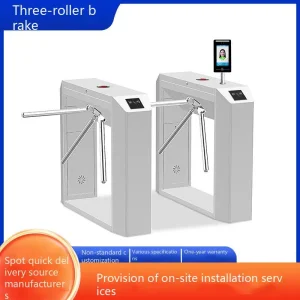
Cheap Factoryoem/ODM Durable Smart Fast Speed Swing Automatic Used Industrial Gym Turnstile Gate Manufacturer, Factory
View Specifications -
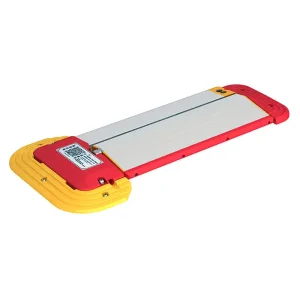
Advanced Scan to pay charging pilecommunity parking lock automatic sensing,electric shared scanning paymentanti-oil car occupying parking space Supplier, Factory
View Specifications -
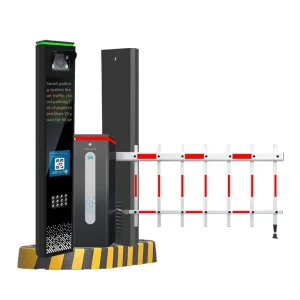
Buy Discount Car Parking And Toll Access Control Automatic Articulated DC Parking Boom Barrier Gate With Long Range Rfid Reader Manufacturer, Price
Request Factory Price -
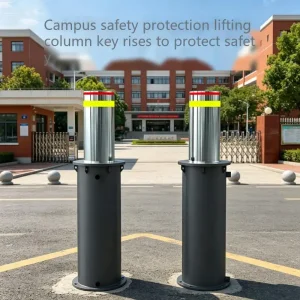
Discount Rising Bollard Instruction Manual Manufacturer, Quotation
View Quotation & Manual -
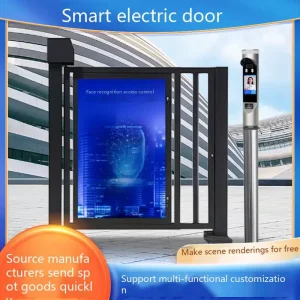
OEM Intelligent pedestrian advertising gate Factories, Price
View Factory Price -
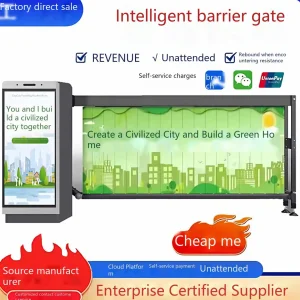
Durable Intelligent Barrier Gate Model D03 Manufacturer, Suppliers
View Specifications -
Durable Office Building Entrance Attendance Security Access Control Turnstiles Gate Swing Barrier Speed Gate Manufacturers, Supplier
Request Factory Quotation -
Newest Intelligent Barrier Gate Model D11S Factory, Factories
View Specifications
Accelerate Your Project with Direct Factory Engineering
Submit your lane counts, duty cycles, and integration requirements. Our Shenzhen technical team will prepare a detailed engineering specification and tiered factory quotation within 24 hours.
Request Custom Quotation & Technical Catalog