
Featured Smart Barrier & Vehicle Access Hardware
Precision-manufactured entrance automation machinery engineered in our ISO 9001 certified industrial robotics facility, tested across 80+ nations.
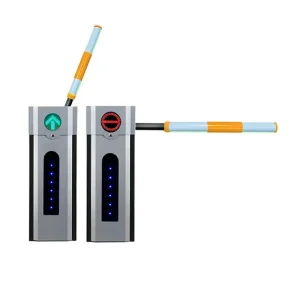
Newest Intelligent Barrier Gate Model D11S Factory, Factories
Configure Model D11S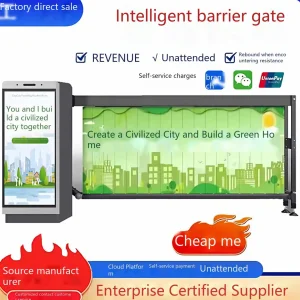
Durable Intelligent Barrier Gate Model D03 Manufacturer, Suppliers
Configure Model D03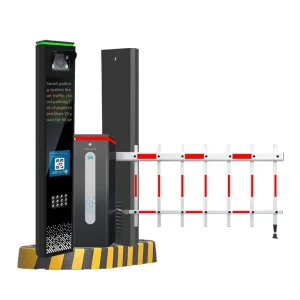
Buy Discount Car Parking And Toll Access Control Automatic Articulated DC Parking Boom Barrier Gate With Long Range Rfid Reader Manufacturer, Price
Request Toll Gate Price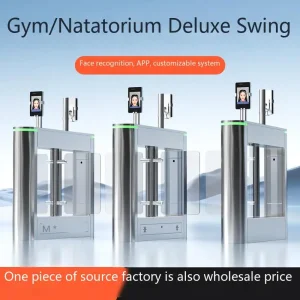
Durable Office Building Entrance Attendance Security Access Control Turnstiles Gate Swing Barrier Speed Gate Manufacturers, Supplier
Speed Gate Specifications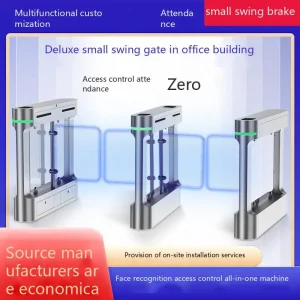
Durable Swing Gate Image Reference Manufacturer, Pricelist
Download Swing Gate Pricelist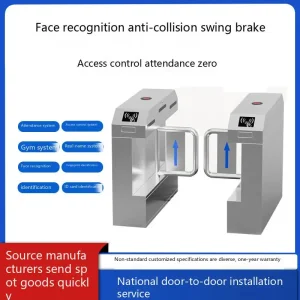
OEM Bridge Type Sloped Swing Gate Manufacturer, Quotation
Request OEM Bridge Gate Quote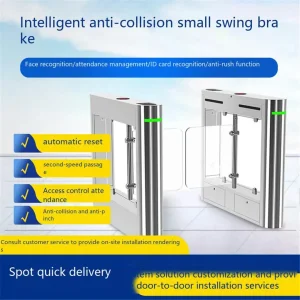
China Swing Gate Supplier, Quotation
Inquire Direct Factory Price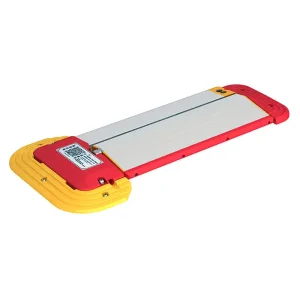
Advanced Scan to pay charging pilecommunity parking lock automatic sensing,electric shared scanning paymentanti-oil car occupying parking space Supplier, Factory
View Smart Space LockThe Macro Shift from Inductive Loops to Deep Learning Edge LPR
Evaluating the evolution of automated vehicle identification from ground-cut copper loop sensors to multi-spectral neural vision processors across global transportation infrastructure.
The global automated license plate recognition (ALPR/ANPR) market has entered a pivotal transition period. Historically reliant on localized embedded PC architectures coupled with disruptive ground pavement cuts for inductive loop triggers, municipal and private parking infrastructures are migrating toward unified Edge-AI optical sensors. According to global smart transportation indexes, the market is expanding at a Compound Annual Growth Rate (CAGR) of 13.8%, driven by accelerated labor cost inflation, the expansion of municipal Ultra-Low Emission Zones (ULEZ), and the commercial demand for frictionless, ticketless parking facilities.
High-tier manufacturing in Shenzhen and specialized Asian industrial clusters has adapted to this shift by integrating Neuromorphic Processing Units (NPUs) directly onto the camera sensor board. In doing so, modern ANPR/LPR cameras are no longer mere visual feeds sending high-bandwidth RTSP video to server racks; they function as decentralized autonomous access controllers capable of vehicle detection, retroreflective character segmentation, alphanumeric OCR inference, and barrier relay actuation in less than 150 milliseconds.
On-Device Edge Neural Compute
Modern factories leverage dual-core or quad-core NPUs (delivering 2.0 to 6.0 TOPS) directly inside the camera housing, eliminating edge PC hardware, reducing single points of failure, and permitting offline local whitelist execution.
Optical Starlight Engineering
Industrial-grade LPR factories mandate Sony STARVIS 2 CMOS sensors with back-illuminated pixel architecture, global or high-speed electronic shutters, and 140dB True WDR to conquer severe headlight blooming and sun glare.
Multi-Modal Radar Fusion
Eliminating traditional inductive ground loops, Tier-1 factories integrate 77GHz or 79GHz millimeter-wave FMCW radar modules. This reduces civil engineering installation expenses by over 65% while providing dual vehicle-pedestrian discrimination.
Factory-Direct Pricing Structure & Total Cost of Ownership (TCO)
Transparent analysis of factory Bill of Materials (BOM), wholesale unit pricing tiers, and a five-year lifecycle capital expenditure evaluation.
B2B project managers, international system integrators, and government contractors often encounter wide pricing disparities when sourcing vehicle recognition systems. High-quality systems require an understanding of how component-level engineering dictates factory FOB quotation prices. Low-cost consumer-grade rebranded surveillance cameras marketed as "LPR ready" typically cut corners on optic shutter mechanisms, heat sinking, and internal NPU capability, resulting in failure rates exceeding 25% during summer heatwaves or freezing winter conditions.
| Equipment Classification | Core Hardware Specifications | Target Operational Velocity | Factory Unit Price (MOQ 1-10) | Wholesale / OEM Price (50+ Units) |
|---|---|---|---|---|
| Standard Parking Access LPR Residential / Gated Estates |
2.0MP CMOS, Fixed 4-11mm Lens, White Light Supplemental LED, Integrated Relay | 0 - 25 km/h (Stop-and-Go) | $220 - $380 | $165 - $260 |
| Enterprise Dual-Sensor LPR Commercial Malls / Office Parks |
4.0MP Starlight Sensor, Motorized 2.8-12mm Varifocal, Quad-Core NPU, Voice Prompt, Matrix LED | 0 - 45 km/h | $450 - $720 | $330 - $490 |
| Highway & Free-Flow Tolling ANPR High-Speed Municipal Multi-Lane |
8.0MP Global Shutter Sensor, 1/1.8" Format, 9-22mm Motorized Telephoto, Dual Flash Strobes | Up to 160 km/h | $1,100 - $1,850 | $850 - $1,350 |
| Integrated LPR & Barrier Station All-in-One Turnkey Column (AnRuitong II) |
LPR Camera + Brushless DC Barrier + Advertising/Display Screen + 79GHz Radar | High Frequency (3-6s cycle) | $850 - $1,450 | $620 - $980 |
5-Year Total Cost of Ownership: Factory-Direct vs. Distributed Re-Brand
Procuring directly from verified smart access factories like Anrui yields an average 42% reduction in initial CapEx, while eliminating third-party brand markups. Crucially, OpEx drops by 58% over 5 years due to the standardized modularity of DC brushless barrier gearboxes, drop-in replacement sensor boards, and firmware longevity without mandatory per-camera recurring SaaS licensing fees.
Algorithmic Architecture: YOLO Object Tracking & Hybrid OCR
How deep neural networks conquer retroreflective variations, heavy particulate dust, motion blur, and localized typography challenges.
Dual-Stage Neural Inference Pipeline
High-accuracy factory algorithms run a dual-stage convolutional pipeline. Stage 1 (Vehicle & Plate Localization): A lightweight YOLOv10-derived bounding-box network continuously evaluates downsampled 30fps frames to detect vehicle silhouettes and localized plate quadrilaterals, correcting for perspective distortion up to 45° off-axis.
Stage 2 (Character Segmentation & Syntactic Parsing): Once bounded, the raw plate matrix is fed into a recurrent CNN with connectionist temporal classification (CTC), segmenting individual alphanumeric characters without relying on fixed character spacing or color boundaries.
Extreme Environment Optical Adaptation
Physical optics represent 50% of the recognition equation. Anrui factory systems deploy an active mechanical IR cut filter coupled with pulse-width-modulated (PWM) directional fill strobes. In high-contrast environments—such as a subterranean garage exit bathed in direct summer sunlight—the multi-frame HDR processor synthesizes an optimal contrast balance in real-time.
Additionally, internal heating resistors and convective airflow diverters prevent lens condensation when transitioning between rapid thermal shifts (-30°C morning frost to +45°C midday sun), ensuring zero operational downtime for critical municipal perimeters.
Localization Protocols, Data Privacy & Regional Compliance
Bridging national license plate typologies, cryptographic privacy compliance (GDPR/NDAA), and open industrial interconnectivity protocols.
European Union (EU)
Support for single-row blue strip retroreflective plates, motorcycle squares, and special zero-emission green identifiers. Full compliance with GDPR Article 6 & 32 via automated localized hashing, plate blurring, and encrypted ephemeral memory storage.
North America (US/CA)
Algorithms trained on all 50 US states, Canadian provinces, and Mexican formats. Models recognize diverse background graphics, embossed letters, stack vertical state abbreviations, and vanity permutations with over 99.4% field precision.
Middle East & GCC
Bilingual deep models parse Arabic-Indic and Latin characters simultaneously. Thermal stabilization systems are engineered to withstand ambient sustained desert environments exceeding +55°C without CPU thermal throttling.
Asia-Pacific & ASEAN
Trained on dense two-wheeler mixed traffic, double-row vehicle plates, non-standardized private typography, and reflective coatings across Vietnam, Indonesia, Philippines, Thailand, and Malaysia.
Open Architecture API/SDK Integration
A frequent challenge for overseas systems integrators is software lock-in. Tier-1 Shenzhen factories like Anrui provide open RESTful APIs, ONVIF Profile S/G/T compliance, MQTT lightweight IoT publishing, and direct Wiegand 26/34 outputs. This permits seamless native integration with third-party software platforms such as Genetec, Milestone, LenelS2, SKIDATA, and custom municipal smart city cloud orchestrators.
Mission-Critical Deployment Blueprints
How integrated vehicle recognition and access control machinery operate in live enterprise environments across 80+ countries.
Logistics Parks & Intermodal Freight
Paired with weighbridges and automated boom gates, LPR cameras instantly authenticate truck tractor plates and container chassis codes, cross-referencing warehouse management ERP systems to route freight without gatekeeper delays.
Commercial Center Unattended Parking
LPR cameras integrate with multi-currency QR-code payment stations. Drivers enter seamlessly; upon exit, the system identifies payment status through the plate number, elevating throughput to 720 vehicles per lane/hour.
Critical Perimeter & Rising Bollards
At government ministries and embassies, LPR cameras perform pre-clearance validation. Upon authorized plate confirmation, hydraulic rising bollards lower in under 1.5 seconds, maintaining strict physical crash-rated anti-ram security.
Gated Residential & Smart Subdivisions
Eliminating lost RFID tags and remote clickers, residents enjoy hands-free access while visitor management systems issue time-restricted LPR access passes via mobile apps, lowering security overhead costs.
The Technological Roadmap: Beyond the License Plate
Anticipating the convergence of multimodal vehicle fingerprinting, 5G V2X telematics, and zero-carbon harvesting optics.
Vehicle Fingerprinting (MMCR)
Factory neural network pipelines are evolving beyond plate characters to Make, Model, Color, and Generation Recognition (MMCR). If a stolen plate is attached to a differing vehicle model, the system flags the anomalous discrepancy immediately.
V2X Direct Lane Communication
Integration of Dedicated Short-Range Communications (DSRC) and C-V2X (Cellular Vehicle-to-Everything) antennas inside the gate chassis. Electric vehicles authenticate with the access terminal cryptographically before physical camera line-of-sight.
Neuromorphic Vision Sensors
Next-generation research incorporates event-based neuromorphic bio-sensors that transmit only pixel changes (microsecond temporal resolution), consuming less than 1.5 Watts of power and enabling 100% solar-driven roadside monitoring.
How to Audit an LPR Equipment Factory: A 5-Point Checklist
Mitigate supply chain risk by verifying genuine manufacturing infrastructure before placing large-scale OEM/ODM access control purchase orders.
1. SMT Line & Optics Cleanroom Verification
True equipment manufacturers operate in-house Surface Mount Technology (SMT) high-speed placement lines and dust-free optical assembly cleanrooms. Sourcing from simple assembly workshops often leads to dust accumulation between the camera lens and CMOS sensor glass, causing permanent imaging distortion.
2. Climate & Burn-In Aging Protocol
Demand documentation verifying a 100% 72-hour continuous thermal cycling burn-in test (-30°C to +70°C chamber exposure) before crate dispatch. Sub-tier suppliers test only random batches for 4 hours, risking catastrophic failure in deployment lanes.
3. Motor Gearbox Stress Test (Boom Barriers)
Vehicle access barrier reliability hinges on the gearbox. Ensure the factory utilizes Brushless DC (BLDC) motors paired with planetary gear systems with certified test histories exceeding 10 million continuous open/close cycles without oil leakage or backlash degradation.
4. SDK & Protocol Firmware Ownership
Inquire whether the supplier maintains an internal software engineering division. Companies that license third-party generic firmware cannot customize OCR models for non-standard regional plates or deliver bespoke API endpoints for complex client security systems.
Frequently Asked Questions: Technical & Sourcing Inquiries
Authoritative insights for international importers, access control contractors, and system engineers.
What is the typical FOB factory lead time for customized LPR barrier systems?
Standard off-the-shelf configurations (e.g., standard color, 220V/110V power supply, English firmware) typically ship within 3 to 7 working days for orders up to 50 sets. Bespoke OEM orders—including custom Pantone chassis powder coating, laser-engraved client logos, specialized focal length lenses, and country-specific plate training algorithms—generally require 14 to 20 working days.
How does an Edge LPR system maintain functionality during an Internet or local server outage?
High-quality factories engineer their LPR cameras with on-board non-volatile eMMC storage (typically 16GB to 64GB). An offline database of authorized white-listed license plates is mirrored directly on the camera board. When an authorized vehicle approaches, the camera performs local AI inference and independently triggers the dry-contact relay to lift the boom barrier within 120ms—even if the central server or cloud network is offline. Once connectivity is restored, cached logs synchronize automatically.
What installation geometry is optimal for achieving 99%+ recognition accuracy?
The horizontal angle between the camera optical axis and the vehicle approach direction should not exceed 30° (ideally between 10° and 20°). The vertical elevation angle must be maintained under 25°. The capture distance is determined by the selected lens focal length: a 2.8-12mm varifocal lens operates optimally at 3 to 8 meters, while a 6-22mm lens suits longer approaches of 8 to 18 meters. The camera should achieve at least 150 to 200 pixels across the license plate width in the capture zone.
How do radar vehicle sensors replace traditional ground inductive loops?
79GHz millimeter-wave anti-smash radar sensors mount directly onto the barrier cabinet or LPR column, emitting high-frequency electromagnetic waves to detect vehicle presence and motion trajectory. Unlike inductive loops, radar sensors require no destructive road pavement cutting, are unaffected by reinforcing rebar in concrete, function reliably during rain or snow, and distinguish between human pedestrians and motor vehicles to prevent pedestrian injury while ensuring anti-tailgating precision.
Can Anrui LPR hardware integrate into existing third-party access software?
Yes. We provide complete, well-documented C++, C#, Java, and Python SDKs, alongside HTTP/HTTPS RESTful API interfaces that push JSON payloads (including recognition timestamps, plate string, confidence score, vehicle color, and base64-encoded snapshot images). In addition, direct Wiegand output allows the LPR unit to emulate an access card badge directly into legacy access control panels.
Specialized LPR Machines, Bollards & Access Turnstiles
Expand your automated perimeter with high-durability integrated optical terminals, anti-ram hydraulic rising bollards, and rapid throughput pedestrian gates.
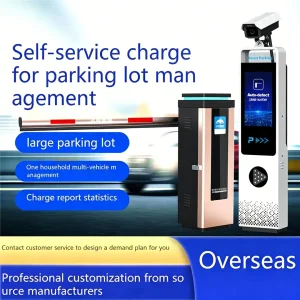
Durable High-def license plate recognition machine Dolphin I model Supplier, Exporters
Configure Dolphin I Machine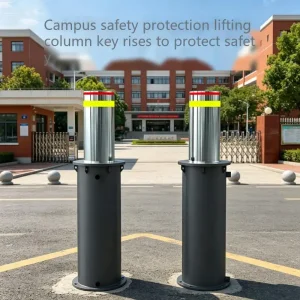
Discount Rising Bollard Instruction Manual Manufacturer, Quotation
Request Rising Bollard Manual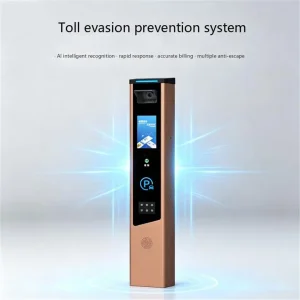
Durable High definition license plate recognition integrated - AnRuitong II Exporters, In Sales
Explore AnRuitong II All-in-One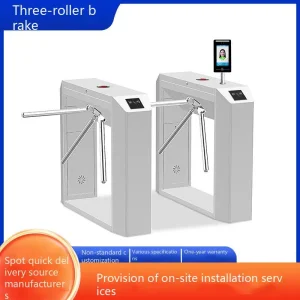
Cheap Factoryoem/ODM Durable Smart Fast Speed Swing Automatic Used Industrial Gym Turnstile Gate Manufacturer, Factory
Inquire Industrial Gym Turnstile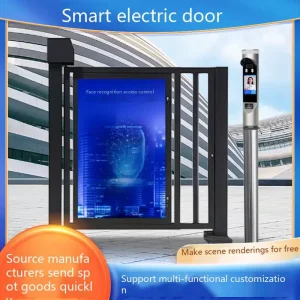
OEM Intelligent pedestrian advertising gate Factories, Price
Get Advertising Gate Price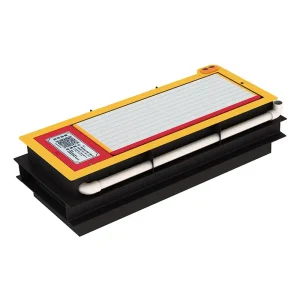
China City Parking Product Manufacturer, Price
View City Parking Portfolio
Newest Intelligent Barrier Gate Model D11S Factory, Factories
Direct Factory Order D11S