
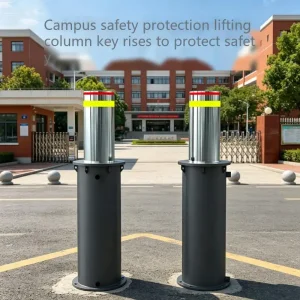
Integrated Access Ecosystem
Engineered Security Gate & Access Control Portfolio
Precision-manufactured entrance hardware engineered for interoperability with heavy-duty sliding chain link assemblies, cantilever infrastructure, and high-throughput industrial gates.
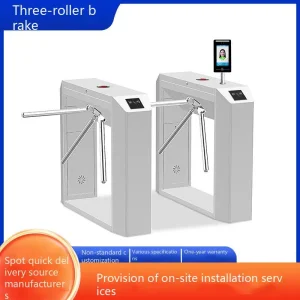
Cheap Factoryoem/ODM Durable Smart Fast Speed Swing Automatic Used Industrial Gym Turnstile Gate Manufacturer, Factory
View Product Specifications
Durable Intelligent Barrier Gate Model D03 Manufacturer, Suppliers
View Product Specifications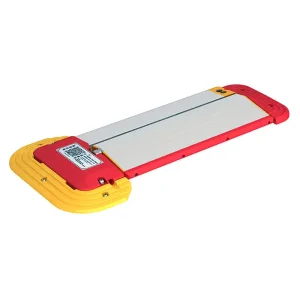
Advanced Scan to pay charging pilecommunity parking lock automatic sensing,electric shared scanning paymentanti-oil car occupying parking space Supplier, Factory
View Product Specifications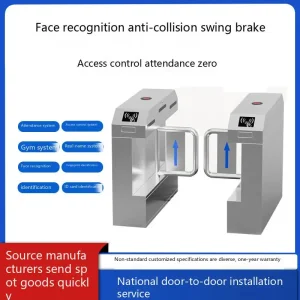
OEM Bridge Type Sloped Swing Gate Manufacturer, Quotation
View Product Specifications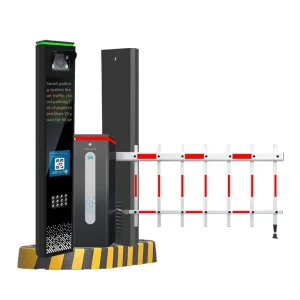
Buy Discount Car Parking And Toll Access Control Automatic Articulated DC Parking Boom Barrier Gate With Long Range Rfid Reader Manufacturer, Price
View Product Specifications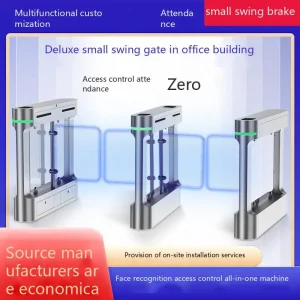
Durable Swing Gate Image Reference Manufacturer, Pricelist
View Product Specifications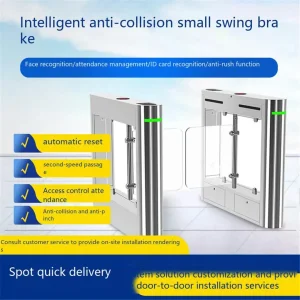
China Swing Gate Supplier, Quotation
View Product Specifications
Industry Strategic Intelligence
Global Enterprise Procurement Dynamics for Sliding Chain Link Gate Assemblies
Navigating total cost of ownership (TCO), physical barrier automation, and high-cycle mechanical endurance for international commercial and critical infrastructure projects.
Enterprise Footprint Optimization
Industrial sliding chain link gates offer zero-swing radius utilization, reclaiming up to 45% of interior staging apron space compared to conventional dual-leaf swing gates in dense logistics terminals, bonded warehouses, and intermodal freight depots.
Forced-Entry Deflection Integrity
Fabricated from heavy-gauge galvanized structural framing and high-tensile interlocking diamond chain link mesh, these systems mitigate unauthorized vehicular access while presenting low wind-drag resistance, critical for coastal container terminals.
Automated Telemetry Interoperability
Modern export-grade sliding chain link systems feature native mechanical and electrical integration conduits for industrial rack-and-pinion actuators, loop sensors, long-range RFID, and automated license plate recognition (ALPR) edge controllers.
Architectural Value & Lifecycle Metric
Procurement directors and perimeter security consultants identify high-strength sliding chain link gate frameworks as the industry benchmark for high-cycle industrial spans exceeding 8 to 25 meters. Unlike solid barrier panels that experience severe structural fatigue from localized vortex shedding during high-velocity wind events, chain link permeable design allows up to 72% wind aeration while maintaining impenetrable boundary containment.
Technical Architecture
Engineering Blueprints: Cantilever vs. Ground-Track Sliding Gates
Comprehensive breakdown of kinematics, load-distribution physics, and mechanical installation environments.
| Performance / Engineering Attribute | Cantilever Sliding Chain Link Gate | Ground Track (Roller) Sliding Gate | Export Quality Compliance |
|---|---|---|---|
| Kinematic Mechanism | Suspended counterbalance frame riding on enclosed internal roller truck assemblies. No ground contact along the roadway opening. | V-groove or round steel wheels tracking on an embedded or surface-anchored foundation rail across the driveway. | ASTM F2200 / ASTM F1184 Type II |
| Terrain & Climate Adaptation | Impervious to snow, ice accumulation, loose gravel, mud, and unpaved grade transitions. Optimal for heavy seasonal climates. | Requires clean, level terrain and continuous ground-track maintenance to avoid track jamming and derailment risks. | Class I - Class IV Deployment |
| Counterbalance Overhang Requirement | Demands an additional 40% to 50% overhang counterbalance length beyond the clear opening width for structural counterbalance. | Direct opening span with minimal tail overhang (5% to 10%), minimizing overall lateral property footprint. | Structural Moment Analysis Certified |
| Structural Frame Steel Profile | Continuous ASTM A500 Grade B high-tensile hollow structural section (HSS) with integrated lower track extrusion. | Cold-formed tubular structural framework reinforced with vertical upright struts and diagonal tension cable turnbuckles. | Hot-Dip Galvanized ISO 1461 |
| Industrial Duty Cycle Expectation | Rated for continuous duty (>500,000 operational cycles) with zero ground friction drag on drive motors. | High duty cycle, though ground debris directly impacts wheel bearing longevity and increases actuator friction load. | UL 325 Class IV Industrial Tested |
| Motor Torque & Propulsion Efficiency | Constant linear inertia requirement; operates efficiently with 24V/36V Brushless DC or 3-phase AC frequency inverters. | Low initial rolling resistance; vulnerable to mechanical resistance spikes if track collects debris. | CE Machinery Directive 2006/42/EC |
Material Metallurgy & Chemical Treatments
Metallurgical Rigor & Anti-Corrosion Finishing Standards
How tier-one export manufacturing facilities formulate barrier longevity for aggressive maritime, desert, and chemical environments.
Hot-Dip Galvanizing
Pre-welded and post-welded immersion in molten zinc baths at 450°C per ASTM A123/A123M standards, delivering a molecular metallurgic bond of zinc-iron alloy layers exceeding 85 µm (610 g/m²) coating thickness.
Thermoset Powder Coating
Multi-stage zinc phosphate pre-treatment followed by electrostatic deposition of architectural-grade polyester or TGIC thermoset powder coating (80-120 µm), rigorously tested to surpass 2,000 hours of ASTM B117 salt spray exposure.
Tensile Interlocking Mesh
High-carbon steel core wire with continuous hot-dipped zinc or thermally bonded PVC coating. Interlocking diamond configuration (50mm x 50mm mesh, 9 or 6 gauge) ensures high tensile break-force and cut resistance.
Precision Laser Calibration
Robotic CNC plasma cutting and optical laser alignment jigs ensure beam deflection tolerances within ±1.5 mm over a 12-meter continuous span, eliminating premature internal wheel bearing wear.
AI-Driven Edge Intelligence
Perimeter Automation & Edge Telemetry Integration
Bridging mechanical heavy steel sliding gates with modern autonomous security ecosystems, SCADA architectures, and distributed edge computing.
Brushless DC & Variable Frequency Propulsion
High-efficiency 24V/36V BLDC motors coupled with oil-bath helical gearbox transmissions enable soft-start and soft-stop ramp modulation. System sensors continuously monitor current draws to dynamically detect obstructions within 20 milliseconds, safeguarding vehicles and personnel.
Neural ALPR & Multi-Spectral Optics
Sliding chain link gates integrate seamlessly with neural-network license plate cameras and automated vehicle identification (AVI) transponders. Microsecond whitelist processing signals dry contact relays, reducing vehicle dwell time at entry gates to under 4.2 seconds.
MQTT & Cloud Telemetry Telepresence
Onboard edge microcontrollers log cycle count metrics, thermal dissipation levels, vibration spectrums, and safety circuit interrupts over secure cellular or Ethernet protocols. Predictive maintenance alerts pre-empt mechanical downtime before bearing failure occurs.
Industrial Sourcing Credentials
Factory-Direct Manufacturing Capacity & Export Excellence
Engineered in our state-of-the-art 8,000+ m² facility, certified for volume production, international container packaging, and rigorous testing protocols.
8,000m²
Dedicated Production & Assembly Facility
80+
Countries Actively Deployed Worldwide
100%
Pre-Shipment Kinematic & Stress Testing
<24h
Engineering Technical Support Response
International Compliance Architecture
Compliance Assurance & Safe Physical Entrapment Mitigation
Conforming to mandatory North American, European, and Australasian occupational safety and mechanical gate guidelines.
UL 325 & ASTM F2200 Entrapment Protection
Sliding chain link gates incorporate primary and secondary monitored entrapment prevention systems. All chain link mesh openings smaller than 57 mm (2-1/4 inches) extend across the entire travel zone and counterbalance tail, preventing reach-through shear pinch hazards.
EN 12453 & EN 12604 Dynamic Force Limits
For European Union deployments, gates feature dual resistive contact safety edges and redundant optical infrared curtains. Peak collision impact forces are strictly limited to less than 400 N, dissipating within 0.75 seconds to eliminate crushing dangers.
ASCE 7-22 Wind Loading Certification
Every custom sliding gate undergoes finite element stress analysis (FEA) calibrated to localized 3-second gust wind velocities up to 160 km/h (100 mph), calculating moment loadings on concrete footings and structural gate receiver posts.
Global Logistics Execution
Precision Sourcing: From Shop Drawing to Overseas Port Delivery
Engineered modular shipping methodologies designed to optimize standard 20ft and 40ft high-cube sea freight containerization.
01
Site CAD / BIM Inception
Custom structural drawings, civil foundation anchor plans, and electrical conduit mockups aligned with site elevation coordinates.
02
CNC Fabrication & Coating
Robotic weldments, precision hot-dip galvanizing, and multi-stage powder curing under ISO 9001 factory quality oversight.
03
Splice-Joint Engineering
For oversized gates exceeding 11.8m, factory-machined internal precision splice joints allow modular shipping in standard 40HQ containers.
04
Seaworthy Crating
Anti-scratch protective foam wrapping, desiccants, and reinforced steel-frame crates to prevent maritime corrosion and transit shock.
05
Site Commissioning
Comprehensive installation blueprints, multilingual wiring schematics, and 24/7 remote video-assisted field engineering support.
Technical & Procurement FAQ
Frequently Asked Questions for Project Engineers & Specifiers
Direct technical answers addressing kinematic geometry, wind resistance, export logistics, and access control integrations.
How do you calculate the counterbalance tail ratio for industrial cantilever sliding chain link gates?
The industry engineering benchmark specifies a counterbalance tail length of 40% to 50% of the clear opening width. For example, a 10-meter clear driveway requires an overall gate leaf length of 14 to 15 meters (10 meters clear opening plus 4 to 5 meters counterbalance overhang). This geometry ensures that the mechanical cantilever moment remains distributed evenly across the dual heavy-duty internal roller truck assemblies anchored into a reinforced concrete grade foundation beam, eliminating sagging and binding during travel cycles.
How are long cantilever sliding gates packaged to fit standard 40ft sea containers?
Standard 40ft High-Cube (HQ) shipping containers have an internal length limit of 12.03 meters (39.5 feet). For gate leafs exceeding 11.5 meters, our engineering department designs heavy-duty internal structural steel sleeve splice joints. The top and bottom structural beams are factory CNC pre-machined, precision aligned, and drilled for high-tensile Grade 8.8 structural bolts. When delivered on-site, mechanical installers seamlessly join the modular sections with zero on-site welding required, preserving anti-corrosion zinc and powder coat integrity while substantially cutting container freight costs.
What chain link wire gauge and aperture mesh is recommended for high-security industrial installations?
For critical infrastructure and industrial logistics sites, we recommend 9-gauge (3.76 mm core wire diameter) or 6-gauge (4.88 mm core wire diameter) hot-dip galvanized steel wire woven into a 50 mm (2-inch) or anti-climb 25 mm (1-inch) diamond mesh pattern. In highly corrosive coastal or chemical industrial environments, we utilize Class 2b thermally bonded extruded PVC/polyolefin coated chain link fabric over galvanized core wire in accordance with ASTM F668 specifications.
Can your sliding chain link gates operate reliably in sub-zero and extreme desert heat environments?
Yes. Our cantilever systems are deployed in regions ranging from Northern Europe (-35°C freeze conditions) to Middle Eastern desert facilities (+55°C ambient temperatures). Cantilever designs eliminate ground contact entirely, meaning snow, frost, sand drifts, and standing water never obstruct gate travel. Furthermore, our electric drive mechanisms utilize low-temperature synthetic lubricants, IP67 sealed limit switches, and internal thermostatically controlled cabinet heating units or heat-sink ventilation fans.
What safety systems are incorporated to comply with UL 325 and EN 12453 entrapment standards?
Every automated sliding gate system features a multi-tiered safety envelope: (1) Primary inherent current-sensing reverse mechanisms in the motor drive; (2) Monitored wireless resistive safety contact edges mounted along the leading vertical edge and rear overhang of the gate leaf; (3) Redundant photoelectric through-beam infrared sensors across the drive corridor; and (4) High-density chain link mesh covering all entrapment and reach-through zones within 1.8 meters of adjacent posts.
Can the gate operators be synchronized with existing third-party access control platforms?
Absolutely. Our intelligent drive controllers support standard dry contact trigger inputs, Wiegand interfaces, RS-485 Modbus, and TCP/IP Ethernet protocols. Whether integrating with license plate recognition (ALPR) cameras, UHF long-range windshield RFID tag readers, biometric facial recognition terminals, or central security building management systems (BMS), integration requires zero proprietary software lockouts.
Turnkey Perimeter Automation Equipment
Comprehensive Commercial & Industrial Gate Access Products
Explore our full line of factory-direct intelligent barrier units, pedestrian speed turnstiles, and license plate recognition subsystems.
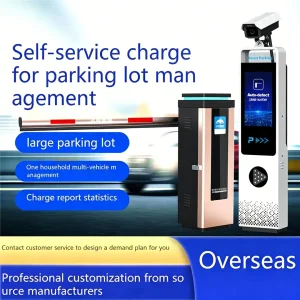
Durable High-def license plate recognition machine Dolphin I model Supplier, Exporters
View Product Specifications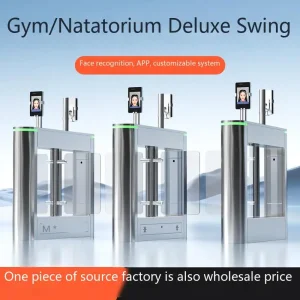
Durable Office Building Entrance Attendance Security Access Control Turnstiles Gate Swing Barrier Speed Gate Manufacturers, Supplier
View Product Specifications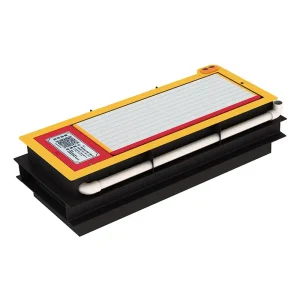
China City Parking Product Manufacturer, Price
View Product Specifications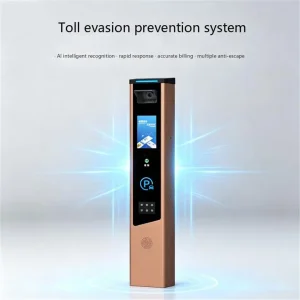
Durable High definition license plate recognition integrated - AnRuitong II Exporters, In Sales
View Product Specifications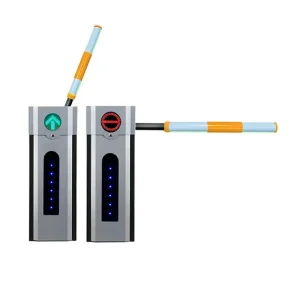
Newest Intelligent Barrier Gate Model D11S Factory, Factories
View Product Specifications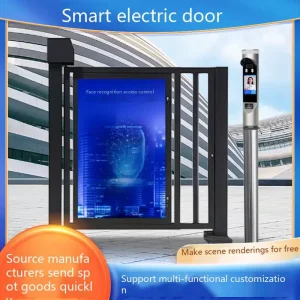
OEM Intelligent pedestrian advertising gate Factories, Price
View Product Specifications
Durable Intelligent Barrier Gate Model D03 Manufacturer, Suppliers
View Product Specifications