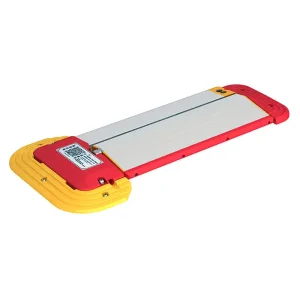
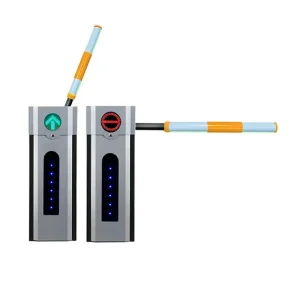
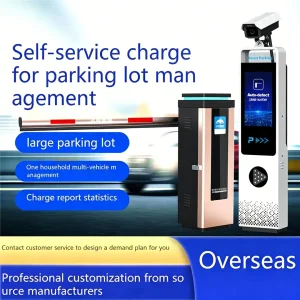
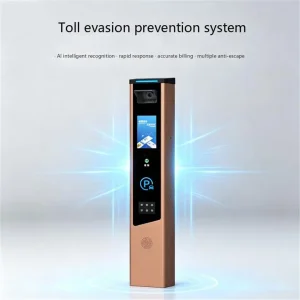
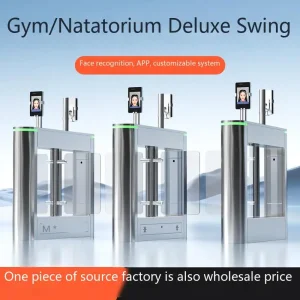
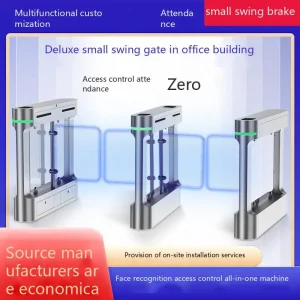
Featured Commercial Access & Smart Gate Fleet
High-precision optical and capacitive fingerprint readers embedded within barrier gates, turnstiles, and pedestrian lanes engineered directly for global deployments.
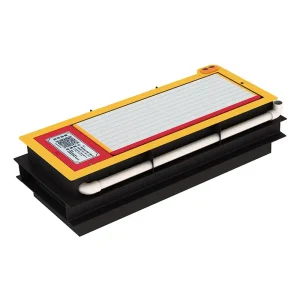
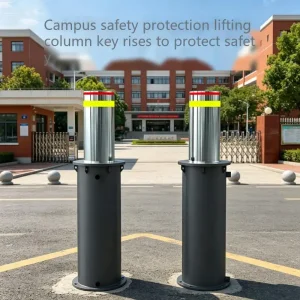
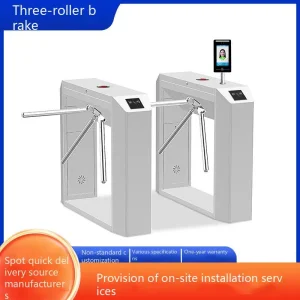
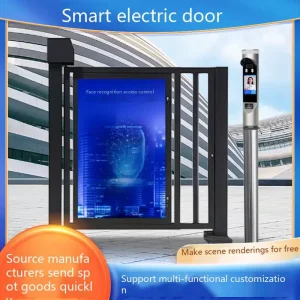
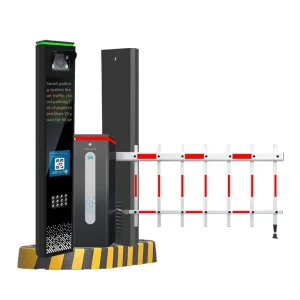
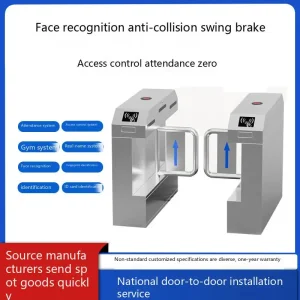
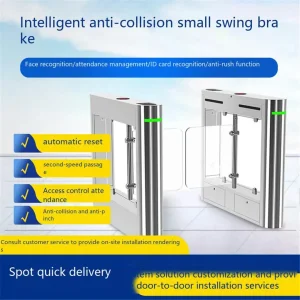
Industrial Biometric Procurement: Cost Breakdown & Engineering Dynamics
Integrating finger biometric scanning systems into perimeter infrastructure demands an engineering perspective beyond superficial retail cost matrices.
Total Cost of Ownership (TCO)
Evaluation requires analyzing hardware MTBF (>5 million actuations), false rejection rate (FRR) impacts on bottleneck throughput, SDK license renewals, and IP65/IK08 ruggedization against corrosive outdoor salt-spray and ultraviolet degradation.
Optical vs. Capacitive vs. Multispectral
While optical prism glass scanners deliver high mechanical durability for budget projects, multispectral imaging analyzes subsurface capillary blood flow, effectively eliminating presentation attacks and spoofing via silicone or latex prosthetic films.
Zero-Trust Cryptographic Edge
Modern access controllers bypass simple Wiegand 26-bit protocols in favor of bi-directional OSDP v2.2 with AES-128 hardware encryption. Templates remain unexportable, stored purely as irreversibly hashed mathematical matrices compliant with ISO/IEC 19794-2.
| Biometric Sensor Class | Sensor Resolution & Tech | Typical Integration Platform | Target FAR / FRR Metric | Reference Price (FOB Shenzhen) |
|---|---|---|---|---|
| Commercial Optical Entry-Tier | 500 DPI Crown Glass Prism | Tripod Turnstiles, Gym Entrances | FAR <0.001% | FRR <0.1% | $18.50 – $34.00 |
| Active Capacitive Silicon Module | 508 DPI FAP10 Thin Sensor Array | Office Speed Gates, Elevator Banks | FAR <0.0001% | FRR <0.05% | $42.00 – $68.00 |
| Industrial Multispectral Sensor | Polarized Optical + Subsurface Dermis | High-Security Prisons, Toll Hubs | FAR <0.00001% | FRR <0.01% | $115.00 – $180.00 |
| Integrated Edge Biometric Terminal | Dual Iris + Capacitive Finger + RFID | Commercial Headquarters, Data Centers | Ultra-Low Cryptographic Rejection | $210.00 – $385.00 |
Macro-Industry Deployment Architectures
Translating biometric sensor precision into enterprise-wide access control, workforce tracking, and security automation across key verticals.
Industrial Campuses & Logistics Yards
Coupling optical biometric scanners with heavy-duty tripod and full-height turnstiles allows continuous anti-tailgating regulation. High-throughput shifts handle upwards of 45 verified workers per lane per minute, integrating seamlessly with ERP/payroll platforms.
Corporate Grade-A Towers & Lobbies
Ergonomically flush-mounted capacitive scanners housed in brushless servo-motor swing gates ensure quiet operation (<50dB) with rapid lane clearance. Integrated elevator dispatching assigns cars instantly upon authorized biometric validation.
Automated Parking & Toll Lanes
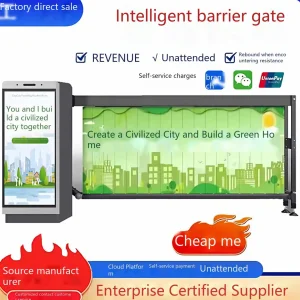
Interlinking driver-side fingerprint scanners with automated boom barriers and LPR camera networks eliminates unmonitored ticket transfer fraud. Dual verification guarantees registered fleet drivers are authentic before lane release.
Shenzhen Advanced Manufacturing: Resilient Supply Chains
From optical prism grinding and automated SMT chip placement to laser-cut 304/316 stainless steel housings in Guangming District.
Direct Component Traceability
Eliminate OEM broker surcharges. Every optical module and digital signal processing (DSP) unit undergoes incoming material control (IQC) under Class 10,000 cleanroom environments to maintain optimal optical clarity and consistent capacitive yield.
Environmental Stress Screening
Hardware batches endure rigorous thermal cycling from -25°C to +70°C, 95% relative humidity testing, ESD strike tests up to ±15kV air discharge, and mechanical vibration verification to withstand punishing international shipping routes.
Agile OEM/ODM Co-Development
With an in-house engineering team of 50+ experts, we develop customized bracket dies, OEM brushed stainless chassis finishes, proprietary Linux/Android API ports, and localized language configurations within 14 business days.
Global Standards, GDPR Safeguards & SLA Execution
Balancing edge biometric performance with strict jurisdictional data governance and uninterrupted lifecycle support.
GDPR & CCPA Edge Privacy
Our scanning engines convert biometric readings into anonymized algorithmic strings locally on the device. Raw fingerprint imagery is never cached, stored, or transmitted upstream, fulfilling Article 9 special-category data protection criteria under EU GDPR.
Round-the-Clock Global Support
Field engineers provide 24/7 technical guidance across overseas time zones. We provide live diagnostic troubleshooting, remote desktop firmware debugging, wiring telemetry verification, and guaranteed air-courier component replacements within 72 hours.
Regulatory Certification Portfolio
Equipped with CE, FCC, RoHS, and UL safety standards. Biometric units meet FBI PIV/FIPS 201 and Mobile ID FAP specifications, certifying devices for financial clearinghouses, international borders, and municipal government tenders.
Technology Roadmap: Next-Gen Access Paradigms
Anticipating evolving biometrics: emerging trends reshaping high-speed perimeter security architectures.
Contactless Touchless-Wave Sensors
Transitioning from touch sensors to four-finger 3D wave capture in free air. Speeds clearance up to 60 users per lane/minute while eliminating surface bacterial cross-contamination in medical and transit hubs.
Subsurface Finger Vein Recognition
Near-infrared (NIR) light maps vascular structures inside the finger. Vein patterns are nearly impossible to spoof, remain immune to surface cuts or moisture, and ensure reliable capture across difficult outdoor conditions.
Neural Network Edge Micro-NPUs
Onboard Neural Processing Units (NPUs) execute localized 1:N biometric matching across 100,000 templates in <150ms—delivering immediate verification during centralized network outages.
Equipping a Major Infrastructure or Turnstile Project?
Get the complete 2026 Finger Biometric & Turnstile Engineering Pricelist, complete with CAD diagrams, SDK documentation, and tiered OEM volume schedules.
Engineering & Procurement Q&A
Answers to common integration questions regarding pricing variables, protocols, weatherproofing, and multi-tenant installations.
What core factors influence industrial biometric scanner pricing?
Can biometric scanners operate in extreme outdoor heat or sub-zero environments?
How do our turnstiles handle third-party access control platforms?
How does multispectral scanning defend against spoofing and fraudulent copies?
Connected Barrier Systems & Commercial Access Nodes
Combine multi-biometric credential terminals with high-durability barrier gates, LPR optical tracking, and automated access control mechanisms.