
Perimeter Boundary Gateways & Intelligent Hardware Systems
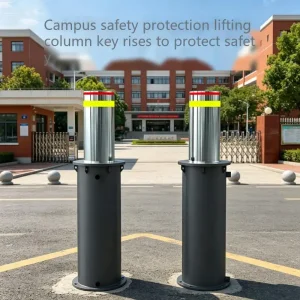
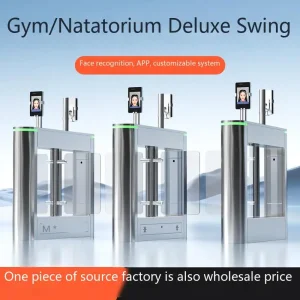
Physical chain link security fences and structural top rails deliver optimal site integrity when combined with automated vehicular barriers, rising bollards, and intelligent turnstiles at entry access control portals.
Chain Link Fence Top Rail: Engineering Trends & Next-Gen Perimeter Defense
The continuous top rail forms the structural backbone of commercial chain link enclosures, providing linear rigidity against wind deflection, mechanical impact, and intentional breaching attempts across industrial assets.
High-Strength Micro-Alloyed Steels
Traditional mild carbon steel (Q195/Q235) top rails are transitioning toward high-yield, cold-formed micro-alloy tubular profiles (ASTM F1043 Group IC and Group IV). These proprietary alloys reduce overall linear weight by up to 22% while boosting tensile and yield resistance beyond 50,000 psi (345 MPa), significantly cutting freight costs per container load.
- Yield strength exceeds ASTM standard baselines
- Optimized wall thicknesses minimize dead-weight deflection
- Extended spans between line posts without center sag
Duplex Zinc-Polymer Barrier Protection
To conquer corrosive ISO 12944 C4 and C5 environments, hot-dip galvanizing is engineered into multi-stage duplex coating architectures. Chemically cleaned substrate tubes receive an inline zinc bath (exceeding 2.0 oz/ft² or 610 g/m²), followed by conversion primers and thermally cured polyvinyl chloride (PVC) or architectural-grade polyester powder coatings.
- Zero micro-cracking during swaging and crimping
- Salt spray resistance certified over 3,000 hours (ASTM B117)
- UV-stabilized resins prevent color fade and embrittlement
Physical-Electronic Perimeter Integration
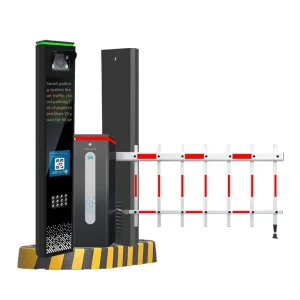
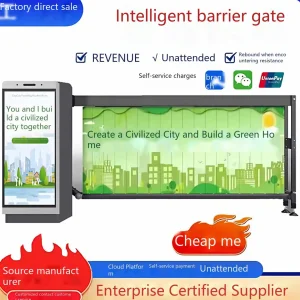
Modern fence lines are transformed from passive mechanical demarcations into responsive electronic security planes. Structural top rails now double as protective conduit pathways housing fiber-optic perimeter intrusion detection sensors (PIDS), coaxial cabling, and low-voltage power links for automated boundary swing and boom barrier gates.
- Shielded hollow conduit prevents signal tampering
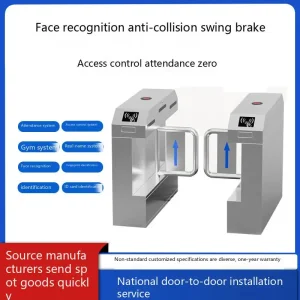
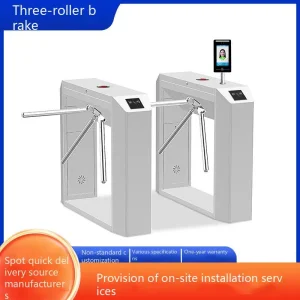
- Seamless integration with entrance bollards and speed turnstiles
- Continuous mechanical rigidity buffers vibration false alarms
Global project engineers must balance deflection resistance, corrosion rate, and automated gate tie-in demands. While ASTM F1083 Schedule 40 (nominal 1.660" OD or 1.900" OD, wall thickness 0.140" / 0.145") remains the gold standard for heavy government, correctional, and military perimeters, high-strength cold-formed ASTM F1043 Group IC steel rails (WT-40) deliver equivalent bending moment strength with superior zinc-alloy adhesion and reduced shipping tonnage.
Global Enterprise Sourcing Standards: Top Rail Technical Matrix
International EPC contractors, municipal transit operators, and security integrators demand strict adherence to dimensional tolerances, metallurgical yield thresholds, and connection geometry.
| Classification Standard | Nominal Outside Diameter (OD) | Wall Thickness (in / mm) | Minimum Yield Strength | Zinc Coating Specification | Primary Commercial Use Cases |
|---|---|---|---|---|---|
| ASTM F1083 Regular Schedule 40 | 1.660 in (42.2 mm) / 1.900 in (48.3 mm) | 0.140 in (3.56 mm) / 0.145 in (3.68 mm) | 30,000 psi (205 MPa) | Hot-Dip Galvanized ≥ 1.8 oz/ft² (550 g/m²) | Municipal transit yards, electrical substations, federal detention perimeters |
| ASTM F1043 Group IC (WT-40 High Strength) | 1.660 in (42.2 mm) / 1.900 in (48.3 mm) | 0.111 in (2.82 mm) / 0.120 in (3.05 mm) | 50,000 psi (345 MPa) | Type B Zinc ≥ 0.9 oz/ft² + Polymer Topcoat | Commercial distribution centers, intermodal logistics, renewable energy farms |
| ASTM F1043 Group II (Formed Steel C-Section) | 1.625 x 1.250 in (41.3 x 31.8 mm) | 0.105 in (2.67 mm) roll-formed open section | 45,000 psi (310 MPa) | Hot-Dip Galvanized ≥ 2.0 oz/ft² (610 g/m²) | Self-draining industrial perimeter lines, corrosive fertilizer facilities |
| BS EN 10255 Heavy / Medium Series | 42.4 mm (1-1/4 in) / 48.3 mm (1-1/2 in) | 3.20 mm – 4.00 mm seamless/welded | 235 – 275 N/mm² (S235JR / S275JR) | Hot-Dip Galvanized EN ISO 1461 ≥ 500 g/m² | European civil projects, railway corridor fencing, port security barriers |
| AS 1725 Commercial / Heavy Duty | 32 mm NB (42.4 mm) / 40 mm NB (48.3 mm) | 2.60 mm – 3.20 mm ERW Tube | 350 MPa (Grade 350 structural steel) | AS/NZS 4792 Class HDG300 or HDG600 | Australian mining compounds, council sports complexes, outback airfields |
Swaged End Joint Engineering
Precision hydraulic tapering reduces the rail tip diameter over a 2.5 to 3.0-inch lead length, enabling rigid slip-fit male-female couplings without external hardware. This joint maintains axial concentricity, eliminates assembly play, and speeds linear installation across rough terrain.
Plain End Sleeve Coupling
Used in heavy-duty or seismic expansion layouts, plain-end top rails are anchored inside 6-inch (152 mm) internal or external structural steel sleeves. This architecture allows thermal contraction and expansion across 1,000-meter continuous runs while preventing fence fabric sagging.
Loop Cap & Post Fitment
Cast aluminum or malleable ductile iron eye-caps seat securely atop intermediate line posts, permitting the continuous top rail to pass through smoothly without friction wear. Precision tolerances prevent moisture accumulation inside post columns, ensuring prolonged structural service life.
China Factory 4.0: Supply Chain Resilience & Fabrication Precision
Shenzhen and greater industrial manufacturing hubs provide high-speed automated pipe forming, continuous high-frequency induction welding, inline galvanizing, and integrated digital quality assurance.
Continuous HFIW Tube Rolling
Cold-rolled strip coils undergo progressive multi-station roller forming, followed by High-Frequency Induction Welding (HFIW) at 450 kHz. The welded seam is scarped inside and out to ensure a clean, burr-free surface with metallurgical integrity matching the parent strip.
Inline Flo-Coat Galvanizing
Immediately post-welding, tubes are cleaned in acid baths, flushed with flux, and immersed in molten 99.99% pure zinc baths. A continuous inline air knife regulates zinc coating thickness, immediately quenched with a corrosion-inhibiting chromate or polymer top-sealer.
Automated End Forming & CNC Punching
Tubes are fed into automated multi-axis rotary swagers that deliver uniform 2.5-inch taper swages at tolerances within ±0.25 mm. Consistent tapers eliminate friction binding on job sites, speeding field installation for fencing crews.
Digital QC & Laser Geometry Inspection
Non-destructive eddy-current flaw detection identifies micro-porosities across 100% of weld seams, while inline laser micrometers continuously verify outer roundness, wall thickness, and straightness to exceed ISO 9001 and ASTM inspection protocols.
Global Infrastructure Status: Commercial, Logistics & Security Deployments
Across international markets, surging infrastructure investments demand robust physical perimeter enclosures capable of withstanding local environmental stresses and high-throughput security protocols.
Mega Intermodal Freight Terminals
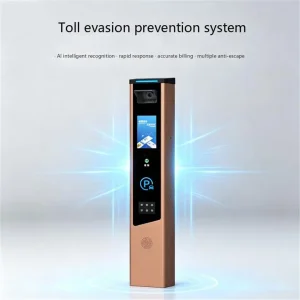
Distribution hubs in North America and Western Europe require high-security 8-foot to 12-foot chain link fences fitted with heavy-wall 1.900-inch Schedule 40 top rails. These perimeter structures support top-mounted razor ribbon coils and internal cabling for license plate recognition (LPR) lanes and automated vehicle inspection checkpoints.
- Resists heavy perimeter tractor-trailer dynamic wind vortices
- Anchors high-tension welded mesh bottom kick plates
- Eliminates fabric bowing when subjected to repeated impact
Hyperscale Cloud Data Centers
Mission-critical server campuses mandate dual-layer perimeter fencing. The outer barrier integrates crash-rated hydraulic rising bollards and automated boom gates, while the inner line utilizes black polyester powder-coated high-tensile top rails fitted with taut-wire intrusion sensors to detect climbing or cutting within seconds.
- Zero-glare powder finishes for optical CCTV tracking
- Seamless integration with anti-tailgating vehicle lanes
- Vibration damping properties prevent nuisance alarms
Utility & Photovoltaic Solar Parks
Enclosing utility-scale solar farms stretching across 500+ acres requires cost-efficient, durable structural rails. WT-40 galvanized pipes resist intense desert ultraviolet exposure, sudden sandstorm wind shear, and flash thermal swings ranging from -10°C to +55°C without warping.
- Corrosion resistance in high-alkaline desert soils
- Swaged ends cut mechanical assembly labor by over 30%
- Ground wire bonding capability for perimeter lightning protection
Localized Application Scenarios: Severe Climate & Site Challenges
Selecting fence top rail specifications requires careful analysis of local environmental hazards, chemical exposure, dynamic wind pressures, and physical security demands.
Coastal Marine Saline Environments (C5)
Port facilities, offshore storage bases, and coastal defense installations endure constant airborne salt spray and high relative humidity. Top rails require hot-dip galvanizing exceeding 610 g/m² followed by an electrostatically applied 10-mil PVC or fluoropolymer architectural coating. Sealed rail joints prevent internal capillary condensation and premature rust.
High-Velocity Hurricane Wind Corridors
In regions subject to Category 4 and 5 typhoons, windward chain link fabrics transmit tremendous lateral shear force into terminal and intermediate post frameworks. Specifying nominal 1.900" Schedule 40 top rails with 6-inch internal heavy steel sleeves creates a rigid continuous beam that prevents localized structural buckling and fence collapse.
Mining Sites & Heavy Chemical Processing
Open-pit copper, lithium, and coal mining infrastructure exposes fencing to acidic runoff, dust abrasives, and ground vibration. Heavy-gauge seamless steel pipes with metallurgically bonded zinc-aluminum-magnesium (ZAM) coatings provide superior self-healing edge corrosion resistance, even when scratched by operational equipment.
Substation & High-Voltage Enclosures
Under IEEE 1119 grounding standards, fence boundaries surrounding power utilities must safely manage touch-and-step voltage hazards during electrical faults. Continuous top rails are bonded with exothermically welded copper ground leads at 50-meter intervals, safely discharging induced currents to earth ground grids.
Chain Link Fence Top Rail & Integrated Security Systems FAQ
Clear answers to structural engineering, tender compliance, coating durability, and factory-direct procurement questions.
Schedule 40 top rails adhere to ASTM F1083 standards, using hot-dip galvanized mild carbon steel with a nominal wall thickness of 0.140 inches (1.660" OD) and minimum yield strength of 30,000 psi (205 MPa). WT-40 (ASTM F1043 Group IC) utilizes cold-formed micro-alloyed steel with a thinner 0.111-inch wall but a much higher yield strength of 50,000 psi (345 MPa). WT-40 delivers equivalent or superior bending resistance while reducing weight by roughly 20%, generating substantial ocean freight savings for overseas buyers.
Swaged-end top rails are ideal for high-speed linear fencing installations over flat or gently undulating terrain. The 2.5-inch tapered end seats directly into the adjoining pipe, eliminating the cost of separate external steel sleeves and reducing installation labor by 20% to 30%. Plain-end pipes joined with 6-inch external sleeves are preferred across extreme temperature fluctuation zones (to absorb thermal expansion), high-security penal perimeters, or when specified under ASTM F1083 municipal tenders.
Advanced factories utilize inline high-frequency induction welding paired with instantaneous external/internal scarfing knives that plane the weld bead smooth. Immediately downstream, inline thermal zinc atomization (metalizing) sprays a concentrated molten zinc-aluminum coating directly onto the heated weld zone. This ensures uniform galvanic protection that exceeds standard ASTM A90 strip tests, eliminating premature weld rust.
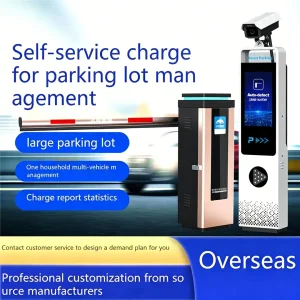
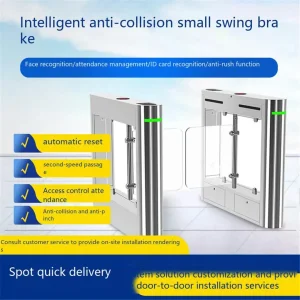
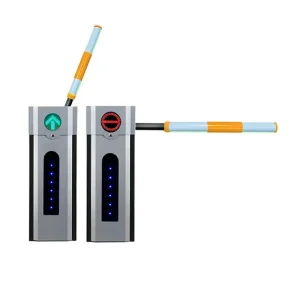
Physical perimeter fencing channels pedestrian and vehicular traffic toward controlled access points. At vehicular gates, the chain link framework terminates into reinforced terminal end posts wired to high-speed automatic boom barriers or crash-rated hydraulic rising bollards. Pedestrian traffic is routed through full-height or optical swing speed turnstiles. The top rail frequently serves as a protected conduit path carrying RS-485, TCP/IP, or fiber-optic links back to centralized access controllers.
Export top rails are standardly bundled in hexagonal packages of 37, 61, or 91 pieces, bound tightly with heavy-gauge steel strapping and fitted with protective nylon lifting slings. Threaded or swaged pipe ends are shielded with heavy-duty polyethylene push-on caps to prevent transit denting. Custom bundled lengths (typically 21 ft for North America or 6.0 m for European and Australian markets) maximize container weight and cube capacity in 40ft High Cube containers.
Access Automation & Smart Perimeter Portals
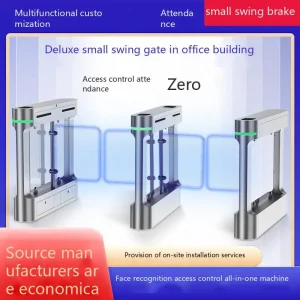
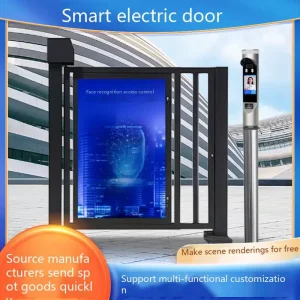
Explore our full line of commercial barrier gates, license plate recognition cameras, speed turnstiles, and unattended vehicle management systems engineered to complement perimeter chain link security fences.
Request a Customized Chain Link Fence Top Rail & Perimeter Hardware Quotation
Submit your project requirements, pipe diameters, wall thickness schedules, ASTM standard criteria, and total linear footage. Our engineering sales team delivers comprehensive container loading calculations, mill test certifications, and CIF/FOB pricing within 24 hours.