Standard Precision Barrier & Lane Entry Hardware
Explore high-duty automatic barriers, optical turnstiles, and license plate recognition terminals configured for rapid procurement, system integration, and global dispatch.

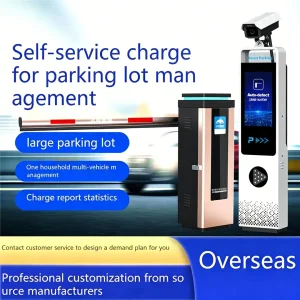
Macro Dynamics of Industrial Barricade Architecture
In modern civil engineering, perimeter access control has evolved from passive mechanical road stops into networked edge-computing ecosystems. Today's automatic barricade systems must satisfy high duty cycles, extreme environmental tolerances, and deterministic access logic.
High Mean Cycles Between Failure
Traditional AC asynchronous motors are rapidly being superseded by brushless DC (BLDC) and permanent magnet synchronous motor (PMSM) drive units. By removing high-friction carbon brushes and integrating multi-stage planetary gearing, modern barrier units routinely surpass 5 million continuous cycles without thermal throttling or fluid replenishment.
Passive & Active Kinetic Attenuation
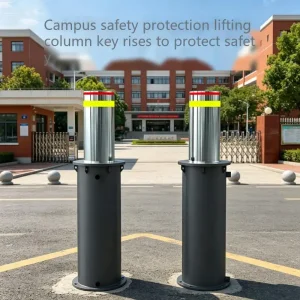
Global specifications dictate higher physical resistance classes. From commercial parking booms engineered with anti-collision breakaway shear pins to heavy hydraulic rising bollards tested under ASTM F2656/M30/K4 criteria, current access infrastructure requires certified dynamic impact mitigation to protect high-density facilities against unauthorized vehicular breaches.
Cloud-Edge Native Orchestration
Single-lane standalone controllers are obsolete. Modern enterprise hardware links directly to MQTT, REST, and ONVIF microservices, facilitating synchronized operation where vehicle capture cameras, optical speed gates, and smart hydraulic bollards share a low-latency bus to guarantee unencumbered transit and auditable audit trails.
The Evolution toward Autonomous Gated Operations
A rigorous examination of shifting engineering priorities within physical perimeter control, high-efficiency revenue mechanics, and edge artificial intelligence.
Edge-AI Multi-Exposure ANPR
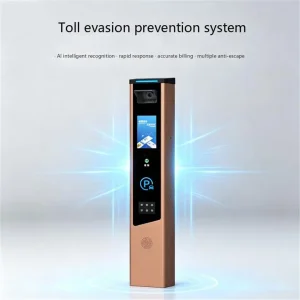
Integrated neural processors embedded into barrier stanchions achieve 99.8% capture efficiency across extreme lighting conditions, headlight glare, and high-velocity approaches without relying on external IPC triggers.
Omnichannel Fiscal Integration
Eliminating roadside payment booths. Modern intelligent barricades utilize cloud-native dynamic QR screens and long-range DSRC RFID transponders that clear payment in under 600 milliseconds, optimizing site egress throughput.
Predictive Telemetry (PdM)
Built-in torque curves, current surge analysis, and spring oscillation monitors allow central management consoles to predict mechanical fatigue, belt slippage, or hydraulic pressure losses well before operational outages occur.
Modular Lane Multiplexing
Unifying pedestrian speed gates, hydraulic rising bollards, and vehicular louver barriers into a solitary system bus, simplifying civil trenching, reducing field wiring, and ensuring coherent interlocking behaviors.
System Integrator Note: Deploying open API, multi-frequency barrier equipment shortens commissioning timelines by up to 60%. Shenzhen Anrui guarantees complete backward compatibility across RS485, Wiegand, TCP/IP, and dry contact input arrays to interface seamlessly with third-party software.
Macro Industry Solutions & Deployment Blueprints
Engineering topologies configured for distinctive operational demands, climate extremes, and security baselines around the world.
| Deployment Sector | Core System Selection | Physical & Digital Interfaces | Primary Technical Objective |
|---|---|---|---|
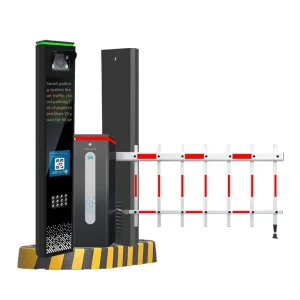
| Commercial Malls & Retail Plazas | Advertising Louver Gate (AR-GGD04) + High-Def LPR | Dynamic LEDQR EngineTCP/IP | Secondary advertisement revenue alongside 0.8s automated barrier traversal for customer retention. |
| Governmental & Embassy Enclaves | Automatic Hydraulic Rising Bollards + Interlocking Boom | ASTM Crash RatedPLC ControlUnder-Vehicle Scan | Zero-compromise perimeter deterrence capable of arresting high-speed heavy commercial truck assaults. |
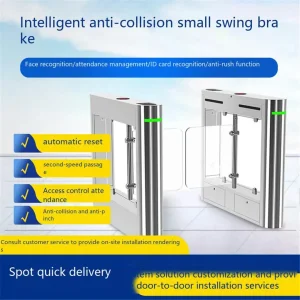
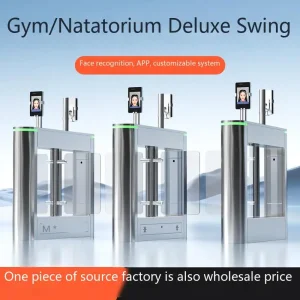
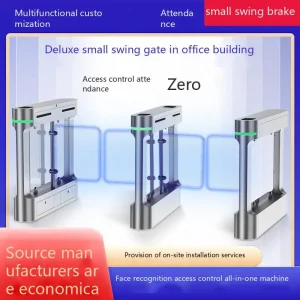
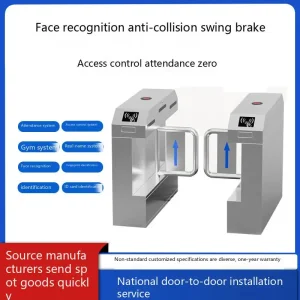
| Enterprise Headquarters & Campuses | Optical Swing Speed Gates + D11S Vehicle Boom | Facial RecognitionNFC / RFIDFire Alarm Link | Unified identity access synchronizing employee vehicle license plates with interior lobby turnstiles. |
| Logistics Hubs & Industrial Parks | DC Articulated Heavy Boom + Radar Vehicle Detectors | Anti-Smash Millimeter RadarUHF Long-Range | Continuous 100% duty cycle movement handling heavy articulators, flatbeds, and wide specialized transport. |
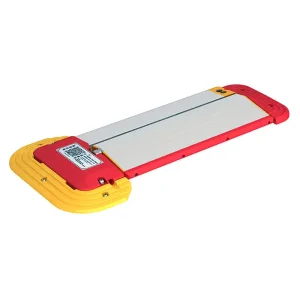
| Automated Parking Shared Bays | Smart Connected Parking Locks + BLE Beacon Array | Solar AutonomousNB-IoT / ZigbeeApp API | Protection of VIP stalls and dynamic reservation booking preventing unauthorized IC engine space blocking. |
Technical Specification & Cost Estimation Framework
Evaluating total cost of ownership (TCO) across physical components, drive trains, and environmental hardening prior to RFP issuance.
Motor Core & Gearbox Topology
Selecting brushless DC mechanisms provides infinite speed profiling, dynamic electronic deceleration, and eliminates micro-switch mechanical burnouts. Brushless DC configurations drastically lower preventive maintenance schedules on remote toll booths and municipal infrastructure.
Corrosion & Ingress Defense (IP Rating)
For installations in tropical, coastal, or high-humidity regions (such as references in the Philippines, Qatar, and Southeast Asia), stanchions require IP54 to IP67 sealing with automotive-grade electrophoretic zinc coating, cold-rolled sheet steel, and fluorocarbon exterior finishes.
Fail-Safe vs. Fail-Secure Redundancy
Life-safety compliance demands deterministic behavior during power outages. Our barricades incorporate auto-release mechanical clutches and integrated high-density lithium back-up units that immediately raise vehicle arms upon main power drops to allow uninhibited egress.
Frequently Asked Questions for Project Engineers & Contractors
Addressing core mechanical, electrical, and systemic variables encountered throughout the RFP, shipment, and deployment lifecycles.
What primary parameters dictate an accurate automatic barrier quotation?
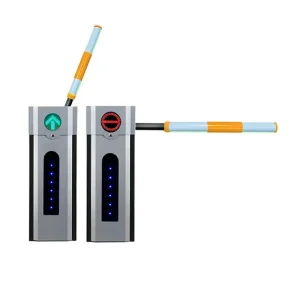
Accurate commercial estimates depend on boom length and structural geometry (straight, articulated, or fence/louver), transit velocity requirements (from 0.6s for high-speed highways to 3-6s for wide industrial booms), housing metal alloy thickness, environmental package needs (anti-freeze heating or sea-spray galvanization), and the integrated access peripherals (LPR cameras, loop coils, or radar safety sensors).
How do millimeter-wave radars compare against inductive ground loops?
Millimeter-wave radar detectors (operating at 77GHz-79GHz) eliminate the costly civil requirement of saw-cutting asphalt for loop installation. Radar units install flush on the barrier chassis, differentiate cleanly between human pedestrians and motorized vehicles, and avoid failure caused by water ingress, asphalt expansion, or structural shifts.
Can Shenzhen Anrui hardware integrate with third-party software platforms?
Yes. Our equipment provides complete architectural transparency via open SDKs, RESTful endpoints, and standard hardware buses including RS485 and Wiegand 26/34. Field integrators can directly access raw license plate data, barrier telemetry, error states, and remote gate actuation signals from their proprietary software platforms.
What ensures barrier stability under severe meteorological conditions?
Wind drag represents the primary mechanical failure catalyst in long-boom systems. We utilize aerodynamically sculpted elliptic and octagonal aluminum extrusions, along with carbon-fiber reinforced options for extreme spans. For open advertising louvers, self-releasing wind louvers automatically relieve face pressure during strong gale bursts.
How does the brushless DC drive maintain position without microswitches?
Our brushless DC and PMSM architectures incorporate magnetic Hall-effect angle encoders directly on the rotor axis. This provides 360-degree closed-loop position monitoring with sub-millimeter precision, eliminating the mechanical contact wear, bounce, and calibration drifts common to conventional microswitches.
What warranties and technical support SLAs are provided internationally?
We provide standard multi-year structural and electrical replacement warranties backed by comprehensive lifetime factory technical support. Our dedicated engineering desk operates 24/7/365 to deliver circuit analysis, firmware updates, and schematic reviews for deployed sites across Europe, the Americas, the Middle East, and Asia.
Industrial Access Control & Space Protection Line
Review additional field-tested access control solutions, hydraulic rising bollards, and intelligent space-locking mechanisms available for project specification.