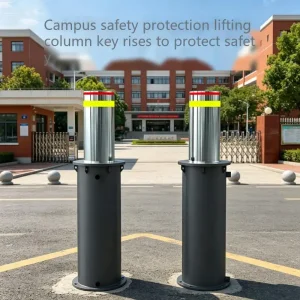
Engineered Vehicular Access & Barrier Automation Portfolios
Factory-direct smart access hardware precision-fabricated at our ISO 9001 certified manufacturing plant. Explore our foundational barrier systems, sloped speed gates, and perimeter security terminals.
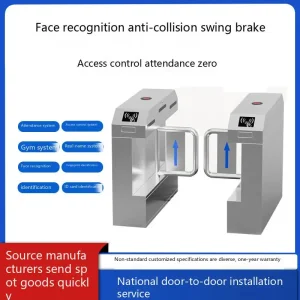
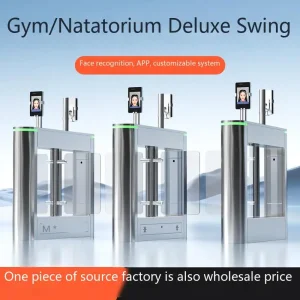
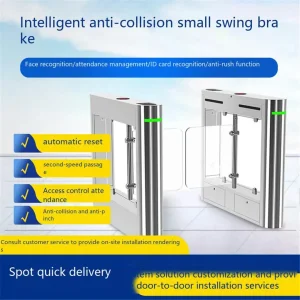
The Paradigm Shift: From Passive Lane Separation to Monetized DOOH Assets
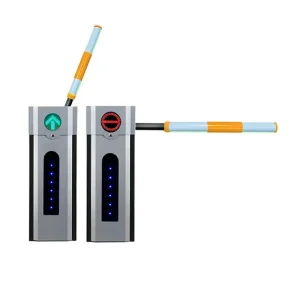
Modern facility infrastructure demands a convergence between rigorous security engineering and operational revenue generation. Advertising barrier gate arm systems represent an evolution where automated lane containment acts simultaneously as a high-dwell-time marketing medium.
Guaranteed Impressive Dwell Time
Unlike roadside billboards with split-second glance rates, vehicular barrier arms enforce an average visual contact duration of 8 to 22 seconds per transiting vehicle. During license plate recognition (LPR) capture, ticket vending, or barrier actuation, the driver’s cone of vision is precisely aligned with the illuminated barrier arm display surface.
- Frontal eye-level visual orientation (1.1m to 1.4m grade height)
- High-density message retention across residential and commercial lanes
- Captive commuter audience targeting during mandatory stopping points
Aerodynamic Louver Engineering
Standard flat advertising signs encounter severe aerodynamic resistance, resulting in motor burnout or structural shearing in wind-exposed corridors. Anrui's engineered louver mechanisms dynamically rotate or decouple during lifting phases to minimize air resistance while maintaining static rigidity when deployed horizontally.
- Aviation-grade 6063-T6 aluminum extrusion louvers
- Hydrodynamic wind-spill profiles rated up to Beaufort Scale 10
- Dynamic balance spring counterbalance mitigating gearbox stress
Rapid CapEx Amortization
Traditional barrier arms remain a pure cost center subject to vehicle strikes, fatigue wear, and periodic replacement. Incorporating standardized backlit LED banners or smart programmatic DOOH panels transforms each gate lane into an income generator yielding monthly recurring ad revenue.
- Break-even ROI achieved within 3 to 7 months of continuous deployment
- Dual-sponsor capability with independent street and egress-facing displays
- Local commercial merchant advertising partnerships integration
Enterprise Procurement Matrix: TCO & Mechatronic Standards
Global access system integrators, EPC general contractors, and municipal authorities evaluate advertising barrier systems across strict mechanical duty cycles, environmental survivability, and digital interconnectivity benchmarks.
Drive Dynamics: BLDC Servo vs. AC Induction
Legacy barrier arms utilize AC induction motors coupled with high-wear worm gear reducers. This configuration generates significant thermal overhead during high-density rush hour throughput, leading to duty-cycle shutdown. Industrial advertising barriers necessitate Brushless DC (BLDC) 24V/36V servo motors.
BLDC systems eliminate brush wear, offer continuous 100% duty cycles without thermal throttling, and enable fine-grained digital torque curve profiling. Digital position encoders ensure that the heavy inertia of advertising banners is decelerated with zero mechanical rebound or gear chattering.
Structural Metallurgy & Cabinet Enclosure
Because advertising barriers support wider surface panels (spanning 3.5m to 4.5m), chassis twisting moments are 300% higher than conventional round-arm gates. The cabinet must be cold-rolled pickled carbon steel (minimum 2.0mm thickness) or structural SUS304.
Surface finishing requires multi-stage automotive electrocoating followed by outdoor-rated polyester powder coat baking. This ensures Salt Spray resistance exceeding 1,000 hours (ASTM B117), essential for humid tropical installations or high-salinity coastal ports.
Multi-Tier Safety & Anti-Crush Redundancy
The physical mass of an advertising panel arm mandates failsafe anti-impact protocols. High-reliability installations implement a triple-redundant collision avoidance framework:
- 79GHz Millimeter-Wave Radar: Ignores environmental rain or dust, accurately detecting pedestrians and approaching vehicles.
- Digital Current Loop Rebound: The BLDC servo controller senses sub-millisecond current spikes upon physical resistance, instantly triggering arm reversal.
- Pneumatic / Optical Bumper Strips: Physical rubber edge housing pressure switches or optical beams providing physical touch disconnect.
| Engineering Parameter | Commercial Grade Spec | Anrui Industrial OEM Benchmark | Procurement Advantage |
|---|---|---|---|
| Motor Technology | Single-Phase AC Induction | Brushless DC (BLDC) Vector Servo | Zero brush replacement; 60% lower power draw; 100% continuous duty |
| Enclosure Protection | IP54 Standard Sheet Metal | IP65 Rated / 2.0mm Cold-Rolled Carbon Steel | Impervious to driven monsoon rains, dust accumulation, and chassis flex |
| Arm Span Coverage | 2.5m - 3.2m Rigid Signage | 3.5m - 4.8m Aerodynamic Articulated Louvers | Accommodates wide dual-lane entries and logistics oversized transit bays |
| Display System | Static Backlit Fluorescent Tubes | Waterproof Edge-Lit LED or P3 Outdoor DOOH | Uniform luminous intensity (>1,200 nits); automatic timer & light-sensor dimming |
| Safety Response Time | 150ms Relay Reaction | < 12ms Digital Current Loop + Radar Link | Eliminates vehicle hood denting and pedestrian impact liabilities completely |
Macro-Industry Solutions: Architectural Access Frameworks
Tailored engineering configurations designed for municipal smart city hubs, retail commercial super-plazas, high-density residential developments, and international logistics hubs.
1. High-Density Residential Super-Blocks
Modern gated communities and township developments require continuous, low-noise access control for thousands of daily resident vehicles. The advertising arm serves dual functions: displaying hyper-local municipal notifications or generating HOA funding through community-sponsored retail promotions.
Integrated with long-range 915MHz RFID windshield readers or AI-powered ANPR cameras, the system executes non-stop drive-through authorization with whisper-quiet BLDC motor acoustics (< 52dB at 1 meter).
2. Commercial Retail & Shopping Centers
Plaza and mall car parks experience extreme traffic surges during peak evening and weekend retail windows. Here, advertising barrier arms serve as high-value programmatic media assets, highlighting in-store flash sales, entertainment offerings, and partner branding.
Seamlessly linked to unattended automated pay stations and multi-currency mobile QR payment platforms, the barrier integrates real-time billing validation with uninterrupted vehicle flow rates exceeding 650 vehicles per hour per lane.
3. Smart City Interchanges & EV Hubs
Public-private transportation hubs, park-and-ride facilities, and EV mega-charging plazas require connected infrastructure. The barrier gate operates on standard Modbus-RTU, TCP/IP, and MQTT protocols, feeding occupancy and dwell telemetry back to central traffic management servers.
The dynamic display surfaces guide drivers regarding charger availability, municipal clean-air advisories, or dynamic toll rates, reinforcing the barrier's role as a digital edge node.
Mechatronic Architecture: Unified Edge-to-Cloud Integration
The modern Anrui advertising barrier gate operates via an integrated edge-controller topology. Sensor telemetry, motor current draw, display status, and vehicular transaction logs are processed locally with sub-second latency, while macro telemetry synchronizes via RESTful APIs to client cloud platforms.
Technical Roadmap: Aerodynamic Physics & Mechanical Counterbalance
Overcoming the structural limitations of wind drag, mechanical fatigue, and thermal stress through precision mechanical engineering and proprietary vector algorithm firmware.
Louver Aerodynamics & Wind Shedding
When a standard solid advertising barrier arm of 4 meters experiences a 60 km/h crosswind, it generates a lateral bending force exceeding 1,200 Newtons at the drive shaft. This quickly deforms output shafts and fractures reduction gears.
Anrui utilizes an articulated louver shutter structure. As the arm lifts, the individual aluminum louvers pivot smoothly via mechanical linkages, dumping wind pressure instantly. In horizontal resting mode, the louvers lock in place, forming a solid high-contrast advertising billboard.
Dual-Spring Dynamic Counterbalance
Unlike bare tubular booms weighing under 5 kg, an advertising barrier assembly—incorporating louver linkages, lightboxes, and ballast weights—can weigh between 18 kg and 35 kg. Lifting this mass without counterbalance destroys motor windings within weeks.
Our factories employ dual silicon-chromium alloy (60Si2Mn) spring configurations calibrated via finite element analysis (FEA). The spring torque curve precisely mirrors the sinusoidal gravitational torque curve of the rotating arm, ensuring the motor operates under virtually zero static load across the entire 0° to 90° arc.
Thermal Dissipation & Extreme Environments
Outdoor road barrier cabinets installed across Middle Eastern desert regions face ambient temperatures reaching +50°C, with internal cabinet solar loading exceeding +75°C. Conversely, Northern European and Canadian winter deployments require operation at -40°C.
Anrui systems integrate active thermostat-controlled ventilation fans alongside ceramic PTC low-temperature heating resistors. Critical electronic components are conformal coated (UL 94V-0 compliant) to protect against condensation, mold, and salt fog ingress.
Global Regulatory Compliance & Regional Operational Protocols
Exporting access automation hardware requires complete adherence to international electrical safety, electromagnetic compatibility, and machine health directives.
European Union: CE, Machinery & Low Voltage Directives
Full compliance with CE Machinery Directive 2006/42/EC, EN 12453 (Safety in use of power operated doors and gates), and EN 12445. Low Voltage Directive (LVD) 2014/35/EU and EMC Directive 2014/30/EU certifications guarantee zero interference with emergency vehicle transponders or local telecommunications.
North America: UL 325 & FCC Class B Compliance
Engineered to conform with UL 325 standard requirements for vehicular access control systems. Provisions include secondary entrapment protection sensor inputs, manual declutch handles for emergency power loss egress, and FCC Part 15 Class B compliance for industrial and light commercial installations.
Middle East (SASO) & Tropical Weatherproofing
Certified for GCC SASO standards requiring uncompromised operation in high-heat sandstorm environments. Incorporates multi-lip silicone dust gaskets, double-insulated electrical conduit channels, and high-temp grease formulations preventing lubricant thinning up to +85°C.
Frequently Asked Engineering & Procurement Inquiries
Exhaustive answers to architectural, electrical, and maintenance questions raised by project developers, access system integrators, and international distributors.
What is the structural difference between an advertising barrier gate arm and a standard boom barrier?
A standard boom barrier utilizes an unencumbered round, octagonal, or elliptical aluminum tube with minimal wind resistance and low total mass (typically 3–6 kg). An advertising barrier arm supports a suspended surface area—either an array of interlocking dynamic louvers or an acrylic/polycarbonate backlight frame—weighing between 15 kg and 35 kg. Consequently, an advertising barrier requires a substantially heavier chassis (2.0mm+ cold-rolled steel), a high-torque Brushless DC (BLDC) planetary drive, and dynamic multi-spring counterbalances to handle high moments of inertia and wind shear loads safely.
How does the system ensure safety during vehicle or pedestrian passage?
Anrui systems integrate a multi-level anti-crush architecture: First, non-contact 79GHz high-frequency radar sensors continuously scan the descent plane, detecting both metallic vehicle bodies and pedestrians regardless of rain, snow, or direct sunlight. Second, standard inductive ground loops under the asphalt hold the gate open while a vehicle is present. Third, an internal digital servo vector controller monitors drive current hundreds of times per second—if an obstruction causes a micro-spike in torque, the arm instantly stops and reverses upward within 12 milliseconds. Fourth, a soft rubber lower contact cushion prevents aesthetic marring of vehicle hoods.
How is advertising media updated and illuminated on the barrier boom?
Depending on model selection, two media platforms are available: (1) Static Backlit Louvers: Graphics are printed on industrial UV-resistant outdoor film inserted into quick-release weather-sealed acrylic pockets. Illumination is provided by low-voltage 24V SMD edge-lit LED strips with an automated twilight sensor or timed scheduler. (2) Dynamic Digital Outdoor LED Panels: Ultra-bright P2.5 or P3 waterproof SMD displays allow operators to push programmatic video, animations, and real-time updates wirelessly via 4G/5G IoT modules, Ethernet, or local Wi-Fi content management platforms.
Can Anrui barrier gates integrate with third-party parking software and LPR systems?
Yes. Our main control boards feature dry contact relay inputs, Wiegand 26/34 interfaces, RS485 (Modbus-RTU), and optional TCP/IP network interfaces. Third-party License Plate Recognition (LPR) cameras, RFID badge readers, ticket dispensers, and cloud billing systems can trigger open, close, and emergency lock commands directly. Comprehensive API and SDK documentation is provided for software developers to ingest real-time gate status telemetry and fault diagnostic codes.
What happens during an unexpected municipal power outage?
In the event of total utility power failure, Anrui gates can be operated through three separate mechanisms: First, an ergonomic manual declutch key directly unlocks the planetary gearbox, allowing personnel to raise the counterbalance arm with minimal effort (under 2 kg of manual force). Second, optional uninterruptible power supply (UPS) or 24V battery backup modules automatically raise the arm upon loss of mains power, complying with municipal fire emergency egress codes. Third, auto-rebound and manual release linkages ensure life safety compliance without requiring specialized tools.
What is the expected operating lifespan and routine maintenance schedule?
Thanks to the brushless DC drive design, there are no motor carbon brushes to wear out. The system features a Mean Cycles Between Failures (MCBF) exceeding 5,000,000 operations. Recommended maintenance is minimal: Inspect spring tension calibration once every 12 months (or every 500,000 cycles), verify linkage joint tightness, and clean display lens faces as needed based on local particulate conditions. Modular Field-Replaceable Units (FRU) enable technicians to swap control boards or power supplies in less than 15 minutes.
Integrated Smart Parking & Access Control Ecosystem
Combine our advertising barrier gates with precision license plate recognition (LPR), automatic parking locks, rising bollards, and high-frequency commercial boom gates for unified facility management.