
Direct Factory Hardware
Integrated Cloud-Ready Access Gate Series (Line A)
Industrial speed gates, automated pedestrian barriers, and intelligent recognition hubs manufactured for zero-maintenance duty cycles.
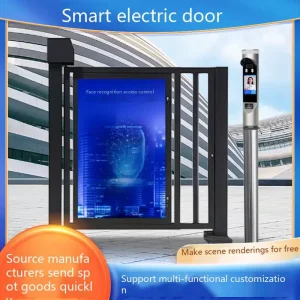
OEM Intelligent pedestrian advertising gate Factories, Price
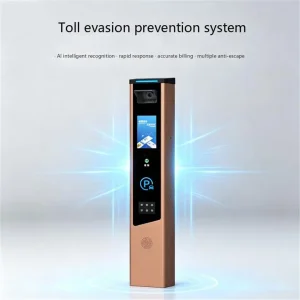
Durable High definition license plate recognition integrated - AnRuitong II Exporters, In Sales
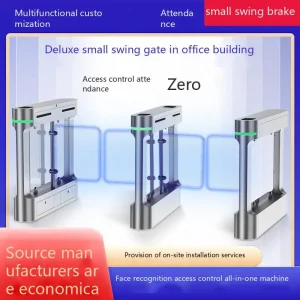
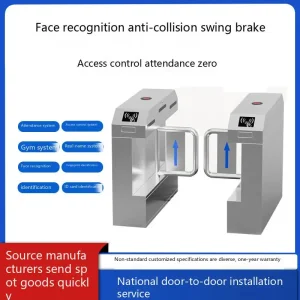
Durable Swing Gate Image Reference Manufacturer, Pricelist
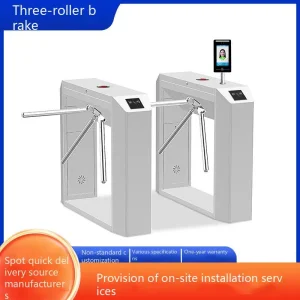
Cheap Factoryoem/ODM Durable Smart Fast Speed Swing Automatic Used Industrial Gym Turnstile Gate Manufacturer, Factory
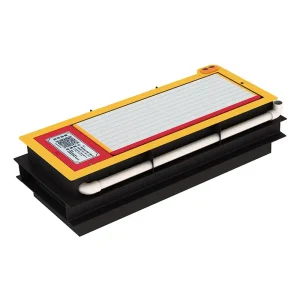
China City Parking Product Manufacturer, Price
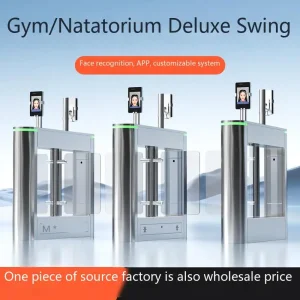
Durable Office Building Entrance Attendance Security Access Control Turnstiles Gate Swing Barrier Speed Gate Manufacturers, Supplier
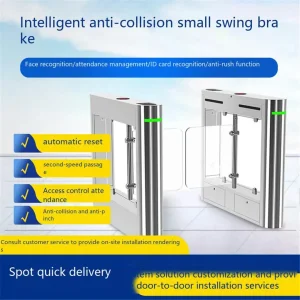
China Swing Gate Supplier, Quotation
Industry Macro Transformation
The Paradigm Shift: From Fragile On-Premises Panels to Cloud-Native ACaaS
How modular engineering and edge-to-cloud abstraction solve the multi-billion-dollar maintenance crisis in perimeter defense and perimeter access automation.
Elimination of The "Truck Roll" Tax
Traditional access control installations bleed capital through unplanned field dispatches. On-premise serial controllers require physical technician intervention for simple firmware updates, database rebuilds, and diagnostic checks. Native cloud architectures re-engineer edge controllers with hot-swappable sub-boards and continuous self-diagnostic telemetry.
- Remote serial port redirection & software loopback tests
- Zero-touch provisioning (ZTP) via deterministic QR discovery
- Granular MTBF extension via cold-swappable relays
Edge Autonomy Meets Central Fabric
A fatal misconception of early cloud systems was direct dependency on open WAN links. Industrial-grade facilities demand that if an underwater fiber optic cable severs or local ISP circuits drop, every barrier gate, high-speed turnstile, and rising bollard must continue processing high-throughput badge events within 12 milliseconds.
- Edge SQLite credential replication for 500,000+ local badges
- Asynchronous sync queues caching offline transactional history
- Dual microcontrollers separating network telemetry from motor drives
Unified Pedestrian & Vehicular Plane
Siloed physical security systems traditionally deployed disparate hardware platforms for parking gates (LPR/RFID) and interior pedestrian speed lanes. Modern Cloud Access Architecture consolidates motor protocols, access logic, and billing APIs into a unified microservices layer, slashing inventory complexity and technician training costs.
- Common hardware bus standard (OSDP v2.2 over RS-485)
- Cohesive unified dashboard across 80+ international sites
- Native integration with global smart city payment gateways
Factory Architectural Directive: Our intelligent manufacturing line in Guangming, Shenzhen operates under a rigid design philosophy: zero hardware point-of-failure should require more than 15 minutes of site downtime (MTTR < 15 min). All mainboards utilize plug-and-play DIN-rail mountings, tool-less push-in spring terminals, and dual-bank flash memory to guarantee automated rollback upon connection dropouts during Over-The-Air (OTA) firmware deployments.
Engineering Deep-Dive
Engineered for Zero Maintenance: Inside the Hardware & Cloud Stack
How brushless DC drives, edge-cloud synchronization, and isolated hardware design eliminate operational overhead across enterprise installations.
True easy-maintainability is not an afterthought implemented via software dashboards; it is baked into the thermodynamic layout, mechanical tolerances, and micro-electronic design of the physical barrier gate cabinets and speed lane turnstiles. From industrial high-temperature operational thresholds to lightning-surge suppression circuits, every component is manufactured to survive continuous 24/7 duty cycles with zero grease degradation or mechanical lash.
Dual-Core Edge Controller Micro-Architecture
Our edge controllers deploy an asymmetric dual-core computing model. Core A runs a dedicated real-time operating system (RTOS) focused entirely on time-critical motor braking, optical sensor matrices, and anti-pinch safety loops. Core B runs an embedded hardened Linux environment managing encrypted TLS 1.3 WebSocket streams to the AWS/Azure cloud cluster.
This strict physical isolation guarantees that even in the event of an intensive cloud synchronization process or network jitter, the barrier's mechanical safety loop will never miss a millisecond-level obstruction event.
Brushless DC (BLDC) & Planetary Reduction
Traditional AC induction motors rely on carbon brushes, mechanical limit micro-switches, and oil-filled gearboxes that degrade, leak, and slip over 2,000,000 cycles. Our equipment incorporates custom permanent-magnet synchronous brushless DC (BLDC) motors paired with ultra-precise planetary reducers.
Coupled with 14-bit absolute magnetic rotary encoders, the system tracks boom and glass wing positions down to 0.05 degrees, completely eliminating the need for periodic physical limit switch adjustments or belt re-tensioning.
Automated Self-Diagnostics & Health Telemetry
Every barrier gate, LPR camera station, and turnstile continuously monitors internal metrics including motor winding temperatures, voltage fluctuations, torque curve deviations, optical beam attenuation (due to ambient dirt buildup), and cycle vibration signatures.
If an optical infrared receiver notes a 30% reduction in light throughput from dust, the cloud platform triggers a preventive maintenance ticket to clean the lens before a nuisance lane closure can manifest.
Engineering Evaluation
Technical Specification & Maintenance Benchmark
Comprehensive architectural comparison between traditional legacy access panels and modern easy-maintainable cloud-native platforms.
| Architecture Feature | Legacy On-Premises Systems | Anrui Cloud-Native Factory Standard | Maintenance Impact & Operational ROI |
|---|---|---|---|
| Wiring Topology | Wiegand point-to-point (6-8 homerun conductors per reader) | OSDP v2.2 over RS-485 + Native PoE+ Edge Ethernet | 70% Cable Cost Reduction |
| Mean Time to Repair (MTTR) | 4 to 8 Hours (Physical technician field diagnostic) | < 15 Minutes (Modular DIN-rail swap + automated profile fetch) | 94% Downtime Elimination |
| Firmware & Patching | Manual serial flashing; rarely updated; security risk | Zero-Touch Cloud OTA with dual-bank automatic rollback | Continuous Zero-Day Immunity |
| Offline Survivability | Basic fallback; limited memory buffers (5k-10k events) | Edge SQLite store for 500k credentials & 100k local audit logs | Zero Disruption During ISP Loss |
| Motor & Drive Lifespan | AC Induction + Worm Gears (2M to 3M cycles before overhaul) | Brushless DC (BLDC) + Planetary Drive (10M+ MCBF rating) | 300% Extended Service Life |
| Multi-Site Scalability | Fragmented VPN tunnels; complex port forwarding; fragile sync | Multi-tenant Cloud Gateway, MQTT over TLS 1.3, Global Rest APIs | Centralized Single-Pane Ops |
Worldwide Deployment
Global Commercial Footprint & Industrial Realities
Delivering high-reliability access engineering across varied geographical, climatic, and network environments.
Middle East & Desert GCC Deployments
Deployments across Qatar, UAE, and Saudi Arabia demand resistance to extreme ambient temperatures (up to 55°C) and penetrating micro-particulate dust storms. Our outdoor cabinets utilize IP66 dual-skin stainless steel enclosures, internal thermodynamic convection channels, and military-grade optical sensors designed to ignore airborne sand refraction.
European High-Latitude & Coastal Sites
From Poland to the North Sea ports, installations face sub-zero freezes, road salt de-icing corrosion, and intense humidity. Our barrier gates feature built-in smart silicone thermostatic heaters and marine-grade electrophoretic zinc primer coatings under automotive-grade fluorocarbon powder coats, eliminating rust-induced maintenance callouts.
High-Moisture Southeast Asian Hubs
In regions like the Philippines and Timor-Leste, heavy monsoons and high electrical grid instability cause widespread electronic failure in legacy boards. Our mainboards integrate multi-stage isolation transformers, high-joule metal oxide varistor (MOV) lightning arrestors, and conformal coating across all printed circuit boards.
Enterprise Trust & Governance
Cyber-Physical Compliance & Rigorous Data Protection
Addressing international cybersecurity statutes, privacy directives, and physical security engineering standards.
GDPR / CCPA Biometric Privacy
For facial recognition and automated license plate recognition (ALPR) edge terminals, images are tokenized at the edge sensor. No unencrypted raw facial images are transmitted; irreversible biometric feature vectors ensure total alignment with strict European data privacy statutes.
OSDP v2.2 Secure Channel
Completely retiring obsolete Wiegand connections that are susceptible to replay and sniffing attacks. All perimeter card readers, turnstile validators, and biometric readers communicate with controllers via AES-128 encrypted OSDP v2.2 protocols with constant tamper-detection heartbeats.
SOC 2 Type II & ISO 27001
Our centralized management platform operates within SOC 2 Type II certified cloud infrastructure. Role-Based Access Control (RBAC), multi-factor authentication (MFA), and immutable audit logs ensure internal IT compliance for multinational banking, healthcare, and high-tech corporate clients.
UL 294 & CE Machinery Directive
Hardware conforms strictly to UL 294 access control electrical and fire-release requirements, alongside the CE Machinery Directive (2006/42/EC). Built-in fire alarm inputs immediately release turnstile barriers and lift vehicle arms during emergency power cutoffs.
Application Engineering
High-Throughput Localized Deployment Scenarios
Tailored configurations delivering seamless access control integration across specialized physical environments.
Commercial Grade-A Towers & Multi-Tenant Estates
High-density metropolitan office towers require swift pedestrian throughput during peak morning arrival windows. Our speed gate turnstiles integrate with cloud tenant databases, issuing temporary dynamic QR code credentials to visitors' mobile wallets while employees pass seamlessly using encrypted NFC badges or high-speed face recognition without queuing.
Intermodal Logistics Hubs & Industrial Freight Depots
Logistics facilities face heavy continuous heavy-goods vehicle (HGV) traffic alongside pedestrian dock workers. Our integrated system combines long-range RFID readers, heavy-duty boom barriers with articulated fold mechanisms for low ceilings, and high-definition license plate recognition (LPR) cameras operating synchronously to verify freight manifests and unlock gates automatically.
Unattended Smart Municipal & Hospital Parking
Commercial parking lots must eliminate friction, reduce cashier staffing, and streamline vehicle turnover. Integrating smart parking locks, Dolphin I / AnRuitong II LPR engines, and automatic boom barriers, vehicles enter ticketless and pay via localized QR scan-to-pay rails supporting over 100 countries' payment gateways.
Innovation Trajectory
Technology Roadmap: The Next Frontier of Physical Access
Anticipating the convergence of Decentralized Identity (DID), AI vision safety, and Matter-enabled smart building standards.
Decentralized Identity (DID) & W3C Verifiable Credentials
Moving beyond proprietary cloud mobile credentials toward open, user-sovereign digital wallets. Our upcoming firmware release integrates zero-knowledge proof verification at the edge reader, allowing visitors to authenticate their identity or security clearances without storing personal identifying data on corporate servers.
Edge AI Neural Tailgating Prevention
Replacing traditional low-resolution infrared beam grids with overhead Time-of-Flight (ToF) 3D vision micro-sensors. Embedded neural networks run on the barrier's edge compute unit to distinguish between a single person carrying a suitcase versus two individuals attempting to tailgate through a single authorization event.
Converged Matter & Thread Building Fabrics
Eliminating the walled-off nature of security systems. We are standardizing gateway controllers on the Matter protocol, allowing physical access events to directly inform HVAC occupancy adjustments, elevator dispatching systems, and automated lighting controls for aggressive corporate ESG carbon reduction targets.
Procurement & Engineering FAQ
Frequently Asked Technical & Operational Questions
In-depth responses for engineering consultants, systems integrators, and international procurement officers.
What defines an "easy-maintainable" cloud access control architecture in practical site operation?
Easy-maintainability encompasses three concrete engineering layers: First, modular hardware swappability, where power supplies, motor drive sub-boards, and micro-controllers reside on standard DIN-rails with tool-less terminal disconnects, allowing field replacement within 15 minutes. Second, automated edge-cloud synchronization, where replacement boards pull down their credentials, door definitions, and timing profiles automatically upon scanning a secure QR code. Third, remote real-time telemetry that flags mechanical wear, optical sensor contamination, or motor coil resistance shifts before a physical breakdown disrupts traffic flow.
How does the access system behave during an unannounced Internet Service Provider (ISP) outage?
All Anrui edge controllers and intelligent turnstile brains deploy an autonomous offline-first operational design. Each controller maintains a local, cryptographically secure SQLite database holding up to 500,000 user credentials, access rights schedules, and anti-passback rule matrices. Passage authorizations process locally in under 12 milliseconds regardless of cloud connectivity. All passage transactions and alarms are cached locally for up to 100,000 events and automatically sync to the cloud database the moment connection resumes.
Can your license plate recognition (LPR) cameras and barrier gates integrate with third-party software platforms?
Yes. We provide modern RESTful web APIs, Webhooks, MQTT broker endpoints, and ONVIF Profile M/C/T compliance for video streaming and metadata push. Third-party software developers can directly consume vehicle plate recognition events, manage whitelist/blacklist databases, or trigger dry-contact relays directly across our secure WebSocket API gateway without purchasing proprietary vendor bridges.
How do you handle environmental extremes in regions like the Middle East or Northern Europe?
Our cabinets are constructed from laser-cut SUS304 or optional SUS316 marine-grade stainless steel with a minimum thickness of 1.5mm to 2.0mm. External finishes utilize automated electrostatic zinc powder priming followed by architectural-grade polyester coatings tested for 1,000+ hours of continuous salt-spray exposure. For cold climates, thermostatically controlled PTC heating elements prevent mechanical icing down to -40°C, while internal isolated airflow baffles ensure operational stability up to +70°C ambient temperatures.
What support lifecycle, spare parts guarantee, and warranty frameworks are provided for international shipments?
We provide an absolute minimum 10-year spare parts availability guarantee from the date of model discontinuation. All systems ship with complete electrical schematics, component level pinouts, and exploded 3D assembly CAD files for maintenance teams. Our engineering headquarters in Shenzhen provides 24/7 Tier-3 remote video diagnostic assistance, and critical replacement modules can be air-dispatched globally via DHL/FedEx within 24 business hours.
Direct Factory Hardware
High-Duty Perimeter & Vehicle Access Solutions (Line B)
Heavy-duty hydraulic rising bollards, articulated DC boom barriers, smart parking locks, and intelligent license plate recognition hubs.
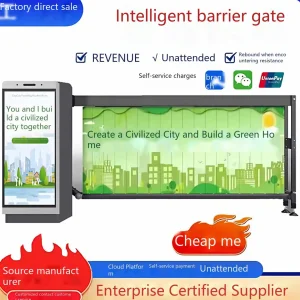
Durable Intelligent Barrier Gate Model D03 Manufacturer, Suppliers
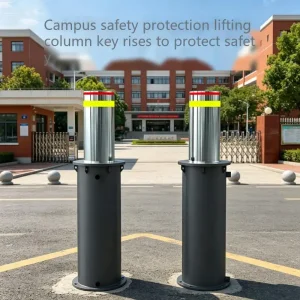
Discount Rising Bollard Instruction Manual Manufacturer, Quotation
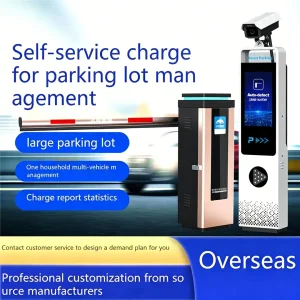
Durable High-def license plate recognition machine Dolphin I model Supplier, Exporters
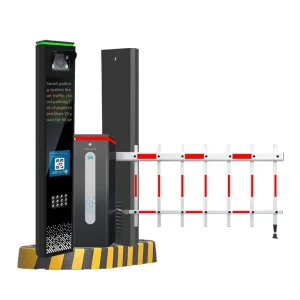
Buy Discount Car Parking And Toll Access Control Automatic Articulated DC Parking Boom Barrier Gate With Long Range Rfid Reader Manufacturer, Price
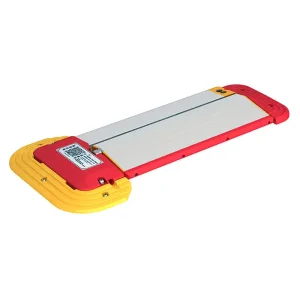
Advanced Scan to pay charging pilecommunity parking lock automatic sensing,electric shared scanning paymentanti-oil car occupying parking space Supplier, Factory
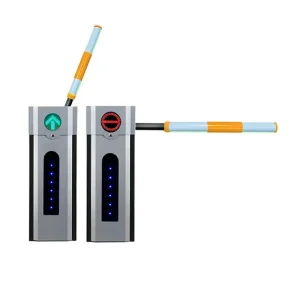
Newest Intelligent Barrier Gate Model D11S Factory, Factories
OEM Bridge Type Sloped Swing Gate Manufacturer, Quotation