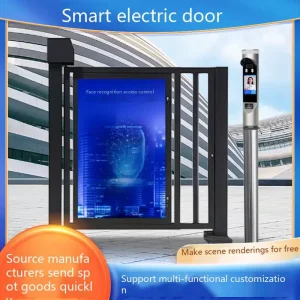
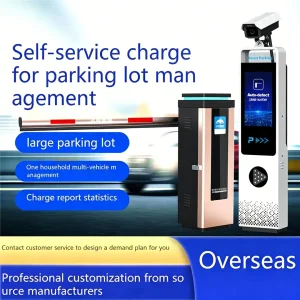
Direct-Export Replacement & Automated Perimeter Portfolios
Featured export models, structural accessories, and modular replacement infrastructure ready for cross-border dispatch.
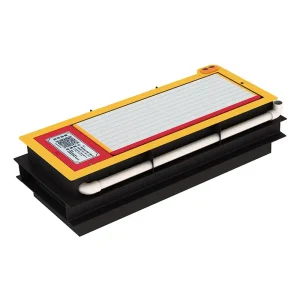
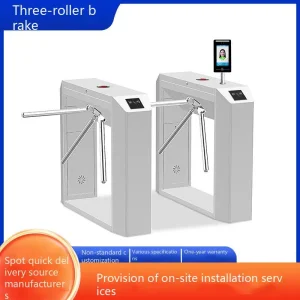

Industrial Sliding Door Replacement: White Paper & Engineering Specifications
Addressing structural fatigue, thermal deformation, rolling friction decay, and automation retrofitting across commercial footprints.
In high-throughput logistical hubs, intermodal transport facilities, cleanroom storage bays, and heavy commercial premises, sliding doors serve as critical structural barriers. Over continuous operational lifecycles, sliding systems endure heavy mechanical load shifts, severe atmospheric corrosion, thermal expansion, and mechanical vibration. When replacement becomes necessary, commercial engineers and facility managers cannot rely on generic hardware. The selection of durable sliding door replacements demands systematic evaluation of metallurgical properties, track load distribution, friction coefficients, wind load deflection, and integration with automated access controls.
1. Root Causes of Component Failure & Mechanical Degradation
Premature failure in heavy-duty commercial sliding doors generally concentrates around three mechanical vulnerabilities: bottom roller bearing breakdown, track derailment induced by thermal deflection, and misalignment between the drive gear and rack. In cantilevered sliding configurations, cantilever rollers absorb up to 85% of dynamic kinetic impact during rapid closing cycles. Inadequate alloy heat treatment or low ingress protection (IP ratings) on internal bearings allows dust ingress and grease washout, accelerating metal galling.
Our replacement frameworks utilize cold-drawn aerospace-grade aluminum extrusions paired with 304 or 316 austenitic stainless-steel track assemblies. Roller assemblies incorporate sealed deep-groove ball bearings protected by labyrinth seals, pre-lubricated with synthetic low-temperature lithium grease capable of uncompromised duty cycles across -40°C to +85°C. For industrial cold chain, hangar, and cleanroom environments, structural thermal breaks prevent condensation bridges, eliminating internal ice formation or seal degradation.
2. Structural Integrity & Retrofit Engineering Protocols
Exported replacement assemblies must accommodate non-standardized field conditions left by legacy installations. When retrofitting aged commercial entrances, structural engineers face uneven floor thresholds, degraded foundation anchor points, and inconsistent electrical infrastructure. Our engineering approach incorporates modular track-leveling shims, adjustable eccentric roller pins, and universal drive mount brackets. This allows field crews to achieve sub-millimeter axial alignment without extensive structural demolition, reducing commissioning hours by over 40%.
Alloy Metallurgy
T6 temper 6063 extrusions and 316 stainless tracks providing superior tensile strength (≥240 MPa) and resistance to pitting under saline marine conditions.
Impact Mitigation
Multi-point shock absorption buffers and reinforced hydraulic terminal dampers rated for kinetic deceleration of door panels weighing up to 2,500 kg.
Continuous Cycle Life
Bearing raceways precision-machined to Ra 0.4 μm surface roughness, guaranteeing quiet gliding performance beyond 500,000 continuous full-stroke cycles.
China Factory Supply Chain & Direct-Export Quotation Matrix
How concentrated industrial clusters in Shenzhen and the Pearl River Delta deliver unmatched cost, customization, and lead-time advantages.
Global procurement teams face increasing margin compression alongside demanding project timelines. Sourcing replacement systems directly from certified Chinese manufacturers eliminates tier-2 and tier-3 intermediary markups, providing transparent factory-direct FOB, CIF, or DDP pricing structures. The Pearl River Delta hardware ecosystem encompasses comprehensive vertical integration: primary ingot smelting, automated extrusion profiling, surface anodizing/powder coating, surface-mount electronics assembly (PCBA), and final mechanical QA testing are consolidated within a 50-kilometer radius.
This geographic concentration reduces production lead times for standard replacement profiles to under 7 working days, while custom engineered extrusions can be die-cast and sampled within 14 days. When submitting an engineering RFQ for volume replacement orders, our direct quotation breakdown isolates material indexes (LME Aluminum & Nickel pegs), dynamic processing expenses, surface passivation grades, and sea/air freight parameters—ensuring clear audit trails for international bids.
Tier-1 Cost Optimization
Factory-direct economics deliver 30% to 55% procurement savings against domestic European or North American distributors without sacrificing raw material tensile ratings.
Transparent Quotation Structure
Comprehensive pricing schedules detailing bill of materials (BOM), surface treatment microns, gear hardness levels, and export crating specifications.
Rapid Global Logistics
Direct export handling through Shenzhen and Hong Kong container terminals, offering consolidated LCL, FCL, and expedited air transport for emergency maintenance shut-downs.
International Compliance, Building Codes & Localized Support
Certified compatibility with ANSI, EN, CE, and UL standards for seamless localized engineering sign-offs.
EN 12453 / EN 12604
Anti-drop fail-safes and dynamic entrapment force limitation tested to guarantee operator and pedestrian protection during automatic closure.
UL 325 & NFPA Standards
Low-voltage control architecture, secondary optical sensing inputs, and fire alarm egress release overrides for commercial buildings across North America.
Wind Load Testing
Engineered to resist Beaufort Scale Class 11-12 winds (up to 120 km/h) utilizing deep-pocket interlocking guide retainers that eliminate panel blowout risks.
Local Partner Networks
Collaborative handoffs to certified local technicians and systems integrators in Europe, the Middle East, Southeast Asia, and the Americas for on-site commissioning.
Enterprise Procurement Demands & Industrial Sector Scenarios
Technical mapping of high-stress deployment scenarios requiring high-reliability sliding door replacements.
Intermodal Freight & Cold Chain Bays
Continuous dynamic traffic cycles require high-density insulated polyurethane panels with self-healing hermetic rubber track skirts to preserve internal HVAC/freezer stability.
Automotive & Heavy Assembly Plants
Extra-wide apertures (span > 12m) requiring custom telescopic or cantilever replacement hardware, capable of resisting high mechanical shocks and intense daily vibrations.
Secure Perimeters & Commercial Plazas
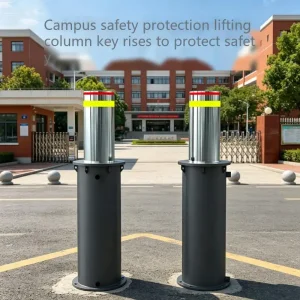
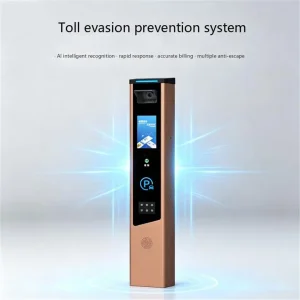
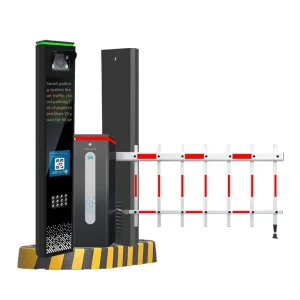
High-security anti-ram designs featuring heavy-gauge structural tubular steel sliding frames integrated with automated barrier controls, LPR systems, and remote telemetry.
Industry Trends: The Convergence of Smart Access & Mechatronic Tracks
The transition from dumb mechanical sliding panels to sensorized, IoT-enabled entrance automation nodes.
The industrial door and perimeter access industry is experiencing a technological pivot toward predictive maintenance and smart infrastructure connectivity. Replacement sliding door frames are no longer inert steel barriers; they function as active data nodes inside modern Facility Automation Platforms (BMS). High-precision Hall sensors embedded inside motor gear assemblies monitor motor torque anomalies, identifying increased friction before catastrophic track bind occurs. Furthermore, optical edge-sensing laser scanners dynamically adjust deceleration speeds based on approaching vehicular momentum.
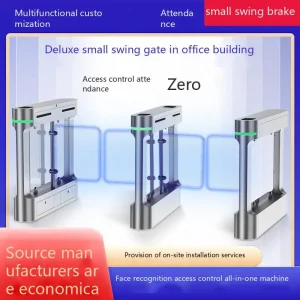
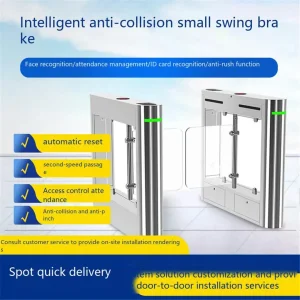
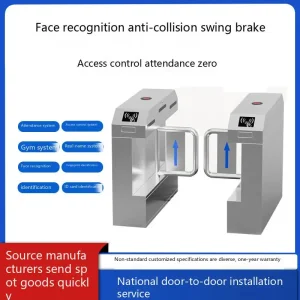
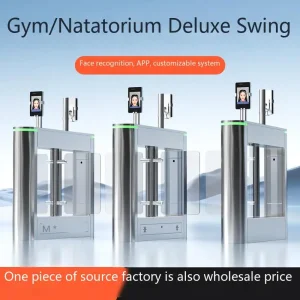
Integration with automated access controls—such as long-range UHF RFID antennas, ANPR / LPR license plate cameras, and biometric speed turnstiles—allows unified tracking of commercial perimeter access. Enterprise facility operators demand single-source suppliers capable of bridging heavy hardware fabrication with low-voltage logic control boards, industrial PLCs, and cloud management dashboards.
IoT Predictive Telemetry
Cloud-connected track monitors track daily duty cycles, vibration spikes, and current load surges to trigger automated spare-part shipments before physical failure occurs.
Brushless DC & Inverter Drive Efficiency
Switching from obsolete induction motors to 24V/36V brushless DC motors reduces thermal wear, optimizes standby energy consumption by 60%, and supports continuous battery backup during grid drops.
System Modular Interfacing
Standardized RS485, CAN bus, and Wiegand interfaces ensure that mechanical replacement assemblies plug directly into external access terminals and ticketing turnstiles.
Frequently Asked Questions (FAQ) for Global Importers & Specifiers
Clear, definitive technical clarifications addressing engineering customization, shipping logistics, and quotation parameters.
What measurements and site parameters are needed to generate an exact export quotation?
To produce an engineered quotation, we require clear aperture width and height, estimated panel mass (or desired infill material such as glass, solid steel, or insulated panel), power supply voltage (110V/220V/380V), anticipated daily operational cycles, and environmental specifics (such as coastal humidity or sub-zero conditions). Providing photos of the existing header track and floor line accelerates retrofit compatibility checks.
How do you guarantee that replacement tracks and rollers fit mismatched legacy installations?
We supply modular retrofit adapter profiles and high-adjustability roller car sets that provide up to ±25 mm of lateral and vertical realignment. Our technical department supplies precise CAD cross-section drawings and 3D STEP models prior to production sign-off, allowing your site engineers to verify bolt patterns and clearances before dispatch.
What is the standard minimum order quantity (MOQ) and production turnaround for custom orders?
For standard profiles, rollers, and mechanical drive replacement kits, our MOQ starts at single project sets (1 kit). Custom extrusion dies or non-standard powder-coating finishes generally require an MOQ of 50-100 linear meters. Standard stock configurations ship within 5-7 business days, while custom engineered replacement runs dispatch within 15-20 business days.
Can our existing access control infrastructure (RFID, ANPR, Barrier Gates) connect to your replacement systems?
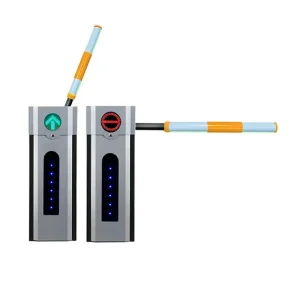
Yes. Our drive controller boards are built around open architecture protocols, supporting clean dry contact relays, RS485 communication, Wiegand 26/34 inputs, and Ethernet IP. Whether connecting into an existing barrier arm gate, license plate recognition camera, or biometric turnstile line, integration requires simple wiring into dedicated terminal strip blocks.
What corrosion protection and warranties are provided for coastal or chemical marine environments?
For coastal, marine, or chemical storage installations, we specify grade 316 stainless steel mechanical brackets, hard-anodized aluminum profiles (minimum 25-micron anodic layer), and fluorocarbon (PVDF) baked coatings that pass 1,500-hour neutral salt spray tests (ASTM B117). We back our structural heavy-duty sliding track components with comprehensive 3 to 5-year replacement warranties.
Integrated Access Control & Automated Perimeter Solutions
Complete perimeter management portfolios engineered to coordinate with industrial sliding door frameworks.