Primary Engineering Series
Precision Vehicle Access & Perimeter Infrastructure
Explore our core automated entrance control modules, precision engineered in Shenzhen for ultra-high duty cycles, heavy wind load resistance, and universal telematics compatibility.
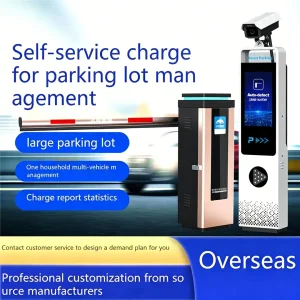
Durable High-def license plate recognition machine Dolphin I model Supplier, Exporters
View Product Specs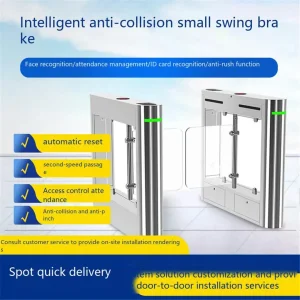
China Swing Gate Supplier, Quotation
View Product Specs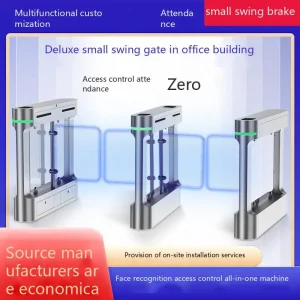
Durable Swing Gate Image Reference Manufacturer, Pricelist
View Product Specs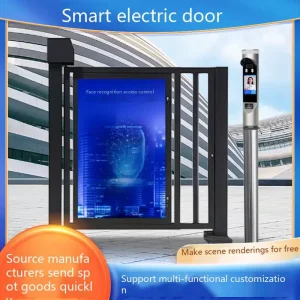
OEM Intelligent pedestrian advertising gate Factories, Price
View Product Specs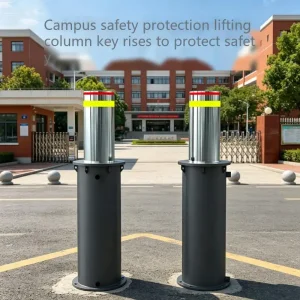
Discount Rising Bollard Instruction Manual Manufacturer, Quotation
View Product Specs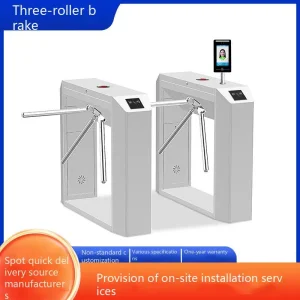
Cheap Factoryoem/ODM Durable Smart Fast Speed Swing Automatic Used Industrial Gym Turnstile Gate Manufacturer, Factory
View Product Specs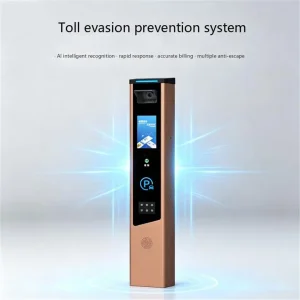
Durable High definition license plate recognition integrated - AnRuitong II Exporters, In Sales
View Product Specs
Industry White Paper Analysis
Evolutionary Dynamics in Speed-Gate Architecture & Perimeter Security
Analyzing the architectural shift toward fast-folding cantilevered and bi-folding driveway gate systems in commercial real estate, logistics hubs, and secure critical compounds.
Kinematic Velocity vs. Clear Opening Radius
Traditional sliding gates demand excessive run-back perimeter space, while heavy swing barriers suffer from prolonged cycle times of up to 18-25 seconds. Modern bifold driveway gates solve spatial bottlenecks by utilizing an synchronized trackless articulated leaf mechanism that folds back 180 degrees. Operating at speeds between 3 to 6 seconds, they eliminate perimeter queuing while preserving structural integrity against tailgating and forced penetrations.
Structural Metallurgy & Anti-Corrosive Integrity
Global suppliers must cater to divergent climate stresses, ranging from high-salinity marine zones (C5-M ISO 12944) to sub-zero permafrost or hyper-arid desert conditions. Premium factories integrate hot-dip galvanized structural steel tubular profiles (Q235B/Q355B) or marine-grade 6061-T6 aluminum alloys. Finished with dual-pass thermoset architectural fluorocarbon or polyester powder coatings, panels endure more than 2,500 hours of continuous salt-spray testing without surface oxidation or weld cleavage.
Mechatronic Servo Automation & Drive Efficiency
The core vulnerability of generic folding gates resides in transmission backlash and mechanical fatigue. Tier-1 manufacturers deploy brushless DC (BLDC) planetary servo geared motors capable of 100% continuous duty cycle ratings. Paired with microsecond-level vector frequency inverters, these units dynamically brake before hard stops, mitigating leaf vibration, bearing degradation, and gear stripping across millions of operational iterations.
8,000+
m² Precision Manufacturing Facility in Shenzhen
80+
Countries Covered Across Five Continents
100+
Sovereign Unattended Payment Systems Supported
10,000,000
Mean Cycles Between Failures (MCBF) on Servo Drive Core
Procurement Specifications
Enterprise Sourcing Matrix: Bifold Gate Mechanical & Electrical Standards
Evaluating the multi-tier engineering criteria global EPC contractors, systems integrators, and critical facility planners demand from OEM/ODM factories.
| Evaluation Parameter | Commercial Grade Gate | Industrial High-Duty Folding Gate | Mission-Critical / High-Security Gate |
|---|---|---|---|
| Clear Span Opening Width | Up to 4.5 meters (Single/Dual Leaf) | Up to 8.0 meters (Trackless Bifold) | Up to 12.0 meters (Engineered Heavy Cantilever) |
| Operating Speed | 6 – 8 seconds full cycle | 3 – 5 seconds rapid actuation | 2.5 – 4 seconds (Emergency Fast Closure / EFO) |
| Motorization Architecture | AC Torque Motor / Mechanical Limit | BLDC Servo System with Optical Rotary Encoder | Heavy Hydraulic Transmission or Dual Sync Servos |
| Safety Sensor Telemetry | Reflective Photocells, Basic Safety Edge | Dual Active Infrared Curtains + Dual Resistive Edges | 3D Laser LiDAR Scanning + Dual Loops + Radar Micro-wave |
| Interface Telematics | Dry Contact Relays | Wiegand 26/34, RS485, Modbus-RTU, TCP/IP | OPC UA, MQTT, Encrypted OSDP v2, RESTful API |
| Wind Load Classification | Class 2 (EN 12424) ~ 450 N/m² | Class 4 (EN 12424) ~ 1000 N/m² | Class 5+ (Engineered Lintel, > 1400 N/m²) |
Integrated Ecosystems
Macro-Level Deployment Architecture & Integrated Gateways
Holistic integration protocols aligning physical bifold gate automation with vehicle identification, pedestrian control, and central building management systems.
AI License Plate Recognition (ANPR/LPR) Interlock
By connecting deep-learning high-definition LPR cameras directly to the bifold gate PLC via low-latency industrial Ethernet, authorized plates are identified at distances of 5-10 meters. The bi-folding leaf initiates opening preemptively, allowing uninterrupted highway-speed ingress while maintaining an audited cryptographic database of license plates, capture timestamps, and direction vectors.
Segregated Multi-Modal Pedestrian Coordination
Perimeter gates must not create safety vulnerabilities for non-vehicular traffic. Our factories integrate matching perimeter swing and tripod turnstiles into the bifold perimeter fence design. Facial recognition terminals, QR barcode validators, and RFID readers route foot traffic safely around primary vehicular folding gates, eliminating blind-spot accidents and complying with European Machinery Directive 2006/42/EC.
Auxiliary Perimeter Hardening: Rising Bollards
In high-risk perimeter scenarios where dynamic vehicle attacks present a tangible threat, trackless folding gates are physically coupled with shallow-mount hydraulic rising bollards. The software orchestrates sequential passage: vehicle authorization lowers K4/K12 rated bollards before the bifold leaves actuate, creating an impenetrable layered physical defense barrier.
Global Regulatory Framework
Localized Support & Comprehensive Global Compliance Assurances
Supplying critical access hardware into over 80 territories necessitates strict adherence to localized electrical, civil safety, and radio-frequency regulatory standards.
CE & Machinery Directive
Complies rigorously with EN 12453 (Safety in use of power operated gates) and EN 12445 (Force testing methodologies), featuring self-monitoring fail-safe safety relays.
UL 325 & FCC Part 15
Tailored power input modularity supporting 110V/220V dual phase with UL-recognized internal components and secondary entrapment sensors for North American distribution.
Severe Climate Resilience
Thermal mitigation suites including integrated internal heating elements for sub-zero climates down to -40°C, and vortex convective cooling for Middle Eastern sites up to +65°C.
24/7 Field Engineering SLA
Multilingual application engineering teams provide remote pre-commissioning reviews, kinematic dynamic simulations, wiring diagrams, and rapid dispatch of critical spare parts.
R&D Trajectory
Engineering Roadmap: Intelligent Perimeter Gate Systems (2026–2030)
The progression of mechatronic bifold gates from isolated electromechanical barriers to autonomous edge-computing security sentinels.
01
Phase I: Predictive Mechatronic Diagnostics & Cloud Telemetry
Integration of vibration harmonics analysis, motor thermal signatures, and torque load cell sensors into gate drive units. Edge gateways transmit real-time telemetry via MQTT to central monitoring dashboards, alerting facility operators of bearing friction, structural misalignment, or spring fatigue prior to mechanical shutdown.
02
Phase II: Carbon-Neutral Solar Micro-Grids & High-Density Ultracapacitors
Deploying ultra-efficient 24V/48V brushless DC drivetrains engineered for localized photovoltaic integration. Coupled with lithium iron phosphate (LiFePO4) storage banks and supercapacitor bursts, bifold driveways achieve 100% off-grid autonomy for remote logistics yards while sustaining over 1,500 full cycles per reserve cycle.
03
Phase III: Multi-Spectral 3D LiDAR & Autonomous Vehicle V2I Handshakes
Replacing traditional induction loops with spatial LiDAR arrays capable of detecting approaching vehicles, classify vehicle mass and height, and identifying pedestrian intrusions in real-time 3D point clouds. Direct Vehicle-to-Infrastructure (V2I) communication modules execute cryptographic handshakes with autonomous electric fleets for zero-latency gate traversal.
Direct Engineering FAQ
Technical & Commercial Procurement Inquiries
Definitive answers addressing structural loads, kinematic trackless designs, OEM customization, and overseas integration workflows.
What makes trackless bifold driveway gates superior to bottom-track or sliding models?
Trackless bifold systems do not require ground track excavation across the driveway, preventing operational failures caused by debris, ice accumulation, gravel obstruction, or pavement shift under heavy axle loads. Furthermore, sliding gates require an open runback zone along the fence line equal to the width of the driveway opening, whereas bifold gates collapse neatly inward or outward within a fraction of that envelope, making them ideal for high-density metropolitan facilities.
How do your factories ensure the dynamic durability of folding hinges and linkages?
Hinges and mechanical links represent the primary points of mechanical shear. Our factories employ precision CNC-machined steel pivot hinges housing heavy-duty, self-lubricating bronze bushings or sealed spherical roller bearings. Linkage push-rods are constructed from high-tensile solid forged structural steel, protected against fatigue fractures and subjected to cyclic stress testing exceeding 1,000,000 load cycles under simulated wind loads.
Can Anrui bifold driveway gate systems integrate with third-party software and LPR sensors?
Yes. Our motor controllers and PLC driver modules feature open architecture interfacing via standard Wiegand (26/34/66 bit), RS-485 Modbus, TCP/IP, and programmable dry contact optocouplers. System integrators can seamlessly connect commercial access control software, ANPR/LPR cameras, active RFID readers, and cloud payment gateways directly without proprietary hardware lock-in.
What safety features prevent gate entrapment or collision with moving vehicles and pedestrians?
Multi-redundant safety compliance is integrated into every unit: (1) dual optical active infrared thru-beam photo sensors monitoring the inner and outer sweep planes; (2) conductive resistive rubber pressure safety edges (8.2kΩ) that trigger immediate reverse-braking within 100 milliseconds upon tactile contact; and (3) intelligent micro-processor current feedback loops that sense motor overload resistance to stop movement instantly in accordance with EN 12453 safety standards.
What are the OEM and custom sizing capabilities for international engineering contractors?
We offer bespoke structural engineering services for custom openings up to 12 meters clear span. Customization covers infill panel options (including anti-climb 358 security wire mesh, solid composite acoustic louvers, structural vertical bar infill, or laser-cut architectural steel), custom electrostatic powder coat color matching according to the RAL Classic palette, and localized motor voltages (110V/220V/380V).
What warranty and global technical after-sales framework is provided for overseas projects?
All structural steel frameworks carry a 5-year anti-corrosion and structural warranty, with a standard 2-year warranty on electromechanical drives, BLDC servo motors, and control units. In addition to technical documentation, CAD/BIM drawing libraries, and 3D installation videos, our technical team provides around-the-clock remote commissioning support and global air-freight spare parts fulfillment.
Comprehensive Lineup
High-Performance Access Control & Barrier Equipment
Examine our full spectrum of physical access security hardware, ranging from articulated rapid parking barriers and LPR terminals to rising bollards and turnstiles.
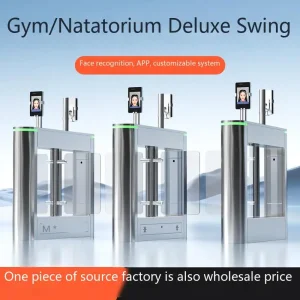
Durable Office Building Entrance Attendance Security Access Control Turnstiles Gate Swing Barrier Speed Gate Manufacturers, Supplier
View Product Specs
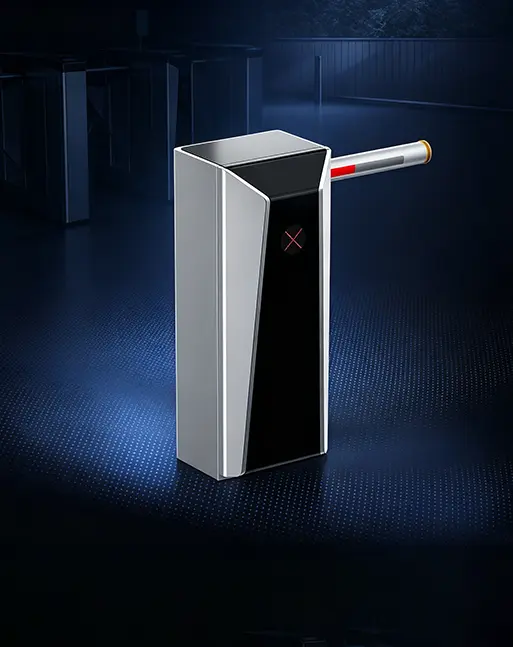
Durable Intelligent Barrier Gate Model D03 Manufacturer, Suppliers
View Product Specs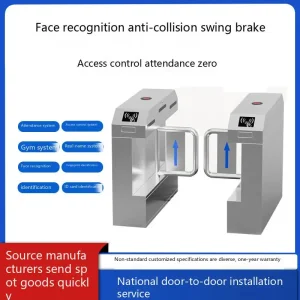
OEM Bridge Type Sloped Swing Gate Manufacturer, Quotation
View Product Specs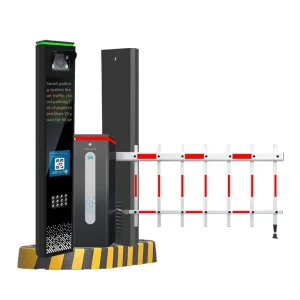
Buy Discount Car Parking And Toll Access Control Automatic Articulated DC Parking Boom Barrier Gate With Long Range Rfid Reader Manufacturer, Price
View Product Specs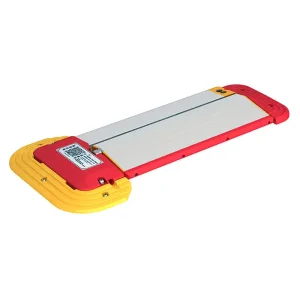
Advanced Scan to pay charging pilecommunity parking lock automatic sensing,electric shared scanning paymentanti-oil car occupying parking space Supplier, Factory
View Product Specs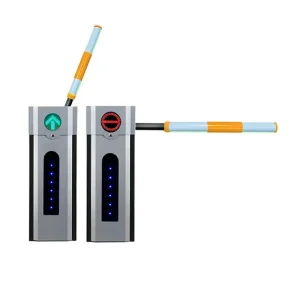
Newest Intelligent Barrier Gate Model D11S Factory, Factories
View Product Specs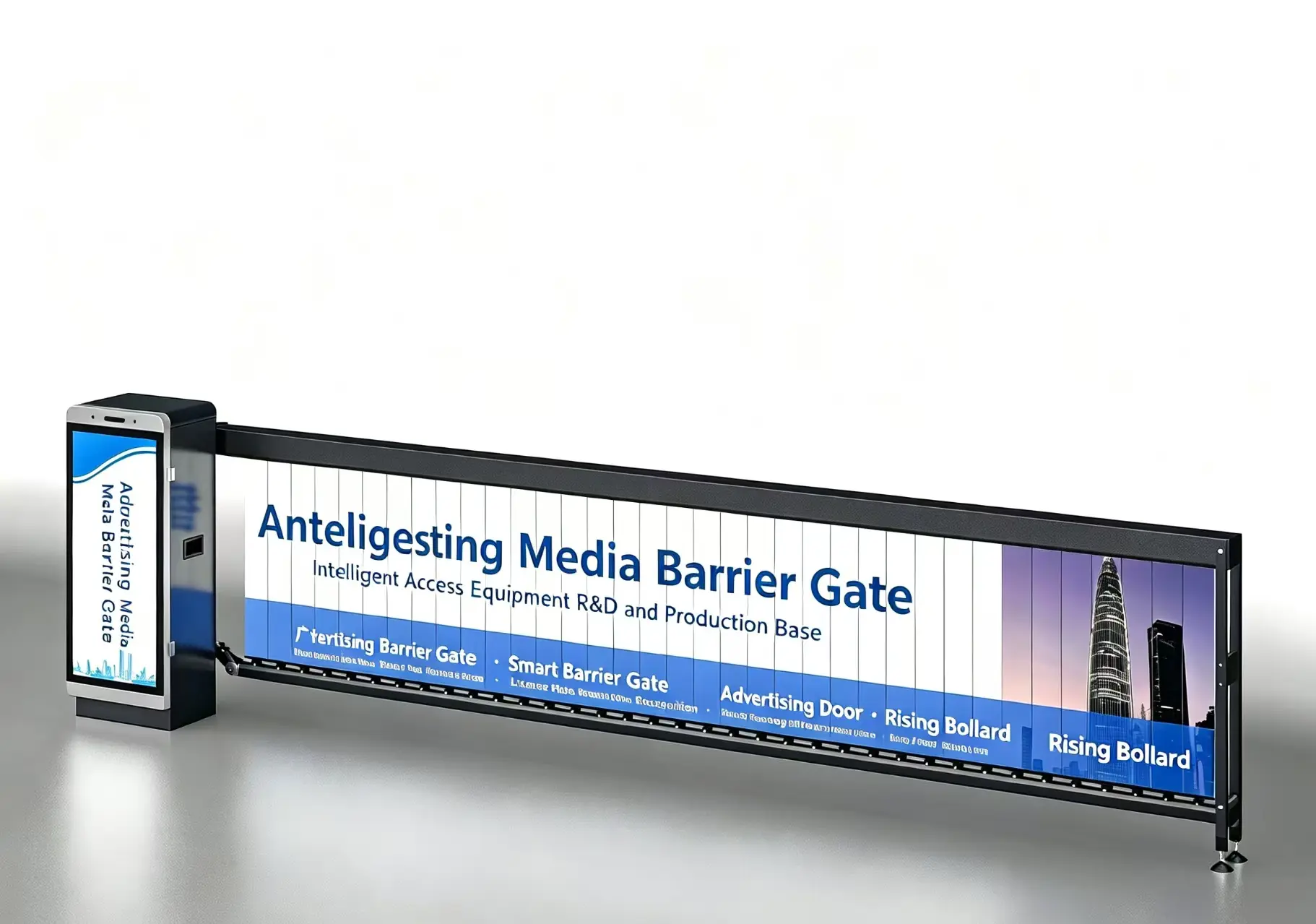
Commercial Louver Advertising Barrier Gate Model AR-GGD04 High Security
View Product Specs