
Precision Entrance & Automated Access Solutions
Explore high-duty automated pedestrian gates, smart barrier systems, and space-saving kinetic controllers engineered by premier Chinese manufacturing facilities for global export.
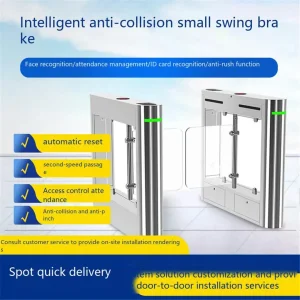
China Swing Gate Supplier, Quotation
Inquire Quotation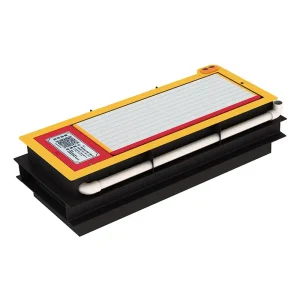
China City Parking Product Manufacturer, Price
Inquire Quotation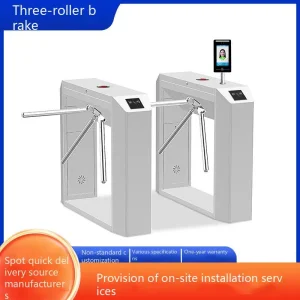
Factory OEM/ODM Fast Speed Swing Turnstile
Inquire Quotation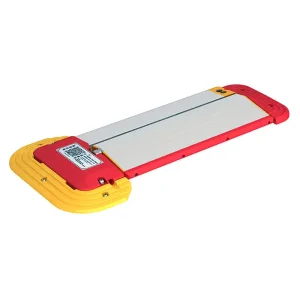
Scan-to-Pay Smart Parking Space Lock
Inquire Quotation
Durable Intelligent Barrier Gate Model D03
Inquire Quotation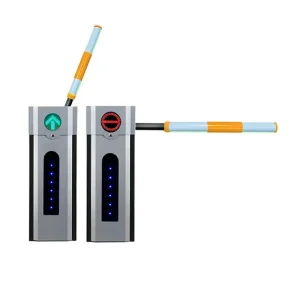
Newest Intelligent Barrier Gate Model D11S
Inquire Quotation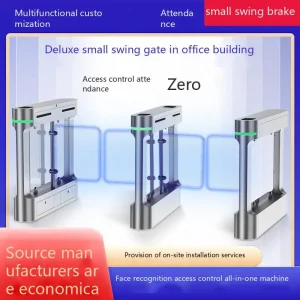
Industrial Pedestrian Swing Gate Turnstile
Inquire Quotation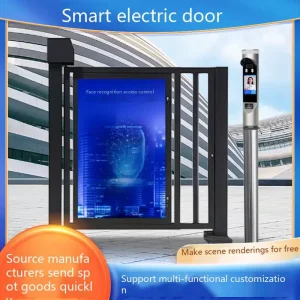
OEM Intelligent Pedestrian Advertising Gate
Inquire QuotationExport Capacity & Engineering Robustness
Verified manufacturing benchmarks underpinning high-efficiency automated entrance hardware across 80+ destination markets worldwide.
Telescoping Kinematics & Next-Gen Structural Design
When structural architectural envelopes demand maximum pedestrian or vehicular transit widths within constrained wall-pocket boundaries, traditional automatic single-slide or bi-parting doors inevitably bottleneck traffic. China’s modern automated entrance ecosystem has pioneered advanced multi-leaf synchronization architectures that redefine dynamic ingress efficiency.
2-Speed Synchronous Leaf Linkage
Telescopic sliding doors achieve up to 66% clear opening space within a restricted footprint by driving secondary and tertiary leaves at mathematically graduated speeds. The primary carrier connects directly to the drive belt, while high-tensile counter-balanced synchronization cables and low-vibration polyurethane toothed belts pull the secondary panel at precisely 50% relative velocity.
- Eliminates mechanical slack and leaf dragging via micro-adjustable cable tensioners.
- Heavy-duty Delrin or ultra-high-molecular-weight polyethylene (UHMW-PE) rollers.
- Double acoustic dampening carriage profiles absorbing operational shear resonance below 45 dB(A).
Brushless DC & Maglev Linear Actuation
China's top export factories have transitioned from legacy brushed worm-gear assemblies to high-torque brushless direct-current (BLDC) motors and contactless magnetic levitation (Maglev) track systems. Operating with 32-bit ARM Cortex DSP controllers, these units execute continuous vector control with real-time back-EMF encoder feedback.
- Torque density surpassing 3.2 N·m with dynamic acceleration up to 0.75 m/s² per panel.
- Elimination of carbon brush wear, guaranteeing 5,000,000 maintenance-free operations.
- Low heat generation preserving electronic lifecycle under extreme high-frequency duty.
Intelligent Kinetic Energy Braking
Safeguarding pedestrians while handling heavy architectural glass panels (up to 250 kg per leaf) requires rigorous energy absorption curves. Advanced digital controllers sample current fluctuation at 1 kHz, dynamically computing panel inertia and decelerating within the EN 16005 compliance envelope.
- Automatic static force limiting below 150 N during final pinch-point travel.
- Smart reverse trajectory triggered within 15 milliseconds of obstacle interception.
- Integrated supercapacitor backup assuring automated fail-safe breakout during emergency power loss.
China Factory 4.0: Supply Chain Resilience & Metallurgical Superiority
The global dominance of Chinese entrance automation exporters is grounded in vertically integrated regional supply clusters, automated extrusion metallurgy, and agile CNC processing.
6063-T6 Extrusion Precision
Overhead track profiles are extruded using premium 6063-T6 virgin aluminum alloy with strict 3.0 mm structural wall thickness. Anodic oxidation coatings exceeding 15 microns guarantee structural deflection resistance under immense mechanical dead loads.
Automated SMT Electronics
Mainboards and edge-computing microcontrollers are assembled on automated surface-mount technology (SMT) lines. Conformal polyurethane nano-coatings protect printed circuit boards against tropical condensation, salt fog, and industrial pollutants.
Full-Spectrum Cycle Testing
Prior to container loading, motorized drives and carriage assemblies endure 72-hour burn-in simulations on robotic testing gantries, benchmarking current draw, thermal equilibrium, harmonic noise, and cable fatigue under full payload parameters.
Rapid Modular Customization
Modular rail and housing architecture allows custom track lengths, dual-motor configurations, integrated acoustic interlocks, and cleanroom airlock inter-connections to be drafted, fabricated, and packaged within 7 to 10 production business days.
Macro Industry Applications & Enterprise Access Synergy
Telescoping sliding door systems do not operate in isolation. In modern civil infrastructure, high-velocity doors interface natively with license plate recognition (LPR), pedestrian speed turnstiles, rising bollards, and central building automation networks.
Healthcare & Emergency Trauma Corridors
In hospital surgical suites and emergency vehicle-to-ward airlocks, narrow corridors cannot accommodate standard swing door radiuses. Telescoping 4-panel configurations deliver 2.8-meter clear widths, accommodating simultaneous bariatric stretchers and medical crash carts.
Integration Vector: Contactless touchless capacitive sensors, microbial hermetic seals, and instantaneous fire-alarm breakout override.
Transit Hubs & Intermodal Terminals
High-speed rail stations and airport concourses manage thousands of passengers per hour. Rapid door opening speeds (up to 1.4 m/s combined) eliminate crowd compression at terminal gateways, while heavy-duty extruded carriers prevent track derailment from baggage impacts.
Integration Vector: Integrated with optical pedestrian turnstiles and time-attendance facial recognition turnstiles.
High-Security Perimeter Interlocks
Logistics depots, corporate data centers, and manufacturing complexes require multi-stage vehicular and employee ingress. Automated heavy telescopic perimeter gates work alongside hydraulic bollards and automatic boom barriers to prevent unauthorized vehicular tailgating.
Integration Vector: Cloud-synchronized ANPR/LPR cameras and edge-controller whitelist relays.
Engineering Specification Matrix: Telescopic vs. Standard Systems
A data-driven technical breakdown for project engineers, architectural consultants, and procurement managers evaluating entrance drive kinematics.
| Performance Dimension | Standard Bi-Parting Sliding Door | 2-Leaf Telescoping Door (Single-Slide) | 4-Leaf Telescoping Door (Bi-Parting) | Heavy-Duty Industrial Telescopic Gate |
|---|---|---|---|---|
| Opening Ratio (% of Total Wall Span) | ~48% - 50% | ~60% - 66% | ~62% - 68% | ~70% - 75% |
| Max Clear Opening Width (COW) | 2,000 mm - 2,500 mm | 3,000 mm | 4,000 mm - 5,000 mm | 8,000 mm - 12,000 mm |
| Drive Motor Architecture | Brushed DC or 60W BLDC | 100W - 150W High-Torque BLDC | Twin Synchronized 150W BLDC / Maglev | Industrial Helical Gear Brushless 350W+ |
| Panel Weight Capacity (Per Leaf) | 100 kg - 130 kg | 120 kg - 150 kg | 150 kg - 250 kg (Toughened Glazing) | 500 kg - 1,500 kg (Steel / Alloy) |
| Kinematic Transmission | Single continuous toothed belt | Belt + Cable Counter-Synchronizer | Dual-Track Independent Belt Linkage | Dual-Speed Rack & Pinion / Roller Chain |
| International Compliance | EN 16005 / CE | EN 16005 / ANSI A156.10 | EN 16005 / DIN 18650 | ISO 13849 / UL 325 |
Localization Support, Global Compliance & Total Cost of Ownership
Procuring automated access systems from China requires deep alignment with regional building codes, electrical safety norms, and end-to-end lifecycle cost predictability.
Global Safety & Electrical Accreditations
Export units produced by certified Shenzhen manufacturers adhere strictly to European standard EN 16005:2012 and American National Standard ANSI/BHMA A156.10 for power-operated pedestrian doors. Control boxes operate on wide-range switched-mode power supplies (100–240V AC, 50/60 Hz), meeting CE LVD, CE EMC, and UL 325 electrical guidelines.
- Integrated category 2 safety performance level (PL d) per ISO 13849-1.
- Monitored redundant microwave and infrared combination sensors.
- Dynamic wind-load deflection verified under EN 12210 Class 4 conditions.
Total Cost of Ownership (TCO) Economics
Direct sourcing from top-tier Chinese manufacturing clusters reduces initial capital expenditure (CAPEX) by 45% to 60% relative to Western European counterparts without compromising component longevity. Brushless motor efficiency yields a 30% reduction in continuous operating power consumption (OPEX).
- Standardized modular components reduce replacement inventory overhead.
- Universal plug-and-play wiring looms minimize specialized on-site labor hours.
- Extended 3- to 5-year warranty commitments with expedited air-express spares.
Localization & Technical Engineering Support
Overcoming geographical barriers, leading Chinese factories provide exhaustive technical onboarding: Revit/BIM 3D architectural models, multi-lingual installation schematics, AutoCAD wiring pinouts, and 24/7 dedicated remote video commissioning support.
- Customized packaging engineered for LCL/FCL ocean freight damp-proofing.
- Pre-commissioned parameter programming prior to factory shipment.
- Regional field engineering partnerships in Europe, Middle East, and Southeast Asia.
Technical Roadmap: Autonomous Entrances & Edge-AI Systems
The convergence of artificial intelligence, green building envelope mandates, and smart building management protocols is steering the next phase of telescoping sliding door engineering.
Predictive Edge-AI Vision Radar
Next-generation operators abandon simple Doppler radar sensors in favor of integrated LiDAR-vision neural networks. Embedded edge processors trace pedestrian walking velocity, approach vectors, and intent. If a person walks parallel to the entrance, the system suppresses door cycling, retaining HVAC climate envelope energy by up to 25%.
Thermal Break Glazing & Aerogel Cores
Stricter zero-carbon building regulations (such as European EPBD recast and US ASHRAE 90.1) mandate structural U-values under 1.2 W/(m²·K). Telescopic systems are integrating polyamide thermal-break extrusions, low-E triple insulated glass units (IGU), and aerogel draft-shield interlocks.
Universal BMS Protocol Native Ingress
Proprietary closed-loop door controllers are being replaced by open-architecture native IP connectivity. Chinese export controllers feature built-in BACnet/IP, Modbus TCP, and MQTT interfaces, sending cycle counts, bearing temperature telemetry, and predictive maintenance alerts straight to central SCADA systems.
High-Security Turnstiles, LPR & Vehicle Access Hardware
Explore our complete export ecosystem: pedestrian speed gates, optical turnstiles, rising hydraulic bollards, and intelligent license plate recognition hardware manufactured for demanding enterprise environments.
Durable Swing Gate Turnstile System
Inquire Quotation
Intelligent Advertising Barrier Pedestrian Gate
Inquire Quotation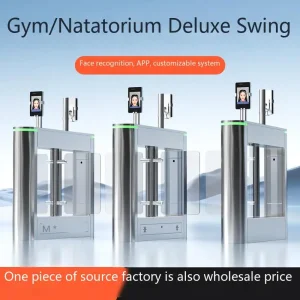
Office Attendance Security Speed Gate
Inquire Quotation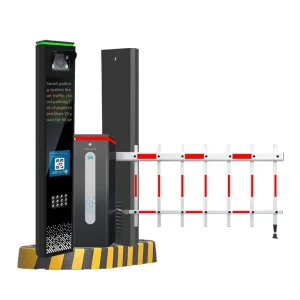
Articulated DC Parking Boom Barrier Gate
Inquire Quotation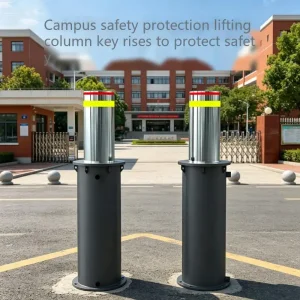
Hydraulic Automatic Rising Bollard
Inquire Quotation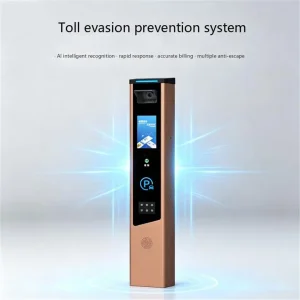
AnRuitong II HD License Plate Recognition
Inquire Quotation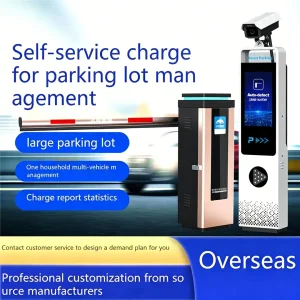
Dolphin I Model LPR Integrated Machine
Inquire Quotation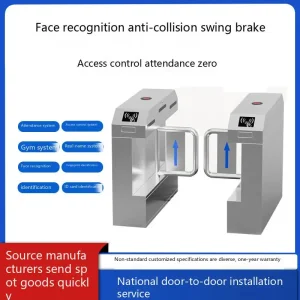
Bridge Type Sloped Pedestrian Swing Gate
Inquire QuotationGlobal Enterprise Sourcing: Evaluation Criteria for Tier-1 Importers
A disciplined roadmap for security integrators, general contractors, and MEP distributors vetting Chinese automated door factories for large-scale tender compliance.
1. Kinetic Load Sizing & Motor Duty Factor
Validate that motor wattage calculation accounts for gross panel dead weight plus dynamic aero-drag resistance. Heavy-duty telescopic entrances must utilize motors operating under an 80% duty threshold to prevent thermal tripping during peak morning and evening pedestrian surges.
2. Synchronization Linkage Integrity
Inspect the mechanical synchronization method. Top-grade exporters employ aircraft-grade stainless steel multi-strand wire ropes with integrated compression springs, or HTD synchronous belts with Kevlar tension members, preventing cable stretch and timing drift over seasonal temperature shifts.
3. Factory Track Machining & Extrusion Straightness
Ensure the supplier uses CNC 5-axis gantry milling for overhead header profiles. Extrusion straightness must stay within ±0.5 mm per 6 meters to prevent carriage wheel binding, premature bearing wear, and harmonic acoustic chatter.
Frequently Asked Questions (FAQ) for Specifiers & Importers
Clear, definitive technical clarifications addressing kinematic mechanics, electrical interfacing, structural sizing, and container logistics.
Standard sliding doors split an entrance into equal parts where mobile panels slide over fixed side lites, achieving at most a 50% clear opening width (COW). A 2-leaf single-slide or 4-leaf bi-parting telescoping system utilizes stacked parallel tracks. When opened, the fast panel overtakes the slow panel, stacking them neatly over a much narrower wall pocket. This geometry yields between 60% and 66% unobstructed walk-through space within the identical masonry rough opening.
China’s tier-1 manufacturers utilize dual synchronous transmission setups: a primary high-torque polyurethane toothed timing belt (fiberglass or Kevlar reinforced) driven directly by a brushless DC motor, coupled with secondary multi-strand aircraft-grade stainless steel cables operating over precision ball-bearing return idler pulleys. This mechanical linkage guarantees that leaf two travels at exactly half the instantaneous speed of leaf one with zero jitter or panel lag.
For emergency exit routes, systems can be ordered with "full breakout" or "fixed-leaf breakout" mechanical swing hardware. Under forward panic pressure exceeding 180 N, heavy-duty mechanical detents disengage, allowing both sliding and stationary panels to pivot outwards 90 degrees like conventional swing doors, clearing 100% of the portal. Controllers simultaneously disconnect motor power to prevent unintended leaf travel during building evacuation.
Yes. Factory-direct digital control terminals feature dry-contact NO/NC trigger loops, 24V auxiliary power taps, emergency fire-relay inputs, and standard RS485 serial communication ports. They natively integrate with facial recognition speed turnstiles, biometric scanners, RFID card readers, UHF long-range vehicle readers, and high-level BMS networks using BACnet or Modbus gateways.
Standard OEM production spans 10 to 15 business days following architectural shop drawing sign-off. Track headers and aluminum extrusions are encased in heat-shrink PE film, nested within high-density EPE foam cushions, and crated inside heavy non-coniferous OSB wooden boxes reinforced with longitudinal steel corner brackets to ensure zero structural bowing during sea transit.
Leading exporters maintain standardized part indexing. High-wear items including carriage roller assemblies, return idlers, toothed belts, and sensor harnesses are shared across product generations. Spare parts kits are commonly shipped with initial container orders, and replacement electronics can be dispatched via DHL/FedEx priority with worldwide delivery within 72 hours.