
High-Precision Access Control & Intelligent Hardware Systems
Engineered for mission-critical reliability, extreme weather tolerance, and turnkey interoperability across global border posts, smart campuses, and industrial logistical arteries.
-
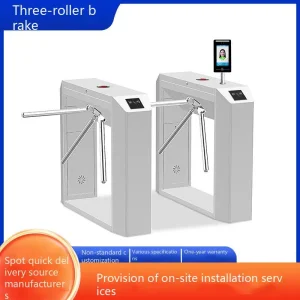 Cheap Factory OEM/ODM Durable Smart Fast Speed Swing Automatic Industrial Gym Turnstile GateView Technical Specs
-
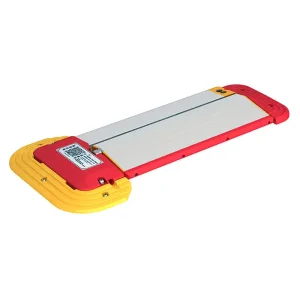 Advanced Scan to Pay Charging Pile Community Parking Lock Automatic Sensing Electric Shared Bay LockView Technical Specs
-
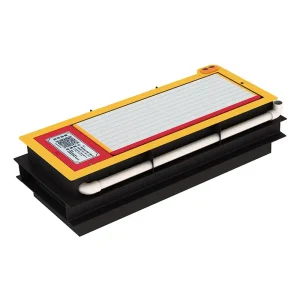 China City Integrated Smart Parking Access Equipment & High-Throughput Terminal HardwareView Technical Specs
-
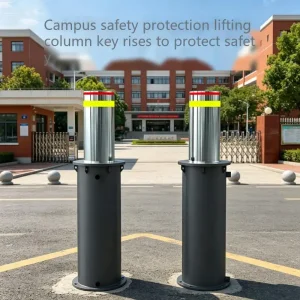 Industrial Hydraulic Rising Bollard Manual Heavy-Duty Anti-Terror Impact Perimeter ProtectionView Technical Specs
-
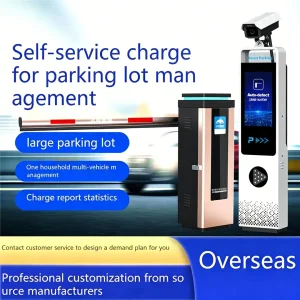 Durable High-Definition Mobile & Static License Plate Recognition Machine Dolphin I UnitView Technical Specs
-
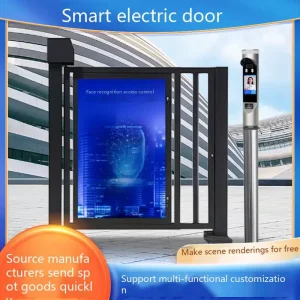 OEM Intelligent Pedestrian Access Advertising Dynamic Gate Industrial Precision EngineeringView Technical Specs
-
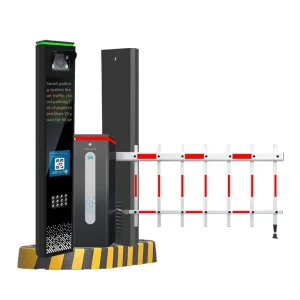 Discount High-Speed Articulated DC Boom Barrier Gate with Integrated Long-Range RFID TerminalView Technical Specs
-
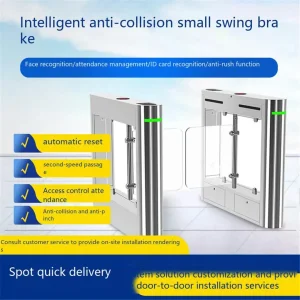 China Commercial Stainless Steel Pedestrian Access Control Swing Barrier Speed Gate SolutionView Technical Specs
The Global Paradigm Shift Toward Mobile & Decentralized ANPR Ecosystems
Analyzing technical frameworks, optical machine learning constraints, and decentralized vehicular access topologies for next-generation transportation infrastructure.
The global physical security and intelligent traffic management sector is currently navigating a tectonic transition away from legacy, centralized, loop-detector-bound fixed systems toward Autonomous Edge-Native Mobile License Plate Recognition (MLPR) architectures. Fixed Automatic Number Plate Recognition (ANPR) systems have historically suffered from substantial capital expenditure requirements, extensive roadway trenching, and severe optical operational vulnerabilities induced by dynamic sun-glare, precipitation, and multi-lane shadowing. As urban environments and logistics terminals evolve into hyper-connected smart hubs, the demand for dynamic vehicular tracking deployed via mobile enforcement fleets, autonomous patrol apparatuses, and agile perimeter deployment kits has surged.
As an established tier-1 Chinese manufacturer and factory powerhouse headquartered in Guangming District, Shenzhen, our engineering facilities deliver industrialized, edge-inference MLPR nodes capable of resolving plates moving across extreme velocity deltas of up to 240 km/h. By combining multi-spectrum strobe illumination arrays (850nm / 940nm NIR) with embedded Neural Processing Units (NPUs) delivering up to 32 TOPS of INT8 inference power, our hardware addresses the core industry pain point: delivering uncompromised 99.8% capture precision across international alphanumeric variations without relying on high-latency backhaul network connections.
Localized Application Frameworks & Real-World Deployments
Mobile License Plate Recognition transcends basic car-park metering. In high-density global metros, vehicle access architectures must address localized operational friction. Chinese manufacturing excellence bridges theoretical computer vision algorithms with physical, robust operating units tailored for real-world scenarios:
Municipal Curbside Enforcement
Vehicle-mounted continuous pan-tilt-zoom (PTZ) mobile recognition pods scan angled and parallel parked cars across curbside bays, correlating plate strings against geo-fenced virtual parking meters in sub-second intervals.
Temporary Incident Command
Rapidly transportable tripod and magnet-mounted edge LPR enclosures deployed during high-visibility public summits, tactical roadblocks, and large-scale industrial events to enforce automated vehicle access blacklists.
Logistics & Intermodal Freight
Automated tracking of Class 1 through Class 8 prime movers, combining front optical character extraction with chassis-level container identification strings within demanding multi-lane freight yards.
Deep Tech Architecture & Future Engineering Horizons
Continuous evolution of hardware microarchitectures, edge transformer deep learning, and cryptographic vehicle validation.
Vision Transformer (ViT) Engines
Moving beyond basic Convolutional Neural Networks (CNNs) to Attention-based Transformer backbones operating directly on 8-bit quantization micro-engines, eliminating optical ambiguities caused by physical plate mud, rust, or partial occlusions.
Multi-Sensor Fusion & LiDAR
Co-registering solid-state micro-LiDAR cloud data with stereo CMOS exposure streams to yield millimetric spatial coordinates, tracking vehicle trajectory vectors before invoking OCR inference processes.
Zero-Trust Hardware Enclaves
Cryptographic micro-controllers (TPM 2.0 / ECC608) safeguard plate logs, image hashes, and geolocational metadata, ensuring absolute evidentiary integrity aligned with global CJIS and GDPR frameworks.
Cellular 5G-V2X Edge Hubs
Native embedded sub-6GHz modem structures broadcast localized road-hazard notices, priority queue telemetry, and toll settlement payloads directly into vehicle CAN-bus network nodes.
China Factory Supply Chain Resiliency & Production Efficiency
Shenzhen's integrated precision hardware cluster delivers rapid time-to-market, agile OEM/ODM iterations, and end-to-end quality assurance.
China's Pearl River Delta manufacturing corridor represents the pinnacle of electro-mechanical access hardware design, component sourcing, and assembly optimization. Our 8,000 m² Shenzhen facility stands at the convergence of optical sensor manufacturing, surface-mount technology (SMT) lines, cold-rolled steel stamping, and automated powder coating infrastructure. This structural proximity enables an agile development velocity unmatched in traditional Western production centers:
Component Sourcing Velocity
Component procurement times for high-grade multi-layer PCBs, military-grade CMOS arrays, and precision-machined aluminum extrusions are compressed into days rather than quarters.
End-to-End Stress Validation
Every Mobile LPR chassis undergoes rigorous thermal shock testing (-40°C to +85°C), high-frequency vibration simulations, and IP67/IP68 submersion validations before dispatch.
Bespoke OEM/ODM Customization
Comprehensive chassis modifications, proprietary firmware branding, lens configuration alterations, and custom SDK/API layer encapsulation executed with low Minimum Order Quantities (MOQs).
Global Industrial Compliance & Tier-1 Field Engineering Support
Architected for frictionless cross-border deployment, local data compliance, and non-stop operational duty cycles.
Regulatory Approvals
Full conformance with CE RED directives, FCC Part 15 Class B emissions, RoHS 3.0 material declarations, and international IP67 climatic sealing standards ensures effortless project sign-off.
Data Privacy Conformance
Firmware incorporates cryptographic dynamic face-and-occupant pixelation algorithms and instantaneous auto-purge data protocols to align cleanly with GDPR, CCPA, and sovereign security standards.
Uninterrupted Global SLAs
Factory-direct tier-3 field engineering teams provide 24/7/365 remote diagnostic connectivity, firmware tailoring, and cross-border replacement hardware fulfillment networks across 80+ territories.
Frequently Asked Questions for Project Engineers & Integrators
Addressing essential technical considerations regarding optical calibration, software interoperability, and environmental resilience.
How does the mobile recognition engine handle non-reflective, damaged, or obscured plates?
Our edge processor utilizes dual-pass inference: a deep semantic segmentation network reconstructs character geometries prior to character classification, enabling accurate reads even with 45% plate damage or non-retroreflective surfaces.
Can the MLPR units integrate directly with existing municipal or commercial access platforms?
Yes. Our systems include comprehensive REST APIs, MQTT messaging brokers, and ONVIF Profile M compatibility, allowing plug-and-play linkage with Milestone, Genetec, and custom central databases.
What mechanisms ensure optical accuracy under intense dynamic sun-glare or direct headlamp exposure?
Equipped with global-shutter CMOS sensors and 120dB True WDR, synchronized with pulse-width-modulated (PWM) near-infrared flashes, the system filters out visible light to capture pure retro-reflective plate text without blooming.
What is the typical lead time for custom OEM hardware configurations from your Shenzhen factory?
Standard OEM samples with custom housing coatings and pre-installed country-specific OCR neural networks ship in 7 to 10 working days, while bulk batch orders typically require 15 to 21 business days.
Enterprise Edge Hardware, Barrier Automations & Access Portals
Interconnected physical security mechanisms built to create turnkey, unattended vehicular and pedestrian management corridors.
-
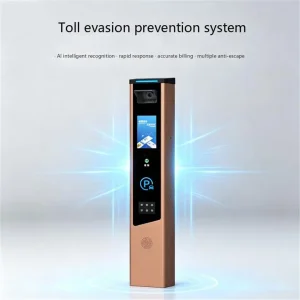 Durable High-Definition License Plate Recognition Integrated - AnRuitong II SystemView Technical Specs
-
 Durable Heavy-Duty Swing Gate Image Reference Manufacturer Factory Direct PricelistView Technical Specs
-
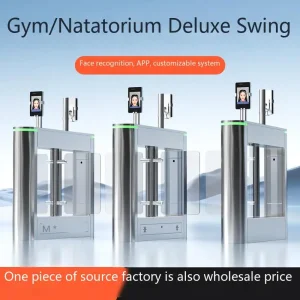 Durable Office Building Entrance Attendance Security Access Control Speed Gate TurnstileView Technical Specs
-
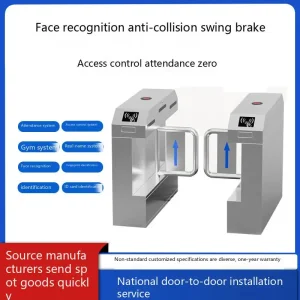 OEM Bridge Type Sloped Pedestrian Swing Barrier Commercial High Traffic QuotationView Technical Specs
-
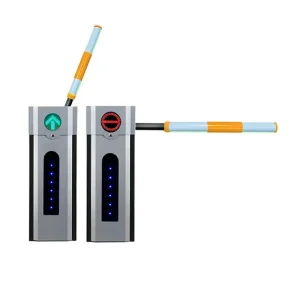 Newest Intelligent Automatic High-Speed Boom Barrier Gate Model D11S Factory UnitView Technical Specs
-
 Durable Heavy-Duty Intelligent Road Barrier Gate Model D03 High-Duty Cycle SystemView Technical Specs
-
Durable High-Def License Plate Recognition Machine Dolphin I Export Grade SystemView Technical Specs
-
Buy Discount Car Parking Toll Access Articulated DC Boom Barrier Gate with Long-Range RFIDView Technical Specs