High-Performance Vehicle & Pedestrian Solutions
Pre-configured hardware modules engineered for seamless API telemetry, high-frequency operation, and rugged all-weather duty.
Global Enterprise Sourcing Paradigms & TCO Optimization
How international commercial hubs, smart cities, and transit complexes balance capital investment with automated field reliability.
Global Procurement Friction
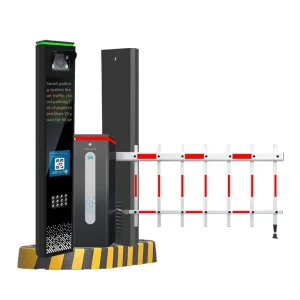
Enterprise procurement departments frequently confront the compromise between high initial CAPEX from tier-one domestic integrators and the variable quality assurance typical of low-tier exporters. The modern standard demands low-cost acquisition with zero compromise on mechanical MTBF (Mean Time Between Failures), requiring automated DC brushless motors rated for over 5 million continuous cycles.
The TCO Equation
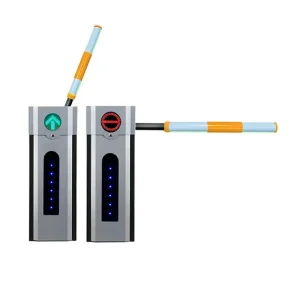
The term "cheap" in large-scale infrastructure has evolved from initial cabinet price tags to Lifecycle Total Cost of Ownership. Modern DC variable-frequency boom barriers reduce electrical draw by up to 45% compared to AC torque motors while eliminating mechanical friction plates, drastically reducing ongoing technician call-out expenses in high-throughput toll hubs.
Industrial Operational Demands
Whether navigating the hyper-arid dust conditions of logistics centers in Qatar or the high-humidity maritime zones across Southeast Asia, boom barrier enclosures require standard IP54 to IP65 electrostatic powder coating, cold-rolled carbon steel, and dual thermal dissipation architecture to prevent circuit controller lockouts.
Technical Roadmap: From RF Control to Edge AI Vision
Architectural evolution of vehicle perimeter security hardware and distributed gateway communications.
Phase 1: Advanced RF Telemetry
Foundational remote control mechanisms utilize 433.92 MHz code-hopping rolling protocols that invalidate replay attacks from RF interceptors. Integrated with digital digital signal processing (DSP) receiver modules, our controllers maintain 30 to 50-meter reliable command reception under significant industrial electromagnetic noise.
- Anti-cloning dynamic keystroke validation
- Extended range micro-strip internal antenna
- Multi-channel frequency assignment capabilities
Phase 2: Hybrid IoT & Wiegand/RS485 Bus
Moving beyond standalone RF transceivers, integrated vehicle gates interface standard Wiegand 26/34, RS485 industrial fieldbus, and TCP/IP Ethernet interfaces. This architecture links barrier arm actuation directly to parking guidance loops, radar sensors, inductive ground loop detectors, and central building management engines.
- Bidirectional telemetry for arm position logging
- Native auto-reverse rebound logic on obstacle collision
- Digital brake angle speed customization (0.6s to 6s)
Phase 3: Edge-AI Vision & Cloud Integration
State-of-the-art entrances synthesize license plate recognition (LPR/ANPR) algorithms processed at the edge camera processor directly linked to the boom barrier controller via local MQTT protocols. Eliminating ticket machines delivers hands-free access control, high throughput velocity, and unassisted autonomous exit processing.
- Sub-200ms edge OCR inference time
- Dynamic plate whitelist/blacklist caching offline
- Automated sync with cloud billing & mobile payment apps
Engineering Standards & Localization Governance
Ensuring compliance across diverse electrical, telecommunications, and physical safety standards globally.
Electromagnetic & Electrical Safety
Export equipment holds CE (LVD/EMC), FCC Part 15 Class B, and RoHS certifications. Dual-voltage operational transformers (110V/220V AC input) and isolated step-down 24V DC inner circuitry protect field personnel while preventing inductive power spikes from disrupting delicate microprocessors.
Environmental Resilience
Barrier enclosures are stamped from 1.5mm to 2.0mm high-tensile cold-rolled steel, followed by zinc phosphate passivation and electrostatic thermoset polyester powder spraying. Cabinets tolerate salt-mist corrosion tests up to 96 hours without blistering, providing deployment confidence in coastal shipping zones.
Field Localization & Telemetry
RF transmitters align with localized radio authority requirements (e.g., 433 MHz in Europe/Asia, 315 MHz or 915 MHz for North America). Boom arms feature universal mounting interfaces for straight, folding (90°/180° articulated for underground basements with low ceilings), and illuminated LED warning profiles.
Frequently Asked Questions: Remote Control Boom Barriers
Actionable clarity on technical parameters, factory direct sourcing, and integration compatibility.
What mechanical components differentiate a low-cost barrier gate from an industrial-grade unit?
How does the factory handle remote control security against frequency scanners and code grabbing?
Can standard remote control barrier gates be upgraded to license plate recognition (LPR) later?
What happens during a complete facility power outage?
What are the lead times and container loading specifications for global export?
Perimeter, Bollard & Parking Space Management Units
Complete your site integration with compatible vehicle security hardware from the same centralized production lines.