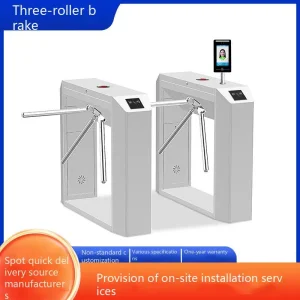
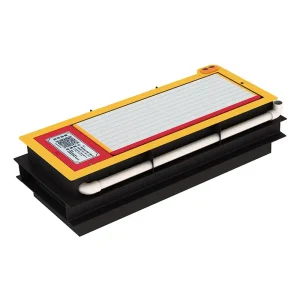
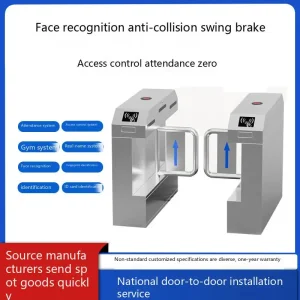
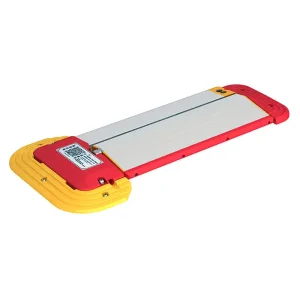
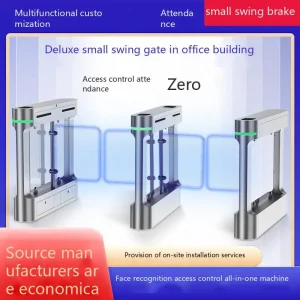
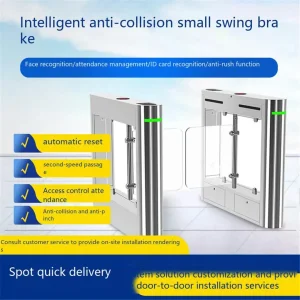
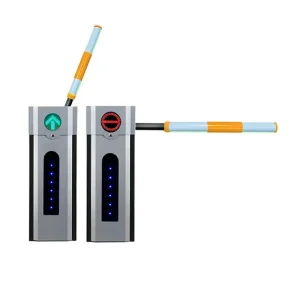
Integrated Entrance Control & Rising Bollard Product Line
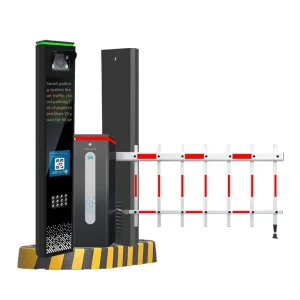
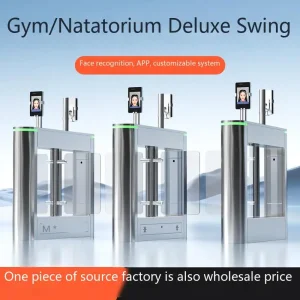
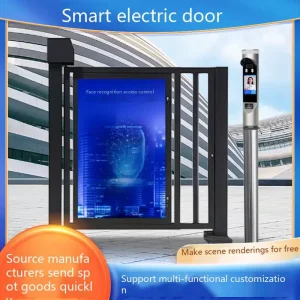
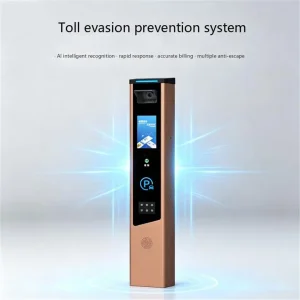
Engineered for seamless integration with unified access control, license plate telemetry, and automated vehicle management platforms.
The Engineering Economics of "Cheap" Hydraulic Rising Bollards
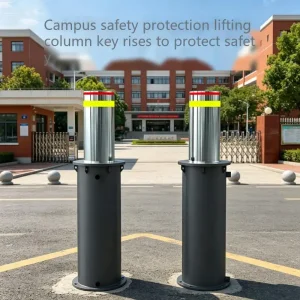
In modern physical perimeter defense, procurement managers and municipal contractors frequently seek "cheap" or economical bollards. At Shenzhen Anrui Intelligent Equipment, we reconcile high-impact crash performance with low initial CAPEX and minimal OPEX through standardized hydraulic architectures and in-house manufacturing efficiency.
Direct-to-Factory Value Engineering
By eliminating multi-tiered international distribution markups and sourcing raw 304/316 stainless steel and seamless Q235 carbon steel directly in the Pearl River Delta industrial cluster, we drive unit manufacturing costs down by 35% compared to European or North American counterparts, without sacrificing metallurgical density or tensile yield strength.
Self-Contained Micro-Hydraulic Units
Our bollards leverage self-contained, integrated hydraulic drive units within the subterranean casing. This eliminates the need for expensive external hydraulic power stations (HPU), underground high-pressure oil piping, and complex subterranean drainage manifolding—cutting installation civil engineering costs by up to 50%.
Life-Cycle MTBF & Low TCO
True affordability is measured over the operational lifespan. Utilizing IP68 submersible seals, solid-state contactless magnetic limit switches, and anti-cavitation hydraulic valves, our rising bollards demonstrate an MTBF exceeding 5,000,000 continuous cycles with near-zero fluid maintenance requirements.
Global Commercial & Industrial Defense Landscape
Rising geopolitical uncertainties, rapid urbanization, and heightened anti-ram compliance standards have shifted retractable bollards from niche military assets into critical baseline infrastructure for commercial and public sectors across 80+ nations.
Smart Urban Pedestrianization
Major metropolitan centers in Europe, Asia, and the Middle East are permanently excluding non-essential vehicular traffic from historical plazas, commercial boulevards, and school corridors. Our bollards provide flush-mount architectural aesthetics with ultra-responsive emergency vehicle pre-emption via automated RFID or RF transponders.
Critical Energy & Logistics Hubs
Oil refineries, LNG storage facilities, petrochemical plants, and multimodal bonded logistics depots require stringent vehicle containment. Anrui hydraulic systems deliver robust containment barriers capable of stopping 7,500 kg commercial transport trucks traveling at 48 km/h to 80 km/h, securing critical supply lines without slowing operational traffic flow.
Government & Diplomatic Enclaves
Embassies, consular compounds, and judicial centers demand rapid deployment and emergency lockdown capabilities. With our proprietary EFO (Emergency Fast Operation) pneumatic accumulator auxiliary module, bollards deploy fully in under 1.2 seconds upon hostile panic triggers or perimeter fence tamper trips.
Technical Benchmark & Global Compliance Standards
Compare our hydraulic rising bollard configurations. Each model is manufactured in compliance with international crash-test criteria, including ASTM F2656, BSI PAS 68, and IWA 14-1 certifications.
| Specification Parameter | Commercial Grade (AR-B101) | High-Security Industrial (AR-B202) | Hostile Vehicle Mitigation / K4 (AR-B303) |
|---|---|---|---|
| Cylinder Diameter | 168 mm (6.61 in) | 219 mm (8.62 in) | 273 mm – 325 mm (10.75 – 12.8 in) |
| Raised Height | 600 mm | 600 mm / 800 mm | 900 mm / 1000 mm |
| Wall Thickness & Material | 6 mm Seamless Q235 Carbon Steel | 8 mm - 10 mm 304 Stainless Steel | 12 mm - 16 mm 316 Marine-grade SS |
| Kinetic Impact Resistance | 250,000 Joules | 680,000 Joules | 1,850,000 Joules (Zero Penetration) |
| Crash Rating Equivalent | Civil Traffic Calming | ASTM F2656 M30 / P1 | ASTM F2656 M50 / PAS 68 V/7500[N3]/80 |
| Operating Pressure / Drive | Integrated Hydraulic (3.5 MPa) | Integrated Electro-Hydraulic (5.0 MPa) | Hydraulic Power Station with Dual Pump (10.0 MPa) |
| Protection Rating & Temps | IP68 (-30°C to +70°C) | IP68 (-40°C with heating to +75°C) | IP68 Hermetic Submersible (-45°C to +80°C) |
| Ascent / Descent Timing | 3.5 seconds | 2.8 seconds | 2.5 seconds (EFO: 1.0 - 1.2s) |
| Telemetry & Protocols | Dry Contact, RS485, Relay | RS485, Wiegand, TCP/IP | Modbus-TCP, CAN-Bus, Encrypted IoT MQTT |
Localized Engineering Support & Global Export Compliance
Supplying bollards to international markets demands deep alignment with regional building codes, electrical standards, and prompt on-site engineering assistance.
Dual-Voltage & Tropicalized Electronics
Every export unit is configured for the destination country’s electrical infrastructure—whether 110V/60Hz (North America), 220-240V/50Hz (Europe, Middle East, Asia), or solar DC feeds. Hydraulic pump windings are conformal-coated against extreme tropical humidity, monsoon flooding, and saline sea-air corrosion.
Full CAD, BIM & Civil Engineering Packs
We supply turnkey engineering documentation with every order: subterranean pit excavation profiles, gravel bed drainage coefficients, conduit pathway schemes, and BIM / Revit 3D assets to enable general contractors and project architects to integrate bollards into tenders effortlessly.
24/7 Field Support & Modular Spares
With critical installations running across Poland, Qatar, the Philippines, Pakistan, and Timor-Leste, Anrui delivers 24/7 remote diagnostic support. Standardized sub-assemblies ensure fast, plug-and-play field replacement of solenoid coils, hydraulic pumps, or circuit boards within minutes.
Technical Roadmap: The Autonomous Perimeter Security Node
Hydraulic bollards are evolving from static hydraulic actuators into smart, connected edge-computing perimeter nodes. Explore the key engineering horizons currently being deployed in our Shenzhen R&D laboratories.
AI Computer Vision Pre-Validation
Direct low-latency coupling with edge-embedded License Plate Recognition (LPR) and LiDAR chassis profiling cameras. The bollard control architecture preemptively calculates incoming vehicle velocity and authorization vectors, dynamically deploying or lowering bollards with zero driver dwell time.
Predictive Cloud Health Telemetry
Continuous monitoring of hydraulic fluid viscosity, operating temperature, pressure rise curves, and electrical current harmonics transmitted via MQTT to cloud maintenance dashboards. Technicians receive early warning notifications before mechanical degradation or cavitation can cause site downtime.
Supercapacitor Blackout Reserves
Traditional heavy lead-acid UPS units are being replaced with solid-state supercapacitor banks integrated directly inside the bollard pit. This provides guaranteed rapid EFO emergency ascents and emergency manual descents even in the event of total municipal grid power failure or physical cable severance.
Frequently Asked Questions on Hydraulic Rising Bollards
Authoritative technical and commercial insights for engineering consultants, systems integrators, and international procurement teams.
Hydraulic systems offer an intrinsically superior power-to-mass ratio and high shock damping. When an unauthorized vehicle impacts a raised bollard, the violent kinetic energy is transferred to the foundation casing and absorbed by non-compressible hydraulic fluid. Electromechanical screw gears or belts frequently strip or shatter under impact, requiring total mechanism replacement, whereas hydraulic cylinders withstand high dynamic shocks with minimal damage.
Each bollard requires an excavated pit approximately 300 mm wider and deeper than the outer casing. A base gravel layer of 250 mm to 300 mm is mandatory to allow natural gravity drainage of rainwater. For high-water-table or subterranean parking environments where gravity drainage is impossible, our bollards feature IP68 submersible seals, and we supply an automated submersible sump pump connection with float switches.
Our export bollards utilize high-performance low-viscosity aviation hydraulic fluid (MIL-H-5606 standard or synthetic equivalents) that operates smoothly down to -30°C. For regions in Northern Europe, Canada, and Central Asia experiencing temperatures down to -45°C, we provide internal PTC thermostatic heating jackets and automated cycling software that warms the internal cylinder continuously.
Yes. The main PLC control cabinet features universal dry contacts, optocoupler isolation, RS485 serial buses, and standard Wiegand interfaces. They integrate directly with RFID long-range readers, ANPR / LPR license plate cameras, building management systems (BMS), induction loops, and red/green traffic signaling lights without requiring proprietary hardware adapters.
Our bollard systems feature a manual mechanical release valve on the hydraulic manifold. By opening this valve, the cylinder smoothly retracts under its own gravity to clear the roadway for emergency service vehicles. Optionally, systems can be fitted with an uninterruptible power supply (UPS) or accumulator to provide up to 10 automated cycles on battery reserve.
Standard models (168mm and 219mm diameter) are maintained in semi-finished stock with assembly and 48-hour pressure-testing lead times of 7-10 business days for orders up to 50 units. Customized K4/K12 bollards require 15-20 days. Shipments are packaged in fumigated solid wooden crates engineered for sea freight (FCL/LCL), air cargo, or multimodal trans-Eurasian rail logistics.
Download Complete Technical Whitepaper & CAD Profiles
Access full dimensional blueprints, wiring schematics, hydraulic valve layouts, and tender specification sheets.
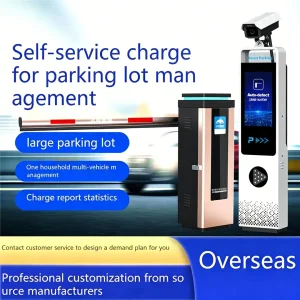
Verified Parking Hardware & Access Management Solutions
Complete project portfolios sourced directly from our 8,000 m² Shenzhen intelligent manufacturing facility.