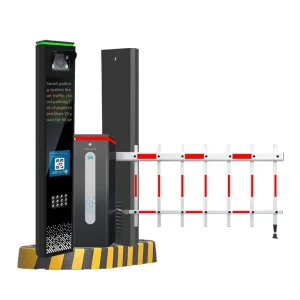
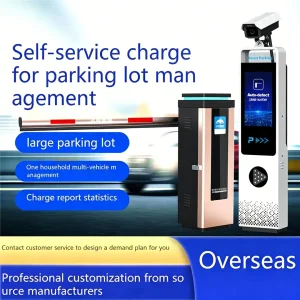
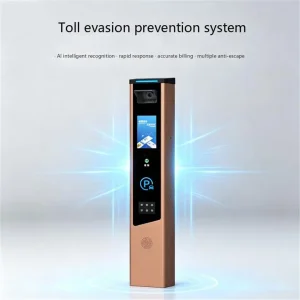
Featured Industrial Barrier Gates & Perimeter Systems
Engineered for unattended perimeter checkpoints, high-traffic commercial plazas, toll stations, and municipal interchanges worldwide.
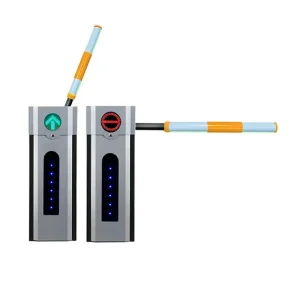
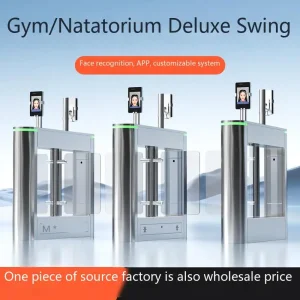

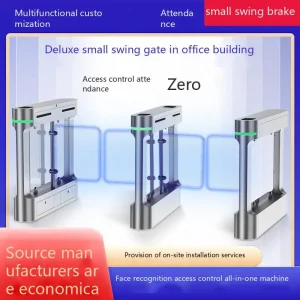
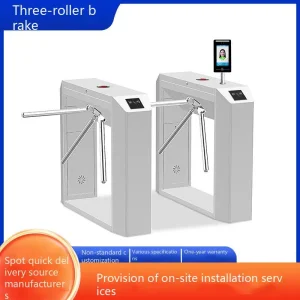
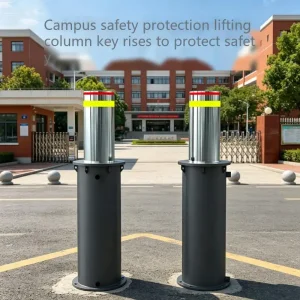
The Technological Paradigm Shift in Automated Barrier Engineering
How next-generation 24V/36V DC brushless servo drivetrains and rigorous CE machinery directives are replacing legacy AC mechanical drives worldwide.
The international perimeter security and vehicle revenue control systems (PARCS) landscape is experiencing an accelerated technological migration. For decades, traditional parking barrier installations relied heavily on single-phase AC induction motors combined with hydraulic dampening cylinders or worm-gear mechanical transmissions. While mechanically resilient, these legacy platforms presented inherent operational limitations: high thermal throttling under frequent cycle loads, fixed mechanical speeds (typically limited to 3 to 6 seconds), high failure rates in mechanical limit switches, and elevated energy consumption during peak traffic surges.
Modern infrastructure procurement mandates have radically altered engineering requirements. Municipal traffic managers, commercial real estate developers, and automated tollway operators now demand high-throughput, precision-controlled, and energy-conserving perimeter gates that integrate directly with license plate recognition (LPR) cameras, LiDAR anti-tailgating sensors, and building management protocols (BACnet/Modbus/MQTT). Central to this transformation is the universal adoption of 24V/36V Brushless DC (BLDC) Servo Motors paired with integrated planetary reduction gearboxes and dual-channel digital encoders.
Variable Vector Speed Control
BLDC digital controllers execute microsecond curve dampening, offering adjustable actuation times ranging from 0.6s (high-speed toll lanes) to 6.0s (heavy-duty 6m articulated booms), virtually eliminating mechanical bounce and structural fatigue.
Strict CE Directive Compliance
Compliance with Machinery Directive 2006/42/EC, EMC Directive 2014/30/EU, and EN 12453 / EN 12445 safety standards. Systems feature torque-limiting auto-rebound sensing within 5 milliseconds of obstacle contact.
IoT Edge Telemetry & Field Diagnostics
Native RS485, CAN-bus, and Ethernet TCP/IP interfaces relay real-time RPM, motor temperature, lifecycle counts, and operational logs to cloud platforms for predictive maintenance scheduling.
Automatic Parking Barrier Gate Factory Pricing Anatomy
Understanding the fundamental engineering cost drivers, mechanical tiering, and operational Total Cost of Ownership (TCO) for enterprise buyers.
In international business-to-business procurement, factory quotations for automatic barrier gates fluctuate between roughly $180 USD to well over $1,200 USD per lane mechanism on an EXW/FOB basis. Evaluating a quotation solely based on initial unit price often exposes projects to disproportionate long-term maintenance costs, downtime penalties, and liability concerns. A professional engineering procurement assessment requires dissecting the bill of materials (BOM), structural metallurgy, surface treatments, motor duty ratings, and integrated firmware capabilities.
| Classification Tier | Motor & Gearbox Topology | Actuation Speed | Duty Cycle & MTBF | Cabinet Treatment | Indicative FOB Range (Shenzhen) |
|---|---|---|---|---|---|
| Economy Commercial | 220V/110V AC Mechanical Motor, Die-cast Worm Reducer | 3.0s - 6.0s (Fixed) | 60% Duty Cycle ~1.5M Cycles MTBF |
1.5mm Cold-Rolled Sheet, Standard Powder Coat | $180 – $280 USD |
| Professional Industrial | 24V Brushless DC (BLDC), Helical Precision Gearbox | 1.5s - 4.0s (Adjustable) | 100% Continuous Duty ~5.0M Cycles MTBF |
2.0mm Galvanized Steel, Electrostatic UV-Resistant Poly | $320 – $550 USD |
| Heavy-Duty High-Speed Toll | 36V/48V Industrial Digital Servo, Planetary Reducer | 0.6s - 1.2s (Vector Dynamic) | 100% Extreme Duty ~10.0M Cycles MTBF |
2.0-2.5mm Hot-Dip Galvanized / 304 Stainless Base | $580 – $950 USD |
| Commercial Advertising Barrier | High-Torque BLDC Servo + Integrated Louver Linkage | 3.5s - 6.0s (Synchronous) | 100% Heavy Duty ~3.0M Cycles MTBF |
Reinforced Structural Alloy, Tempered Glass / LED Panels | $650 – $1,250 USD |
Key Component Factors Influencing Unit Quotations
1. Cabinet Metallurgy and Corrosion Resistance: Standard carbon steel with cheap single-layer spray paint corrodes rapidly in coastal or humid environments. Shenzhen Anrui utilizes high-grade cold-rolled and electro-galvanized sheet steel with a minimum thickness of 2.0mm, followed by an automated multi-stage pre-treatment (phosphating/degreasing) and automotive-grade dual-layer electrostatic powder coating tested to survive 1,000+ hours of continuous neutral salt spray (ISO 9227 testing).
2. Gearbox Machining Precision & Thermal Dissipation: Low-cost factories utilize sintered powder-metal gears or low-grade bronze worms that wear down under high-cycle conditions. High-reliability barrier systems employ carburized, quenched, and precision-ground 40Cr alloy steel helical gears encased in an IP65 sealed aluminum alloy housing with synthetic high-temperature lubricant (-40°C to +85°C operating envelope).
3. Integrated Sensory Safety Arrays: Modern CE-compliant gates require multi-tier safety architecture. In addition to internal algorithmic motor-load monitoring, professional systems incorporate high-frequency loop detectors, dual-channel millimeter-wave anti-smash radars, infrared safety photocells, and rubberized pneumatic pressure safety strips on the boom's underside.
China Industry 4.0: Supply Chain Resilience & Efficiency Advantages
Why Shenzhen and the Pearl River Delta remain the unmatched epicenter for high-precision access control hardware manufacturing.
The global procurement landscape has increasingly highlighted the critical role of agile, robust, and technologically sophisticated industrial clusters. For access control equipment, parking automation machinery, and security physical gates, Shenzhen stands as the undisputed technological and logistical epicenter. Operating within an 8,000+ m² modernized manufacturing facility in Guangming District, Shenzhen Anrui Intelligent Equipment Co., Ltd. embodies the convergence of deep electro-mechanical engineering with agile supply chain efficiency.
Full Vertical Integration
From in-house CNC sheet metal laser cutting and robotic seam welding to surface electrostatic powder curing and high-speed SMT printed circuit board assembly, vertical control minimizes subcontractor margins and guarantees strict dimensional tolerances.
Hyper-Localized Component Clustering
Within a 30-kilometer radius in the Greater Bay Area, our production lines access tier-one copper wire winding specialists, optical sensor fabricators, high-yield aluminum extruders, and microchip packaging plants, compressing standard production lead times to 5–7 business days.
Continuous Automated Burn-in QC
Every motorized mechanism leaving the assembly floor undergoes an automated 72-hour continuous cycling test protocol, dynamic mechanical balancing, vector current overload verification, and computerized high-voltage insulation tests.
Commercial Application Scenarios & Regional Environmental Adaptations
Field-proven engineering implementations tailored to distinct climatic extremes, urban architectural demands, and security thresholds across 80+ countries.
Middle East & Desert GCC Deployments (e.g., Qatar, UAE)
Challenge: Ambient temperatures exceeding +50°C, high UV solar radiation, and ultra-fine silica sand infiltration.
Engineering Solution: Customized internal cooling fans with thermostatic triggers, labyrinth-sealed rubber gasket seals certified to IP65, heavy UV-stabilized fluorocarbon cabinet powder finishes, and pressurized ventilation.
Nordic & Central European Climates (e.g., Poland, Scandinavia)
Challenge: Sub-zero winter freezes (-30°C), heavy snowfall, sleet accumulation, and mechanical ice locking.
Engineering Solution: Built-in PTC ceramic heating elements with automatic dew-point sensors, low-temperature synthetic silicon grease inside planetary reducers, and high-strength aluminum alloy boom profiles engineered against heavy crosswinds.
High-Density Urban & Mixed Traffic Interchanges (e.g., Philippines, Pakistan)
Challenge: Extreme humidity, monsoon rainstorms, high motorcycle/pedestrian intermixing, and aggressive tailgating.
Engineering Solution: Fast-actuation 1.2s brushless boom drives synchronized with AI License Plate Recognition (LPR) cameras, integrated FMCW radar collision sensors, and anti-collision breakaway boom brackets that protect drive mechanisms during accidental impact.
Engineering & B2B Procurement FAQ (Q&A)
Detailed technical and commercial answers addressing common engineering queries from international contractors, systems integrators, and project estimators.
What specific standards define CE certification for automatic parking barrier gates?
- Machinery Directive (2006/42/EC): Requires mechanical risk assessment, crushing force limitation, and emergency manual release validation under EN 12453 and EN 12445.
- Electromagnetic Compatibility Directive (EMC 2014/30/EU): Verifies under EN 61000-6-2 (immunity for industrial environments) and EN 61000-6-4 (emission standard) that the servo drive won't interfere with or suffer degradation from nearby wireless toll transponders, UHF readers, or radio signals.
- Low Voltage Directive (LVD 2014/35/EU): Evaluated via EN 60204-1 for electrical safety, ground bonding, and high-voltage insulation tests up to 1,500V.
What is the mechanical difference between AC induction and 24V/36V DC brushless servo barrier motors?
How does boom length correlate with motor wattage and opening speed?
- Lanes from 1.5m to 3.0m: Can achieve ultra-fast speeds (0.6s to 1.5s) using a standard 140W to 200W servo motor, ideal for express highway toll gates and high-throughput corporate checkpoints.
- Lanes from 3.5m to 4.5m: Require speeds between 2.0s to 3.0s with calibrated counterbalancing compression springs to avoid gearbox shock.
- Lanes from 5.0m to 6.0m: Require heavy-duty 200W to 350W servomotors, dual heavy-gauge counterbalance springs, and controlled actuation speeds of 4.0s to 6.0s. For boom lengths exceeding 5.0m, wind resistance profiles (octagonal or round booms) and stabilizing end-support posts are mandatory.
How are Anrui barrier gates integrated into third-party parking management & LPR systems?
- Dry Contact Relays: Standard NO/NC inputs for Open, Close, Stop, and Emergency Lock commands compatible with all access control relay boards.
- Serial & Bus Protocols: Built-in RS485 and optional CAN-bus ports utilizing standard Modbus-RTU commands, enabling direct software queries for gate status (Angle open, Obstacle triggered, Cycle count, Error codes).
- Wiegand / TCP/IP: Direct pairing with RFID UHF readers and IP LPR camera relays for zero-latency vehicle authorization and automatic passage logging.
What anti-crush and vehicle detection safety redundancies are implemented?
- Electronic Vector Load Feedback: The servo drive samples motor torque at 1,000Hz; if resistance exceeds the programmable threshold, the arm reverses upwards in less than 5 milliseconds.
- FMCW Millimeter-Wave Anti-Smash Radar (79GHz): Detects both vehicles and pedestrians crossing the lane directly under the boom arm, eliminating costly ground cutting required by inductive loops.
- Dual-Loop Vehicle Detectors: Buried induction coils trigger directional logic to distinguish forward vehicle motion from tailgating attempts.
- Pneumatic / Resistive Safety Edge (Optional): A soft rubber bumper strip with embedded contact sensors mounted on the boom underside triggers instant auto-rebound upon tactile contact.
What warranty, spare parts, and lifecycle technical support are provided to overseas buyers?
What are the container load capacities (MOQ, CBM, and weight) for sea freight logistics?
- 20-Foot Standard Container (20GP): Holds approximately 150 to 180 standard barrier gate mechanisms including booms and mounting accessories.
- 40-Foot High-Cube Container (40HQ): Holds approximately 360 to 420 units depending on boom type (telescopic vs one-piece straight booms).
- Minimum Order Quantity (MOQ): Sample orders are accepted starting from 1 unit. Volume discounting tiers commence at 10 units, 50 units, and full container load (FCL) shipments.
Can Anrui provide OEM/ODM customization for corporate brand identity?
Complementary Smart Parking & Pedestrian Hardware
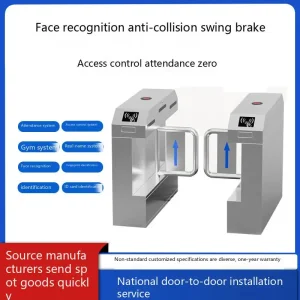
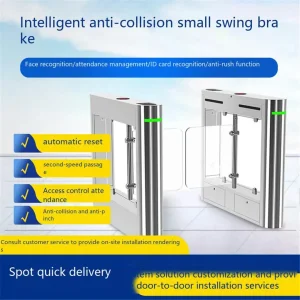
Seamlessly synchronize automated boom barriers with our high-definition LPR cameras, smart bollards, pedestrian speed gates, and automated space locks.