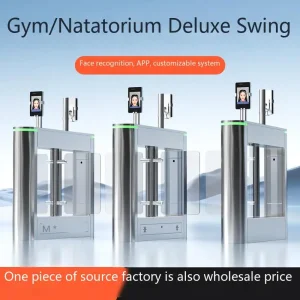
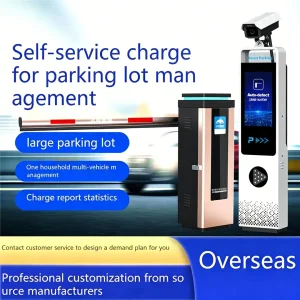
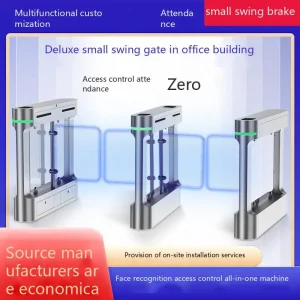
Integrated Access Automation Portfolio
Combining heavy-duty mechanical sliding assemblies with edge-connected parking and pedestrian intelligence.
Global Architectural Landscape: Evolution of Slide and Stack Systems
Strategic analysis of multi-slide configurations, spatial adaptability, and smart envelope infrastructure.
Zero-Clearance Spatial Stacking
Unlike conventional bi-fold or heavy outward-swinging doors, modern slide and stack doors run along low-profile top and bottom tracks, parking neatly inside a dedicated recessed bay or parallel stack wall. This eliminates unusable dead zones in high-traffic logistics bays, hospitality lounges, and commercial perimeters.
Structural Aerodynamics & Sealing
Modern commercial infrastructure demands high wind-load ratings (ASTM E330) and thermal break integrity. Multi-panel slide and stack installations utilize interlocking EPDM perimeter seals and high-tensile 6063-T6 architectural aluminum profiles, retaining internal climate control across wide spans up to 18 meters.
Edge-Ready IoT Synchronicity
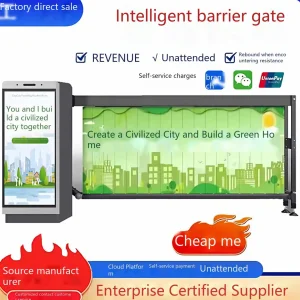
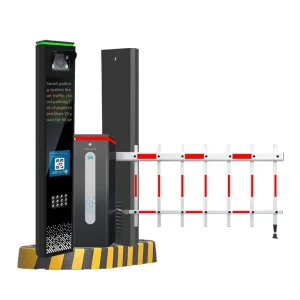
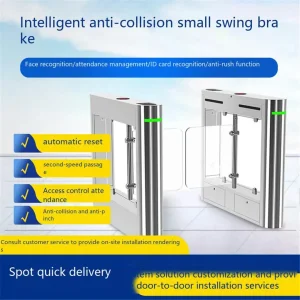
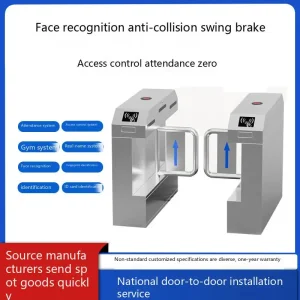
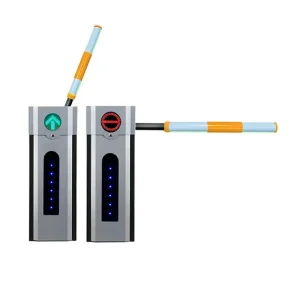
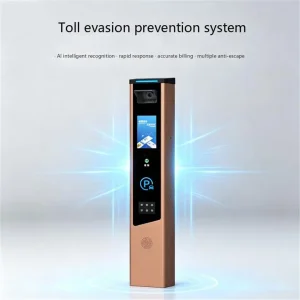
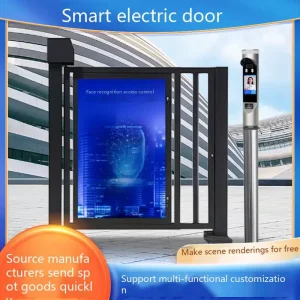
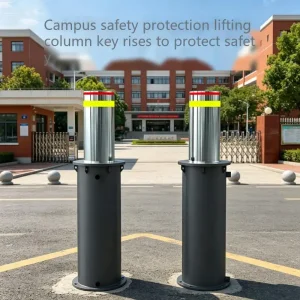
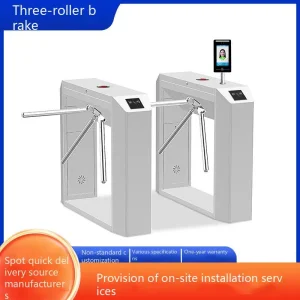
Hardware must not exist in a silo. Shenzhen Anrui bridges heavy structural multi-slide sliding panels with edge telemetry: linking physical opening sensors with license plate recognition (ANPR), high-speed perimeter swing turnstiles, and unattended vehicle barrier hubs via unified RS485 and TCP/IP channels.
China Factory Precision: Manufacturing Advantages & Economies of Scale
How Shenzhen Anrui delivers commercial grade custom tolerances without inflated project premiums.
Lean Automation Lines
From automated laser profile cutting to robotic seam-welding of high-stress track runners, our factory operations in Guangming District decrease dimensional deviation to below 0.3mm across multi-meter track arrays.
Supply Chain Density
Located in the heart of Shenzhen's hardware hub, raw architectural alloy billets, DC brushless motors, optical glass, and PCB modules are sourced within a 30km radius, shortening fabrication turnaround by 45% compared to Western counterparts.
Rigorous Fatigue Life Testing
Every slide runner, hinge bearing, and tension bracket undergoes a 500,000-cycle load endurance verification in our facility prior to export crating, preventing premature track galling and roller failure under continuous operation.
Value-Engineered Direct Pricing
By operating an integrated 8,000 m² plant, we eliminate multi-tier brokerage markups. Overseas buyers procure heavy custom slide and stack door solutions at transparent, budget-friendly ex-factory costs.
Engineered for Harsh Real-World Operating Environments
Deployment-tested hardware resilience across diverse climatic and structural environments.
Tropical & High-Humidity (Southeast Asia)
In project deployments across the Philippines and Timor-Leste, ambient salt air and 90%+ humidity degrade standard steel tracks within months. Anrui implements anodized finishes exceeding 25 microns and marine-grade 316 stainless roller bearings to prevent pitting corrosion and track binding.
Arid & Sand-Laden Perimeters (Middle East)
Operating in Qatar and desert zones requires dust-sealed enclosed track runners. Self-cleaning nylon track wipers brush ultra-fine silt away with every sliding sequence, preventing mechanical friction lockups even during major particulate storms.
Sub-Zero & Snow Envelopes (Central & Eastern Europe)
Deployed in Poland and across northern climates, our track solutions feature internal drainage troughs and optional trace-heating conduits that prohibit ice accretion along stacking sills, ensuring clean opening kinematics year-round.
Industry Directives: The Future of Architectural Slide & Stacking Hardware
Key vectors transforming international commercial specifications and B2B contractor procurement.
Thermal Envelope Compliance
Stringent LEED and European Energy Performance of Buildings Directive (EPBD) laws mandate lower U-values. The industry is rapidly pivoting from single-pane sliding frames to multi-cavity thermally broken slide and stack doors fitted with argon-filled low-E glass panels to cut HVAC loss by up to 38%.
Unified Building Automation (BACnet & Modbus)
Modern building owners no longer accept isolated entrance hardware. Automated sliding and stacking portals must directly report open/closed/tamper states to central BMS dashboards alongside smart parking barriers, LPR systems, and perimeter tripwires.
Total Life-Cycle Cost Evaluation
Global general contractors have moved past initial purchase price toward Total Cost of Ownership (TCO). High-grade self-lubricating rollers, low motor amp draw, plug-and-play modular control boards, and standard off-the-shelf wear components drive supplier selection.
Engineering & Procurement FAQ
In-depth answers addressing installation, customization, and multi-system integration.
What is the structural difference between standard sliding doors and slide and stack systems?
Standard sliding doors move along fixed parallel tracks where each leaf remains on its own plane, limiting the clear opening to typically 50% or 66% of the span. Slide and stack systems allow panels to slide into a designated storage recess and pivot or nest flush against one another, creating an unobstructed clear opening of over 90% without compromising structural lintel strength.
How does Shenzhen Anrui maintain budget-friendly pricing without sacrificing structural integrity?
Our pricing advantage stems from industrial clustering in Guangming District, automated CNC profile machining, high internal mold reusability, and direct factory-to-contractor distribution. We eliminate wholesale layers, pass raw material bulk purchasing savings directly to clients, and standardise mechanical wear components across multiple product lines.
Can motorized slide and stack doors integrate with existing access control turnstiles and LPR gates?
Yes. Our motorized assemblies include dry contact relays, Wiegand, RS485, and TCP/IP control interfaces. They can be commanded to open or lock via signals from our License Plate Recognition (LPR) cameras, RFID badge turnstiles, or centralized building automation emergency overrides.
What customized architectural dimensions and finishes are supported?
We manufacture custom leaf heights up to 4.5 meters and leaf widths up to 1.8 meters. Finishes include standard RAL electrostatic powder coating, multi-hue anodizing (15-25µm), fluorocarbon (PVDF) for severe coastal exposure, and wood-grain sublimation transfers for upscale architectural facades.
How do you support overseas field installation and technical commissioning?
Every shipment is accompanied by comprehensive 3D CAD fabrication layouts, detailed installation manuals, and pre-labeled wiring harnesses. We provide 7x24 remote engineering video support to assist local project teams during lintel fastening, track alignment, and motor calibration.
What safety measures are engineered into the automated stacking cycle?
Automated variants incorporate redundant safety mechanisms: dual-beam infrared photocell curtains across the track line, torque-monitoring obstacle detection on DC drives, manual emergency hand-clutch release mechanisms, and optional fail-safe fire alarm signal trigger releases.
Complete Entrance & Perimeter Hardware Line
Commercial vehicle barriers, smart parking locks, speed turnstiles, and recognition terminals.