
Commercial LPR Nodes & Barrier Automation Modules
Procure fully harmonized vehicle access control components engineered for high-throughput unattended parking lanes, toll plazas, and automated barrier checkpoints.
The Global Commercial Evolution of LPR Surveillance Systems
From centralized backhaul server OCR bottlenecks to sub-20ms Edge Neural Processing Units (NPUs): How budget-friendly ALPR cameras are transforming international commercial infrastructure.
Edge AI vs Server-Bound Processing
Traditional Automatic Number Plate Recognition (ANPR) systems relied on expensive centralized compute servers requiring massive bandwidth to push full uncompressed video feeds. Today's commercial LPR cameras execute YOLOv8/v10 neural network inference directly on-chip within 15–30 milliseconds, dramatically lowering server licensing fees and total installation overhead.
- Zero backhaul bandwidth saturation via metadata transmission
- On-device whitelisting of up to 50,000 plates
- Direct relay trigger for instant barrier arm actuation
Global Market Expansion ($6.8B by 2029)
The global intelligent vehicle identification market is compounding at over 11.4% CAGR, driven by municipal Low-Emission Zones (LEZ), automated Free-Flow highway tolling, and commercial smart parking hubs. Mid-tier commercial enterprises no longer accept five-figure legacy surveillance quotes when agile, budget-friendly hardware offers 99.2%+ optical capture accuracy.
- Demand surges in Latin America, Southeast Asia & Eastern Europe
- Migration from paper ticket dispensing to frictionless license plate billing
- Universal acceptance across commercial fleet yards & logistics hubs
Standardized Protocols & Open Ecosystems
B2B procurement teams now mandate non-proprietary hardware. Budget-conscious contractors reject ecosystem lock-in, preferring cameras featuring native ONVIF Profile S/G/T, MQTT, and JSON RESTful APIs that interface immediately with local access management platforms, Milestone, Genetec, or open-source Python controllers.
- Zero perpetual recurring device licensing fees
- Direct Wiegand 26/34 and RS-485 outputs for legacy access integration
- Cross-platform Docker containerization capabilities on the edge
Why Shenzhen Direct Manufacturing Redefines LPR Affordability
Examining how high-density vertical integration in Guangming District delivers 45–60% hardware savings while surpassing international MTBF metrics.
Dedicated SMT cleanrooms, precision robotic optical alignment rigs, and automated dielectric sealing stations.
Continuous algorithmic adaptation for over 150 international country plate fonts, syntax structures, and emblems.
Battle-tested hardware deployed in desert extremes of Qatar, sub-zero winters of Poland, and humid tropical zones.
Fully bridged payment gateways enabling unattended scan-to-pay via dynamic on-screen QR codes.
The Component Clustering Phenomenon
The dramatic cost reduction of high-performance LPR cameras is not an indicator of cut corners; rather, it is the direct byproduct of the Shenzhen Pearl River Delta Hardware Cluster. Within a 30-kilometer manufacturing radius, our production facility sources Sony STARVIS 2 back-illuminated CMOS sensors, high-grade optical glass zoom lenses (2.8–12mm / 6–22mm motorized auto-focus), anti-glare polarizing optical filters, and custom cold-rolled zinc-coated aluminum housings.
By bypassing multi-tier international distributors, white-label repackagers, and European/American re-branding markups, B2B procurement directors gain direct access to Tier-1 surveillance hardware at genuine direct-from-factory quotes. Every unit undergoes automated thermal stress simulation (-30°C to +75°C), high-pressure IP67 water jet containment tests, and 72-hour continuous burn-in before export sign-off.
Comprehensive 2026 Budget LPR Camera Pricing Matrix
Factory-direct FOB Shenzhen benchmark pricing versus traditional domestic system integrator MSRP across varied operational lane environments.
| Camera Tier / Architecture | Optical Sensor & NPU Compute | Capture Speed & Distance | Supported Protocols | Typical Applications | Direct Factory Price (FOB) |
|---|---|---|---|---|---|
|
Entry Commercial Access LPR Fixed Focal Stop-and-Go |
2.0MP 1080P Sony CMOS 0.5 TOPS Edge AI OCR |
0 – 35 km/h 2.5 – 6.0 Meters |
TCP/IP, ONVIF, Relay, Wiegand 26/34 | Residential Gated Communities, Employee Lots | $180 – $260 $650+ MSRP |
|
Integrated Smart Totem LPR AnRuitong II All-in-One Series |
3.0MP Ultra-HD Wide Dynamic 1.2 TOPS Edge Deep Learning |
0 – 50 km/h 3.0 – 10.0 Meters |
HTTP RESTful, MQTT, JSON, Strobe Sync | Commercial Office Towers, Shopping Plazas | $310 – $440 $1,150+ MSRP |
|
High-Speed Industrial Yard LPR Dolphin I Heavy Duty Housing |
4.0MP 60FPS Low-Light Global Shutter 2.0 TOPS Multi-Core NPU |
0 – 80 km/h 4.0 – 18.0 Meters |
ONVIF Profile T, Webhooks, Dual Relay Out | Logistics Centers, Weighbridges, Free-Flow Ingress | $420 – $590 $1,580+ MSRP |
|
Highway Multi-Lane Tolling LPR Dual-Sensor Spectrum Rig |
4K 8.0MP + Strobe Sync IR 4.0 TOPS Advanced Tensor OCR |
0 – 220 km/h 10.0 – 35.0 Meters |
GigE Vision, RTSP, SFTP Raw Storage | Electronic Toll Collection (ETC), Border Control | $780 – $1,250 $3,400+ MSRP |
|
Curbside Micro Parking Lock LPR Battery/Solar Ultra-Low Power |
1.3MP Wide Angle Lens Micro-NPU Motion Awake OCR |
Static (Parked Bays) 0.5 – 2.0 Meters |
4G LTE Cat-1, NB-IoT, BLE 5.2 | Municipal On-Street Parking, EV Bay Enforcement | $85 – $145 $380+ MSRP |
Real-World Deployment Environments & Architectural Topologies
Engineered to resolve complex optical challenges across varied commercial, urban, and harsh industrial perimeters.
Ticketless Unattended Car Parks
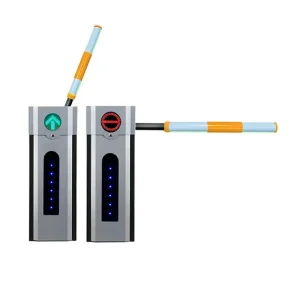
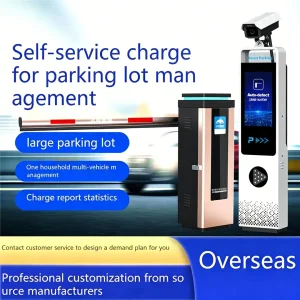
Deploying high-speed barrier gates integrated directly with license plate cameras replaces ticket dispensers, reducing mechanical jam calls by 94%. Drivers glide in; on departure, roadside QR displays or automated payment apps settle fees via plate identification.
- Eliminates thermal ticket roll replenishment costs
- Reduces lane idling time from 12s to under 1.8s
- Eliminates lost-ticket fraud and revenue leakage
Industrial Weighbridges & Freight Yards
Logistics hubs require absolute validation of haulage tractors and chassis container numbers. Dual-angle Dolphin I cameras synchronize front and rear plates while simultaneously triggering automated gross-weight recording without requiring driver cabin egress.
- Immune to heavy soot, diesel exhaust, and dust
- Anti-vibration bracket design for heavy axle rumble
- Direct relay interface with automated digital weigh scales
Corporate Office Towers & Mixed-Use Estates
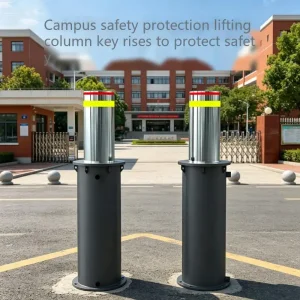
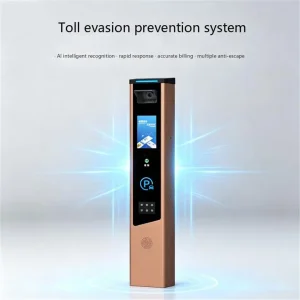
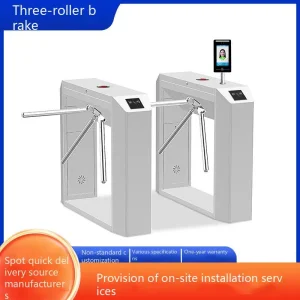
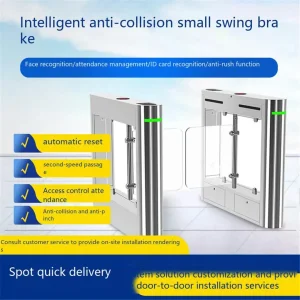
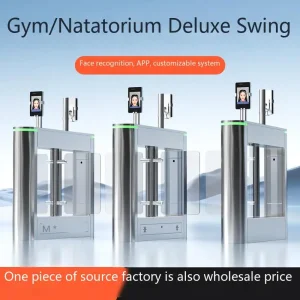
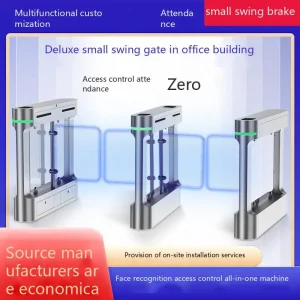
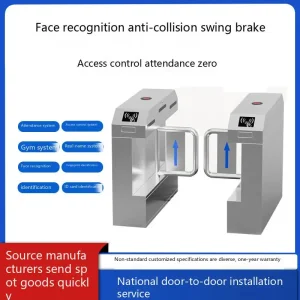
Architects insist on slim, elegant hardware footprints. Integrated totems pairing license plate recognition with high-speed swing speed gates and rising bollards establish an unbroken perimeter shield for VIP executives, registered staff, and vetted couriers.
- Brushed 304/316 stainless steel weatherized housings
- Seamless integration with RFID visitor lobby passes
- Automated whitelist sync with active HR directories
Technological Paradigms Shaping Next-Gen Surveillance
Critical optical, mathematical, and algorithmic developments eliminating environmental failure modes.
Retroreflective & High-Beam Glare Cancellation
Standard security cameras wash out when high-intensity LED headlights point directly into the lens or when ultra-reflective license plates return flash stroboscopic flare. Modern LPR architectures integrate Hardware True WDR (120dB–140dB) combined with synchronized pulsed IR arrays (850nm) to isolate plate embossing cleanly, regardless of opposing high beams.
Deep Learning Vehicle Classification (MMCR)
Advanced commercial deployments do not settle for alphanumeric strings alone. Current edge firmware integrates Make, Model, Color, and Recognition (MMCR). If a stolen plate registered to a silver sedan is attached to a blue commercial delivery van, the onboard neural network flags a high-priority mismatch alert instantly to security operators.
Ultra-Low Latency Embedded Control Loops
Latency is the critical metric in high-volume traffic control. By combining on-chip OCR parsing with direct onboard solid-state optocoupler relays, the response timeline from plate front-edge detection to barrier gate upward motor torque actuation is compressed to under 180 milliseconds, eliminating driver brake tap hesitancy.
Total Cost of Ownership (TCO) & Procurement Selection Criteria
A rigorous five-year lifecycle economic comparison: Budget factory-direct hardware vs. Western brand legacy systems.
1. Initial CAPEX Hardware Investment
Traditional Tier-1 European/American brands invoice comparable dual-camera lane hardware between $2,800 and $4,200 per lane. Sourcing direct from Shenzhen reduces baseline hardware CAPEX to $350 – $650 per lane, releasing capital for civil ground loop sensors, bollards, and high-duty barrier gates.
2. Zero Annual Channel Software Tax
Legacy surveillance manufacturers typically enforce mandatory recurring annual license maintenance contracts ($120–$300 per camera per annum). Anrui factory solutions implement embedded perpetual algorithmic edge licenses, yielding thousands of dollars in cumulative savings over a standard 5-year operational lifecycle.
3. Mean Time Between Failures (MTBF)
Budget hardware must endure extreme outdoor conditions. Fabricated with die-cast aluminum alloys, conformal coated PCB assemblies, internal thermostatically controlled heating blowers, and external IP67/IK10 ingress ratings, our units deliver tested MTBF records exceeding 65,000 continuous hours.
Integrated Physical Security & Barrier Infrastructure
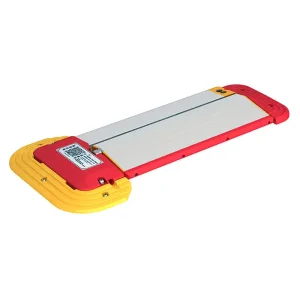
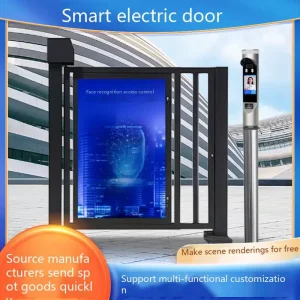
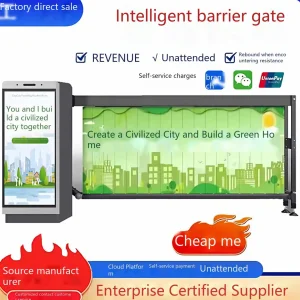
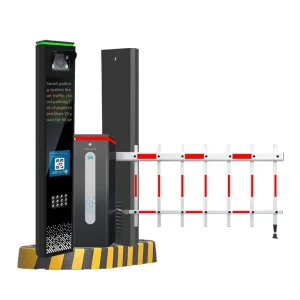
Complete your lane architecture with factory-direct automatic boom gates, high-speed pedestrian turnstiles, and smart city parking solutions.
Frequently Asked Questions on Budget LPR Surveillance Procurements
In-depth responses curated by senior access control engineers and global integration specialists.
Affordable commercial LPR cameras leverage high-sensitivity Sony STARVIS back-illuminated sensors with ultra-low lux illumination thresholds (0.001 Lux). Paired with synchronized 850nm invisible Infrared or focused warm-white LED strobe arrays and high-speed electronic shutters (1/1000s to 1/10,000s), the camera freezes plate movement while suppressing retroreflective surface blowout, maintaining optical character parsing accuracy above 99%.
Yes. Our architectures reject walled-garden ecosystems. Every camera provides comprehensive, well-documented RESTful HTTP Webhooks, MQTT publishing brokers, JSON data push payloads, ONVIF Profile T streams, and direct dry-contact relay outputs. Your engineering team can bind recognition events, plate strings, and cropped plate JPEG snapshots directly into your regional parking management or tolling database in hours.
The primary price drivers are: (1) Optical Sensor Speed (standard 30fps rolling shutter vs. high-speed 60fps global shutter), (2) Motorized Lens Capabilities (fixed 4mm vs. 2.8–12mm / 6–22mm auto-focus zoom), (3) Onboard NPU Computing Power (0.5 TOPS vs. 4.0 TOPS for multi-lane high-speed traffic), and (4) Housing Materials (plastic-composite ingress vs. heavy die-cast aluminum with integrated fan-assisted thermal heaters).
Our embedded neural models are pre-trained on diverse international character datasets covering over 80 countries, including single-line, dual-line, Arabic, Cyrillic, Thai, and Latin scripts. For regional procurements with bespoke font kerning or non-standard provincial emblems, our Shenzhen software lab trains customized convolutional weight tensors using client-provided raw training images at zero development fee for qualified project sizes.
Standard catalog units maintain an active factory inventory buffer, shipping within 3 to 7 business days via air or express courier. For custom OEM branding (silk-screened chassis logos, customized bootloader web interfaces, bespoke IP assignments, and tailored packaging), lead times range from 12 to 18 business days. Full automated SMT line validation ensures identical quality standards across all production batches.
Our cameras feature resilient edge autonomy. With onboard storage (microSD up to 256GB or integrated eMMC), the device maintains local whitelisting of up to 50,000 authorized vehicle plates. If network connectivity fails, the camera continues to authenticate authorized vehicles and triggers barrier opening through its direct relay. Once connectivity is restored, all offline passage logs, timestamps, and cropped images synchronize automatically to the server.