Durable Office Building Entrance Attendance Security Access Control Turnstiles Gate Swing Barrier Speed Gate Manufacturers, Supplier
Configure & Inquire
Precision-manufactured entrance terminals engineered for native vertical transport control, floor scheduling, and synchronized vehicular-pedestrian clearance.
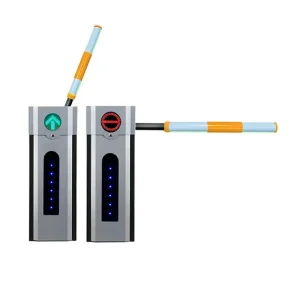
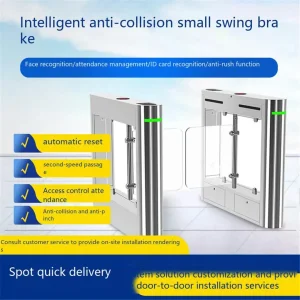
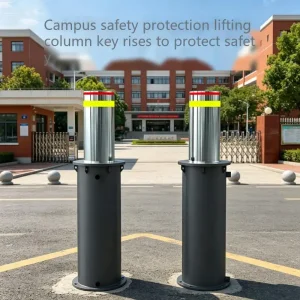
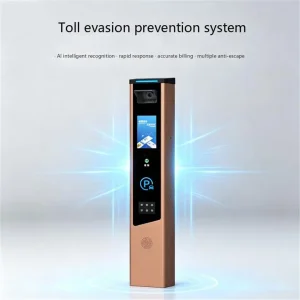
Elevator access control forms the spine of modern facility compartmentalization. By adopting open-protocol hardware and unified relay multiplexers, commercial asset operators reduce CapEx by up to 42% while retaining enterprise-grade reliability.
Traditional proprietary elevator controllers lock facilities into costly, recurring per-floor licenses. Our unified control boards utilize multi-channel dry contact relays (supporting 8 to 64 floors per master unit) that interface non-invasively with elevator COP (Car Operating Panels) from Otis, Schindler, KONE, and Mitsubishi.
Avoid expensive unified re-credentialing overhead. Our integrated edge panels simultaneously decode standard Wiegand (26-66 bit), RS-485 OSDP v2.2, MIFARE DESFire EV3, and encrypted QR or Bluetooth BLE mobile credentials, facilitating seamless gradual retrofits without discarding existing employee badges.
Eliminate service interruptions from WAN outages. Distributed controller nodes store up to 150,000 local credential privileges and 200,000 offline event logs in non-volatile flash memory, executing real-time anti-passback and floor accessibility logic independently of cloud connectivity.
When selecting budget-friendly elevator access suppliers, commercial property stakeholders must account for hidden expenditures beyond the initial invoice:
Utilizing RS-485 or industrial-grade Ethernet converters over existing twisted-pair traveling cables negates the staggering $4,000-$9,000 cost of pulling new specialized traveling cables through high-rise hoistways.
Implementing dry-contact button matrix boards ensures compatibility with any elevator vendor, avoiding proprietary OEM software activation fees which routinely exceed $12,000 per elevator group.
Pre-authorizing destination floors at entrance speed gates allows intelligent passenger batching, eliminating 28% of unproductive cab travel runs and drastically extending mechanical winch lifespans.
From high-density European corporate towers to harsh Middle Eastern logistics compounds, discover how budget-conscious facilities secure vertical perimeters.
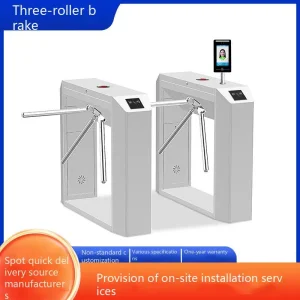
Tenants demand segregated floor access while building managers require centralized administrative control. Integrated speed gates verify identity at lobby turnstiles, instantly enabling authorized elevator floor buttons upon cab entry, restricting guests strictly to their destination level.
In automated fulfillment hubs and multi-tier production facilities, heavy cargo lifts must be limited strictly to certified forklift operators and hazardous material handlers. Ruggedized industrial RFID readers prevent unauthorized machinery elevation and floor overload.
Plazas combining retail podiums with private penthouse living require absolute spatial segregation. Our hybrid access platforms permit free movement across shopping floors during operational hours, while enforcing encrypted mobile key access for residential floors.
Access security must never compromise life safety. Our control boards comply with international elevator and building codes including EN 81-20/50, ASME A17.1, and NFPA 72.
Hardware controllers feature fail-safe normally-closed (NC) emergency relays hardwired directly to the Central Alarm Panel. Upon activation of Phase I or Phase II Firefighters’ Service, all security relays unlatch instantaneously, restoring full manual floor button control for emergency responders.
Access control panels support specialized ADA elevator protocols, including extended dwell times for door closure, audible floor authorization signals, and secondary lower-profile reader interfaces engineered for wheelchair access compliance.
Compliant with international data privacy laws. Hardware stores credential mappings utilizing salt-hashed indices without holding raw biometric or personally identifiable information on edge devices, eliminating corporate liabilities in the event of hardware tampering.
Where budget engineering meets high technology. Discover our roadmap toward frictionless, touchless vertical transport and edge AI analytics.
Eliminate physical button wear and bacterial transmission. Integration with low-cost optical sensor matrices allows users to call floors in mid-air via projected infrared interactive points, bridging premium passenger experience with budget-conscious hardware replacements.
Integrated camera feeds analyze elevator lobby wait queues and cab density using lightweight neural networks running directly on the elevator master controller. Cars are dynamically dispatched based on predicted traffic patterns, cutting building energy draw by up to 18%.
Breaking down operational silos. Modern controller revisions output native BACnet IP and MQTT telemetry strings, enabling heating, cooling, and lighting systems to pre-condition individual floors the instant an authorized tenant passes through lobby turnstiles.
Clear, direct answers for building owners, MEP consultants, system integrators, and security directors.
The system interfaces through optocoupled relay output boards wired in series with the Car Operating Panel (COP) floor call buttons. When an authorized badge is read, the controller's relay closes for that specific floor button, permitting it to be pressed within a customizable 5-second window while keeping all other buttons inactive.
Yes. Because our elevator control nodes accept standard Wiegand and OSDP inputs, you can install any multi-technology reader head inside the elevator cab. Existing 125kHz Proximity, 13.56MHz MIFARE DESFire, and Bluetooth/NFC credentials can be mapped directly into the system database without card replacements.
The hardware features autonomous distributed intelligence. System permissions and schedules are stored in on-board non-volatile memory. If the local network or server drops, the cab controller continues granting floor access uninterrupted. During primary power failure, internal battery backups provide fail-secure or fail-safe operational modes as dictated by local fire codes.
Yes. In destination dispatch configurations, the badge is scanned at turnstiles or lobby kiosks prior to boarding. Our controllers communicate high-speed floor assignments to the elevator group controller via TCP/IP API or Modbus, indicating to the passenger precisely which car (A, B, C) has been scheduled to transport them to their designated floor.
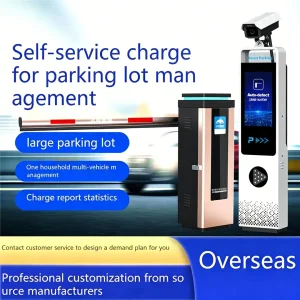
Complete vertical and horizontal facility control. Factory-direct turnstiles, parking locks, and intelligent barrier gates configured for multi-zone deployment.