
High-Throughput Pedestrian & Perimeter Access Systems
Direct factory hardware integration engineered to seamlessly interconnect with walk-through screening checkpoints, biometric speed lanes, and high-frequency vehicle barriers.
-
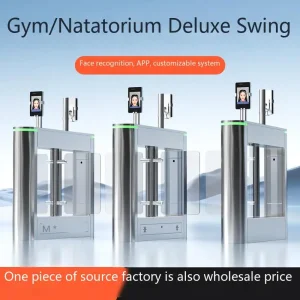 Durable Office Building Entrance Attendance Security Access Control Turnstiles Gate Swing Barrier Speed Gate Manufacturers, SupplierConfigure Turnstile
-
 Durable Swing Gate Image Reference Manufacturer, PricelistRequest Pricelist
-
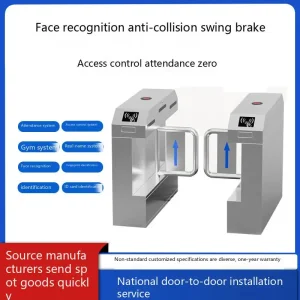 OEM Bridge Type Sloped Swing Gate Manufacturer, QuotationGet OEM Quotation
-
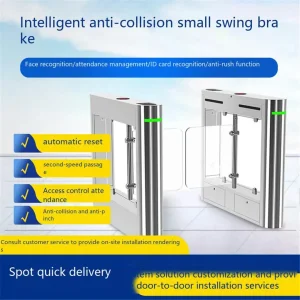 China Swing Gate Supplier, QuotationRequest Quotation
-
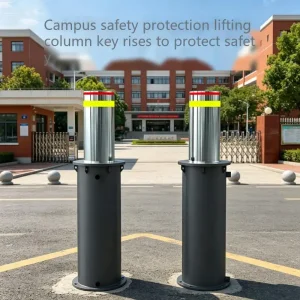 Discount Rising Bollard Instruction Manual Manufacturer, QuotationExplore Bollards
-
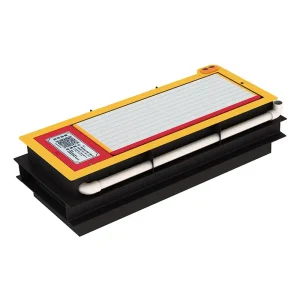 China City Parking Product Manufacturer, PriceCheck System Price
-
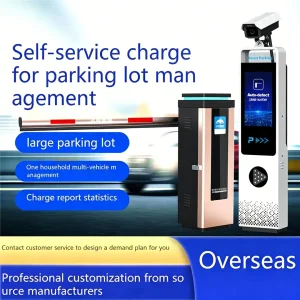 Durable High-def license plate recognition machine Dolphin I model Supplier, ExportersView LPR Specs
-
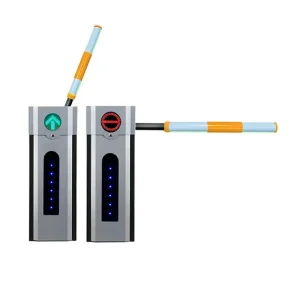 Newest Intelligent Barrier Gate Model D11S Factory, FactoriesInquire Barrier Model
The Physics of Detection: Multi-Zone Coil Geometry & DSP Discrimination
An in-depth technical analysis of continuous wave electromagnetic induction, multi-static receiver arrays, and real-time algorithmic phase discrimination in modern security portals.
Continuous Wave vs. Pulse Induction (PI)
Contemporary walk-through metal detectors (WTMD) rely fundamentally on either high-rate pulse induction or multi-frequency continuous wave electromagnetic fields. While legacy systems operated single continuous sinusoidal emissions vulnerable to ambient harmonic degradation, our modern industrial portals employ bipolar pulse excitation cycles with transient eddy current sampling.
- Sub-microsecond transient gate timing
- Broadband electromagnetic field spectrum
- Zero ionizing radiation exposure (Safe for pacemakers)
33 to 60 Overlapping Pinpoint Zones
Precision threat localization requires matrix spatial mapping. By interleaving overlapping multi-emitter transmit and receiver sensor arrays vertically and horizontally across the detector archway, the system segments the physical aperture into 33, 45, or up to 60 distinct spatial detection cells, illuminating bilateral LED column indicators at the exact elevation coordinates of the metallic target.
- Dual-sided high-density optical bar indicators
- Independent vertical zone sensitivity offsets
- Floor-level boots and ankle compensation curves
DSP Phase Analysis & False-Alarm Filtering
The core bottleneck in high-throughput screening checkpoints is the nuisance alarm rate (NAR). Integrated floating-point Digital Signal Processors (DSP) evaluate complex eddy decay gradients and magnetic hysteresis loops to instantaneously differentiate between benign ferromagnetic everyday carry items (keys, watches, foil wrappers) and dangerous threat profiles.
- Ferrous vs. Non-Ferrous phase discrimination
- 99.8% false alarm rejection on sub-50g benign metal
- Adaptive environmental EMI noise cancellation
Commercial Realities: Transitioning from Passive Inspection to Autonomous Gates
How international regulatory bodies, labor shortages, and evolving mass transit environments are accelerating the demand for unattended security checkpoint corridors.
The Crisis of Screening Labor & Pacing Bottlenecks
Across international aviation hubs, public transit interchanges, and mega-event venues, manual pat-downs and wanding procedures represent massive operational expenditure liabilities. Stacking lines at security lanes creates severe soft-target vulnerabilities outside the physical perimeter. Global facility operators are demanding autonomous checkpoints where walk-through metal detectors directly communicate via dry-contact relays or TCP/IP socket interfaces to high-speed swing turnstile gates.
Under this automated interlocking workflow, normal clearing pedestrians pass through at uninterrupted walking cadences (1.2 to 1.5 meters per second). Only upon anomalous metallic threshold detection does the portal command downstream barrier gates to lock immediately, while alerting security personnel via real-time PTZ camera presets.
Supply Chain Shrinkage & Precious Metal Loss Prevention
Beyond defensive weapon screening, the industrial sector has emerged as a premier consumer of ultra-sensitive walk-through electromagnetic portals. In semiconductor fabs, consumer electronics contract manufacturing facilities, pharmaceutical packaging plants, and precious metal refineries, microscopic internal theft accounts for billions of dollars in annual inventory shrinkage.
Standard security arches cannot reliably detect small gold contacts, printed circuit memory components, or tungsten carbide milling inserts concealed beneath clothing or within body cavities. High-specification 60-zone industrial portals operate localized hypersensitive pulse curves capable of isolating non-ferrous components as small as 0.05 grams without being blinded by floor rebar or structural steel framing.
Mission-Critical Localized Application Environments
Specific environmental tailoring, acoustic/vibrational shielding, and structural integration criteria across rigorous industry verticals.
Aviation & Border Customs Interchanges
Aviation security checkpoints demand strict compliance with international civil aviation standards. Portals operate under continuous, zero-failure cycles with absolute immunity to nearby baggage X-ray scanner high-voltage transformers and radar RF noise. Multi-checkpoint bank clustering requires automated frequency hopping across 100+ operational channels to eliminate mutual inductive crosstalk between arches separated by as little as 30 centimeters.
Correctional Institutions & Penal Facilities
Prisons and maximum-security detention centers require ruggedized, tamper-proof archway construction with hidden wiring harnesses and lockable polycarbonate control interfaces. In addition to conventional shanks and firearms, detection profiles must detect miniature contraband including non-magnetic stainless steel razor blades, tattoo needles, handcuff keys, and micro SIM cards concealed within body cavities.
Hyperscale Data Centers & Chip Fabs
Zero-trust physical infrastructure facilities implement bi-directional walk-through screening. Ingress inspections intercept unauthorized storage media, surveillance hardware, and tools; egress inspections prevent unauthorized hardware exfiltration (solid-state drives, RAM modules, processing units). Portals feature ultra-low electromagnetic interference profiles to prevent corrupting adjacent server clusters.
Mega Stadiums & Outdoor Concert Venues
Temporary mass gatherings require rapid outdoor deployment resilience. Systems must incorporate IP65 weatherproof seals, wind-resistant weighted base stabilizers, integrated wheels for rapid relocation, and dual high-capacity lithium backup battery banks delivering 24–48 hours of continuous operation without AC mains supply, while withstanding torrential rains and direct UV solar baking.
Government Assemblies & Embassies
High-profile diplomatic missions balance architectural elegance with bulletproof defensive readiness. Archway portals are finished in custom architectural hardwoods, titanium-anodized brushed aluminum, or structural stainless steel, marrying covert high-density sensor arrays with silent remote desk alarms and covert biometric video tracking integration.
Logistics Hubs & Fulfillment Centers
E-commerce fulfilment hubs processing hundreds of thousands of packages daily handle intense shift changes with thousands of warehouse personnel passing through within 15-minute intervals. Fast screening profiles maximize worker throughput without sacrificing loss-prevention vigilance, dynamically logging passage records and alarm statistics directly to corporate security databases.
R&D Technology Roadmap (2025–2030)
The evolutionary convergence of pulse induction, artificial neural networks, millimetric imaging, and contactless physiological telemetry.
On-chip convolutional neural networks classifying transient eddy decay curves against a database of 250,000+ known firearms, knives, and electronic device signatures, slashing false alarm rates below 0.1% while maintaining zero-touch passenger flow.
Integrating non-ionizing 77–81 GHz FMCW radar arrays directly within vertical detector side panels. Simultaneous electromagnetic mass detection and surface contour reconstruction reveals 3D non-metallic threats (ceramics, 3D printed composites, liquids).
Unified screening tunnels combining multi-zone metal detection, infrared radiometric fever screening, facial recognition on-the-fly, and automatic flap barrier physical gates into an autonomous single-pass corridor measuring less than 2 meters total footprint.
Miniaturized room-temperature Superconducting Quantum Interference Devices (SQUIDs) capable of passive magnetic anomaly detection at ultra-long range, tracking covert weapons concealed in moving pedestrian crowds without requiring portal structures.
Chinese Factory Supply Chain Resilience & Production Superiority
Unlocking agile mass fabrication, full vertical component integration, and rapid global deployment directly from the world's premier smart equipment cluster.
Vertical Integration & Complete Tooling Control
Operating our specialized 8,000 m² manufacturing plant in Guangming District, Shenzhen, we control every critical phase of the value chain. From proprietary automated coil winding machines that guarantee ultra-precise inductive symmetry to high-speed surface mount technology (SMT) lines populating multi-layer DSP control boards, zero dependence on third-party subcontracting ensures uncompromising batch consistency and accelerated lead times.
Stringent Military-Grade Burn-In Testing
Every walk-through metal detector, speed turnstile, and automated barrier leaving our production line undergoes an exhaustive 72-hour continuous electrical stress test, high-voltage ESD spark immunity trials (up to 15kV), and environmental climate chamber cycles (-30°C to +70°C). We ensure that when equipment arrives at a client site in Doha, Warsaw, or Manila, out-of-box failures are statistically near absolute zero.
Unmatched Agility & OEM/ODM Bespoke Engineering
Our proximity to Shenzhen's peerless electronics ecosystem allows custom engineering alterations—such as custom architectural finishes, bespoke integration protocols (BACnet, Modbus, Wiegand), localized firmware languages, and private branding—to transition from CAD drawing approval to pilot production within 14 working days, outpacing Western competitors by months.
Regulatory Compliance Standards & Worldwide Lifecycle Support
Guaranteed peace of mind across procurement, international customs clearing, and 24/7 technical lifecycle field support.
NIJ Standard 0601.02
Certified across all three discrimination tiers (Small Threat, Medium Threat, and Large Threat Objects), verifying full operational viability across criminal justice and correctional facilities.
CE / FCC / RoHS
Fully compliant with international electromagnetic compatibility (EMC Directive 2014/30/EU), FCC Part 15 Class B emissions, and environmental restriction of hazardous substances standards.
Medical Health Directives
Tested strictly compliant with ICNIRP and IEEE electromagnetic exposure limits. 100% safe for pregnant individuals, cardiac pacemakers, implantable defibrillators, and magnetic media storage.
24/7/365 Global Technical SLA
Supported by dedicated bilingual electrical engineers providing remote telemetry diagnostics, wiring schematics, modular spare component dispatch, and live calibration video sessions.
Integrated Physical Security & Automated Entrance Hardware
Harmonize your security perimeter with precision boom barriers, license plate recognition terminals, rising bollards, and rapid-response turnstiles.
-
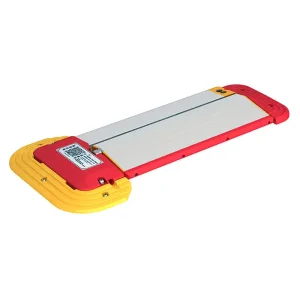 Advanced Scan to pay charging pilecommunity parking lock automatic sensing,electric shared scanning paymentanti-oil car occupying parking space Supplier, FactoryView Parking Lock
-
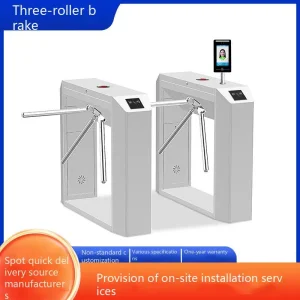 Cheap Factoryoem/ODM Durable Smart Fast Speed Swing Automatic Used Industrial Gym Turnstile Gate Manufacturer, FactoryExplore Speed Turnstile
-
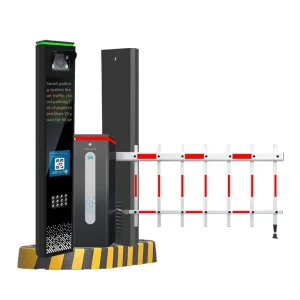 Buy Discount Car Parking And Toll Access Control Automatic Articulated DC Parking Boom Barrier Gate With Long Range Rfid Reader Manufacturer, PriceConfigure Boom Barrier
-
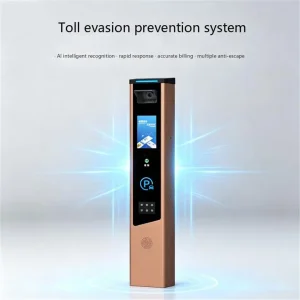 Durable High definition license plate recognition integrated - AnRuitong II Exporters, In SalesView Integrated LPR
-
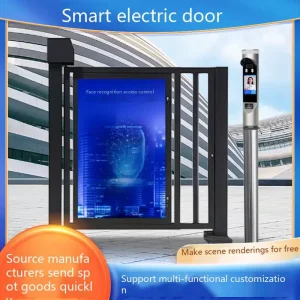 OEM Intelligent pedestrian advertising gate Factories, PriceRequest Gate Quote
-
 Durable Intelligent Barrier Gate Model D03 Manufacturer, SuppliersModel D03 Inquiries
-
Durable Office Building Entrance Attendance Security Access Control Turnstiles Gate Swing Barrier Speed Gate Manufacturers, SupplierConfigure Turnstile
-
OEM Bridge Type Sloped Swing Gate Manufacturer, QuotationGet OEM Quotation
Frequently Asked Questions: Technical Engineering & Global Sourcing
Detailed architectural guidance for systems integrators, security consultants, and international procurement committees.
How do WTMD systems prevent false triggers from structural building rebar?
Concrete floors reinforced with rebar create heavy ferromagnetic field distortion at ground level. Advanced walk-through metal detectors counter this using multi-point progressive ground calibration curves. The lowermost receiver coils execute differential spatial filtering that cancels static background magnetic gradients while maintaining active high-gain transient sensitivity for moving metallic threats at shoe level.
What is the minimum physical spacing required between adjacent detector portals?
Traditional single-frequency detectors require 1 to 2 meters of isolation to avoid mutual inductive interference. Our modern DSP architectures feature 100+ digitally selectable operating frequencies and master-slave pulse synchronization. As a result, portals can be positioned directly side-by-side (as close as 20 to 30 cm) to create ultra-dense multi-lane checkpoint concourses in airport and stadium lobbies.
Can walk-through detectors interconnect directly with third-party turnstiles and CCTV?
Yes. Every controller mainboard includes configurable dry-contact relays (Normally Open / Normally Closed) alongside RS485 and TCP/IP Ethernet ports. An alarm event can instantly trigger physical swing speed gates to lock, activate an overhead strobe, transmit an ONVIF metadata alert to a video management system (VMS), and command a PTZ dome camera to zoom directly to the suspect's coordinate zone.
How does climate conditioning impact the lifespan of outdoor security archways?
Standard indoor units suffer delamination, condensation-induced short circuits, and mechanical warpage in extreme climates. Our IP65/IP67 rated outdoor portals feature marine-grade aluminum framing, synthetic hydrophobic synthetic leather/PVC side-panel laminates, hermetically encapsulated PCB potting, and integrated silicon heating elements that prevent internal dew condensation down to -35°C.
What is the standard production lead time for sea and air freight consignments?
Due to our vertically integrated Shenzhen manufacturing base and extensive raw material inventories, standard model runs (1 to 50 units) dispatch within 3 to 5 business days. Large-scale enterprise orders (100 to 500+ units) complete production, full burn-in testing, and sea-worthy export palletizing within 12 to 16 calendar days, backed by sea, air, and express air courier options.
What documentation and certifications are provided for international customs clearances?
Every shipment is accompanied by authenticated factory certificates of conformity (CE, FCC, RoHS, ISO9001/ISO14001), calibrated electromagnetic safety test reports for pacemaker compliance, detailed English technical wiring and assembly manuals, and comprehensive export documentation (HS Code 8543709990 classification, commercial invoices, packing lists, and Certificate of Origin).