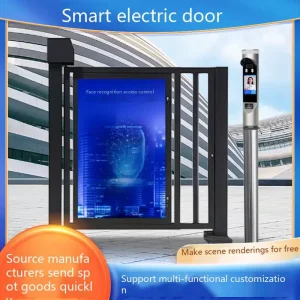
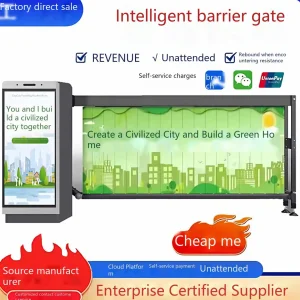
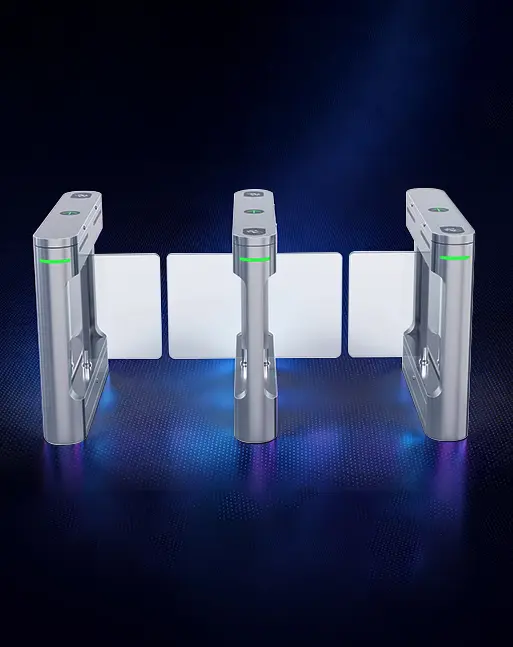
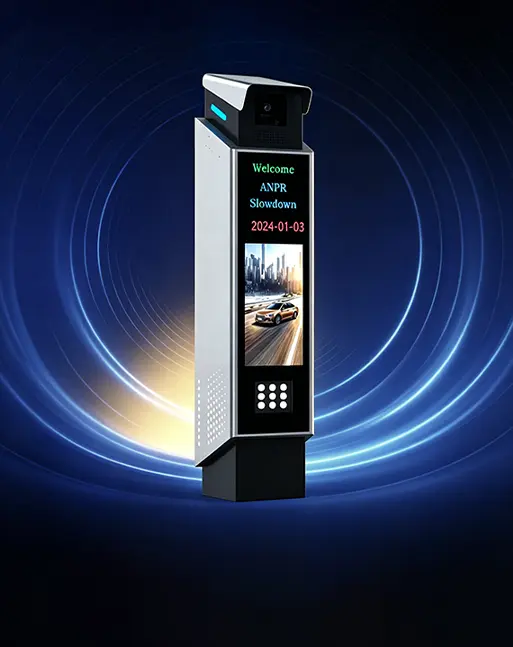
High-Throughput Access Control & Smart Parking Lineup
Pre-engineered hardware configurations optimized for mission-critical reliability, rapid vehicle throughput, and frictionless biometric lobby flow.
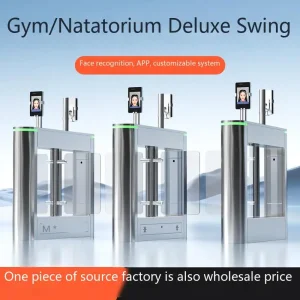
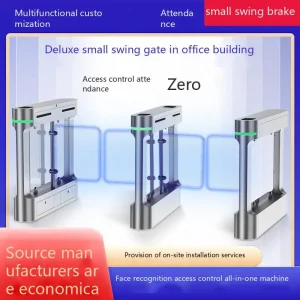
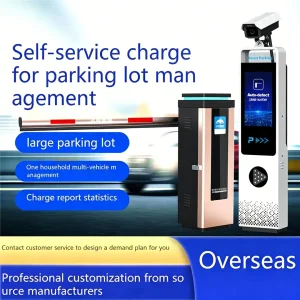
Physical Access Control Systems (PACS): Global Evolution, Zero Trust & Edge Intelligence
The global Physical Access Control System (PACS) industry is experiencing a profound paradigm shift. Legacy, siloed hardware frameworks—traditionally reliant on vulnerable, unencrypted 125 kHz Proximity RFID frequencies and isolated Wiegand controller topologies—are being comprehensively phased out across international markets. Modern commercial complexes, tier-4 hyperscale data centers, intermodal logistics hubs, and sovereign municipal assets are mandating unified, zero-trust architectures that synthesize vehicle ingress automation and pedestrian perimeter management into cohesive, cryptographic cloud platforms.
In accordance with evolving EN 60839 standards and global cybersecurity directives, modern access infrastructure must solve two conflicting challenges: providing maximum perimeter hardness against kinetic breach attempts while maintaining sub-second, frictionless throughput for verified personnel and registered commercial fleets. By combining high-definition Deep Learning Optical Character Recognition (DL-OCR) for vehicle identification with precision servo-driven brushless barrier controls and biometric edge turnstiles, enterprise systems now eliminate manual intervention, reduce tailgating vectors to near-zero, and maintain total cryptographic auditability across millions of lifetime cycles.
Macro Dynamics Driving Physical Access Infrastructure
Four structural shifts in technology, regulation, and urban development redefine enterprise PACS procurement worldwide.
Convergence of Physical & Cyber Security
The rapid obsolescence of unencrypted Wiegand signaling has triggered global adoption of OSDP (Open Supervised Device Protocol) with AES-128/256 encryption, preventing man-in-the-middle sniffing, credential cloning, and relay attacks at the physical barrier.
AI Neural ANPR at the Edge
Next-generation license plate recognition has transitioned from server-dependent post-processing to ultra-low latency on-camera neural inference, delivering >99.5% plate and vehicle categorization accuracy in sub-100ms under extreme environmental glare.
Brushless DC & Planetary Servos
Legacy mechanical gear reducers and brush motors have been entirely superseded by rare-earth DC brushless servo drives, scaling typical mean cycles between failures (MCBF) from 1.5 million to well over 10 million continuous operating cycles.
Unified Multimodal Credentials
Global operators are standardizing on edge controllers that natively support mobile NFC, dynamic QR codes, contactless palm vein sensing, and 3D structured-light facial biometrics on a unified telemetry backbone without secondary converters.
China Factory 4.0: Supply Chain Resilience & Precision CNC Engineering
Integrated precision robotics, in-house mechanical engineering, and Shenzhen's world-leading electronic component supply ecosystem deliver unmatched price-performance ratios and rapid customization turnaround.
Laser Precision Sheet Fabrication
Cabinets are formed from 2.0mm to 3.0mm SUS304/SUS316 austenitic stainless steel and hot-rolled carbon steel, processed through multi-axis fiber lasers and automated robotic welding cells to deliver IP54 to IP68 environmental ingress ratings.
Deep ShenZhen Electronics Ecosystem
Direct co-development with premier chip designers and motor fabrication plants guarantees tier-1 embedded DSPs, robust motor control units, and automotive-grade solid-state relays, eliminating cross-border component procurement delays.
Full OEM/ODM Lifecycle Agility
From initial 3D parametric CAD modeling and stress simulation to complete embedded firmware customization (API/SDK exposure, MQTT, REST, BACnet), our manufacturing base delivers bespoke mechanical and software solutions in weeks, not quarters.
Mission-Critical Enterprise & Industrial Deployment Scenarios
Engineered hardware and software topologies calibrated for unique localized operational, climate, and security requirements.
Tier-4 Data Centers & Financial Campuses
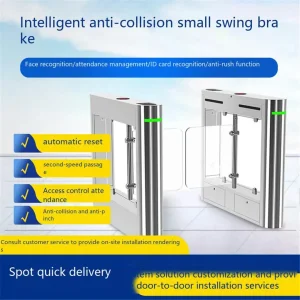
Demands strict anti-tailgating verification, interlocked mantrap portals, and dual-custody credential authentication. Deployed with high-speed swing barriers featuring 24-channel infrared detection arrays and integrated palm vein biometric sensors.
Industrial Logistics & Intermodal Freight Terminals
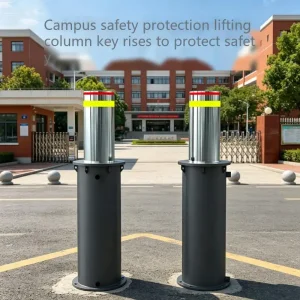
Requires ruggedized boom barriers capable of articulating up to 6-meter carbon-aluminum arms, paired with long-range 915 MHz UHF RFID readers and heavy-duty rising hydraulic bollards for perimeter anti-ram protection.
Smart Municipalities & Mixed-Use Commercial Towers
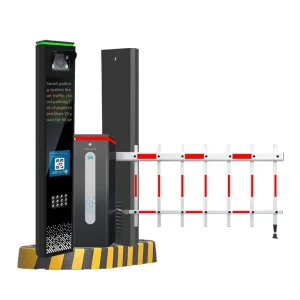
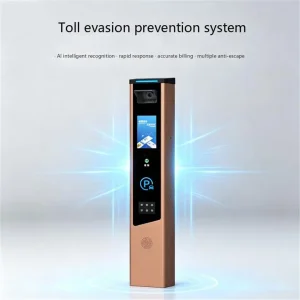
Integrates ticketless deep-learning LPR cameras with dynamic automated louver advertising barriers and automatic scan-to-pay kiosks, supporting unattended multi-tenant vehicle billing and rapid egress clearance.
| System Architecture | Target Kinetic / Flow Zone | Supported Credential Interfaces | Environmental Durability | Recommended Integration |
|---|---|---|---|---|
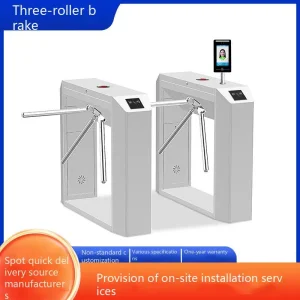
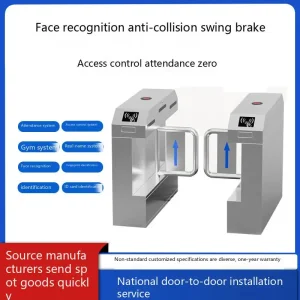
| High-Speed Servo Swing Gate | Class-A Corporate Lobbies, Gov Headquarters | Facial BioQR CodeOSDP NFC | Indoor / Semi-Covered (IP54) | Visitor Management, Elevator Destination Dispatch |
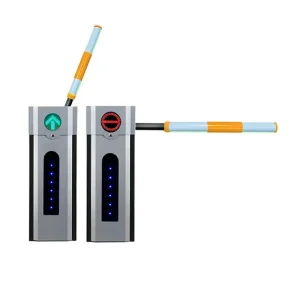
| Direct-Drive High-Frequency Barrier | Commercial Malls, Industrial Toll Gates | DL-ANPRUHF RFIDRadar/Loop | Outdoor Extreme (-40°C to +75°C, IP65) | Unattended Parking Platforms, Fleet ERPs |
| Hydraulic Anti-Ram Rising Bollards | Embassies, Pedestrianized City Plazas | PLC AutomationEmergency EFO | Sub-surface Immersion Resistant (IP68) | Municipal Traffic Management, Intrusion Alarms |
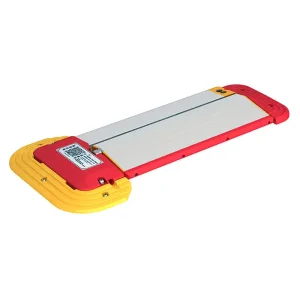
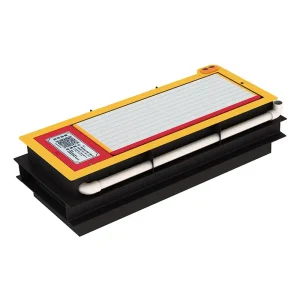
| Smart Space-Occupancy Parking Lock | EV Charging Bays, Reserved Corporate Parking | UltrasonicBluetooth 5.04G Cloud | Direct Tire Over-run Rated (IP67) | EV Roaming Networks, Shared Parking APIs |
Frequently Asked Questions (FAQ)
In-depth architectural, installation, and procurement answers for systems integrators, MEP consultants, and global distributors.
What core products and integrated access management solutions does Anrui engineer?
Can Anrui barrier gates and pedestrian turnstiles integrate with third-party software platforms?
How do procurement engineers select between a Barrier Gate, a Rising Bollard, and a Parking Lock?
- Barrier Gates: Selected for high-volume entry/exit management (1.2 to 3.0-second cycle times) where continuous visual and physical lane metering is paramount, but kinetic vehicle ram resistance is not required.
- Rising Hydraulic Bollards: Deployed where perimeter security mandates high-impact stopping capability (PAS 68 / ASTM equivalent ratings) to physically halt unauthorized vehicles while maintaining an open pedestrian environment when lowered.
- Smart Parking Locks: Deployed within individual vehicle parking stalls rather than lane ingress points, designed to physically reserve and automate billing for EV charging stalls, executive parking bays, or shared-economy commercial spots.
What lifecycle support, calibration, and spare-parts pipelines are provided for overseas installations?
Which global regions and climatic extremes are Anrui products deployed in?
What engineering factors dictate the total cost of ownership (TCO) and unit pricing of barrier gate systems?
- Motor and Drive Mechanism: Brushless DC planetary servo drives with 10M+ MCBF command a slight initial premium over legacy AC torque motors, but drastically reduce lifetime maintenance costs.
- Boom Arm Geometry: Arm design specifications—ranging from standard round aluminum profiles (up to 6m) to illuminated LED octagonal bars, articulated ceiling arms for low-clearance underground garages, or custom louver advertising panels.
- Cabinet Ingress & Metallurgy: Standard powder-coated cold-rolled steel versus premium SUS304 or marine-grade SUS316 stainless steel for coastal or corrosive industrial chemical environments.
- Integrated Edge Subsystems: Integration scope involving embedded microwave anti-smash radar sensors, integrated DL-ANPR cameras, long-range RFID, or local cashless billing terminals.
Perimeter Barrier & Pedestrian Turnstile Systems
Industrial access control units configured for enterprise procurement, tender specifications, and rapid international logistics dispatch.