
Rising Bollard Factory & Exporter for the Seattle Market
Delivering high-tensile crash-rated retractable bollards, electromechanical security barriers, and integrated perimeter solutions optimized for Seattle’s maritime topography, deep seaport gates, and tech hubs.
Send Inquiry NowPrimary Vehicle & Pedestrian Access Modules
Engineered for commercial campus entrances, high-throughput logistics lanes, and downtown enterprise corridors across the Greater Puget Sound region.
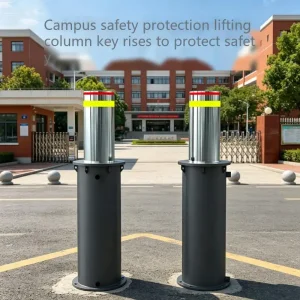
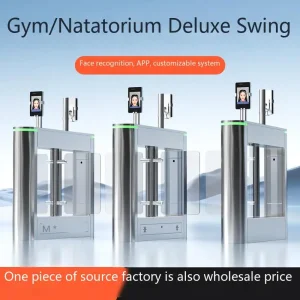
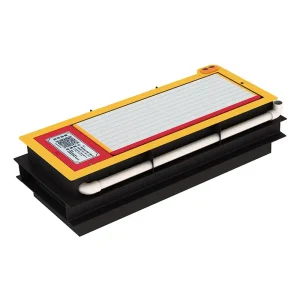
Seattle Market Operational Landscape & Global Industry Evolution
Analyzing kinetic energy mitigation, salt-mist metallurgy, and edge-managed vehicular physical access control systems (PACS) within the Pacific Northwest corridor.
Seattle Regional Demand & Industrial Realities
The Seattle metropolitan area—spanning King, Pierce, and Snohomish counties—demands a specialized tier of hostile vehicle mitigation (HVM) hardware. From Amazon’s urban campuses in South Lake Union and Microsoft’s Redmond facilities to the high-throughput logistics lanes of the Northwest Seaport Alliance (NWSA), perimeter security requirements combine severe anti-ram ratings with high operating cadences.
Unlike inland industrial regions, Seattle's dense marine climate presents critical environmental stressors. Sustained rainfall, high water tables along Puget Sound, and corrosive coastal marine air require rising bollards manufactured with AISI 316L stainless steel outer sleeves, IP68-rated submersible hydraulic drive units, and integrated pit dewatering manifolds that resist salt fog and silt accumulation.
Global HVM & Structural Dynamics Trends
Globally, physical perimeter defense is shifting rapidly from static concrete obstacles to intelligent, dynamic electromechanical and electro-hydraulic bollard networks. ASTM F2656, IWA 14-1, and PAS 68 impact criteria have evolved to address not just medium-duty vehicle intrusions, but asymmetric multi-vehicle threats against municipal infrastructure.
Worldwide deployment benchmarks confirm that legacy centralized hydraulic pump systems (HPUs) with long oil-line runs are being replaced by autonomous, integrated micro-power units located within each bollard core. This design mitigates system-wide single-point failures, eliminates hydraulic fluid friction losses across sub-zero temperature differentials, and lowers total cost of ownership by up to 34% over a 10-year operating cycle.
Localized Application Scenarios in Greater Seattle
Targeted deployment methodologies configured for local terrain, urban transit corridors, and high-density municipal corridors.
Tier-1 Tech Campus Perimeters
Urban headquarters require seamless pedestrian permeability without compromising vehicular crash resistance. Deploying flush-to-grade rising bollards with sub-2.2-second emergency fast operation (EFO) ensures unobtrusive daily operations while offering immediate lockdown capabilities against perimeter breaches.
Port of Seattle Logistics Gates
Harbor terminals and intermodal yards require robust cycling thresholds capable of 3,500 daily operations. Our heavy-duty bollards feature hard-anodized internal cylinders, corrosion-resistant seals, and multi-tier heater coils that prevent hydraulic fluid freezing during icy cascades.
Municipal Venues & Ferries
For high-density public venues, including stadium approaches and Washington State Ferry docks, shallow-mount foundation bollards enable installation over shallow utility conduits, gas lines, and transit tunnel roofs without requiring massive civil excavation.
Next-Generation Vehicle Access Intelligence (2025–2030)
Transforming mechanical bollards into integrated IoT edge nodes with predictive telemetry and biometric network handshakes.
CAN-Bus & Edge Diagnostic Architecture
Modern rising bollards have evolved past simple relay closure controls. Our export-grade units feature integrated CAN-Bus and RS-485 controller nodes, monitoring motor amperage draw, hydraulic fluid viscosity, seal friction indexes, and displacement velocity down to the millisecond. Real-time diagnostic telemetry detects wear prior to component failure, relaying status over secure TLS-encrypted MQTT channels to central SCADA systems.
Edge-AI & Computer Vision Integration
By interfacing directly with ultra-high-definition License Plate Recognition (LPR) cameras and inductive anti-tailgating ground loops, modern bollard matrices automate whitelisted vehicular entries without manual intervention. Under-vehicle inspection cameras (UVIS) operate in real-time correlation with bollard logic arrays, neutralizing unauthorized delivery or fleet access attempts instantly.
Integrated Access Control & Perimeter Hardware
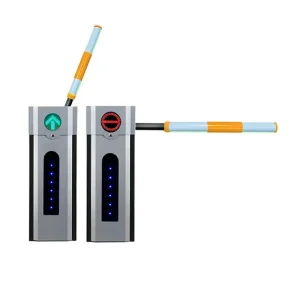
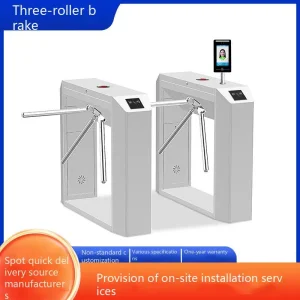
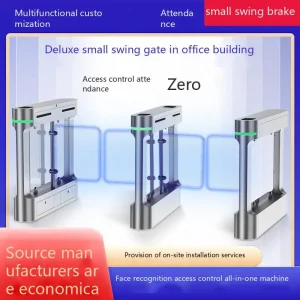
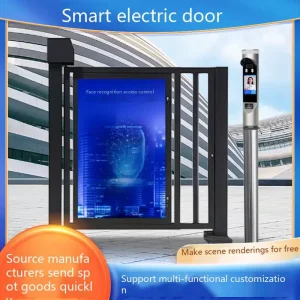
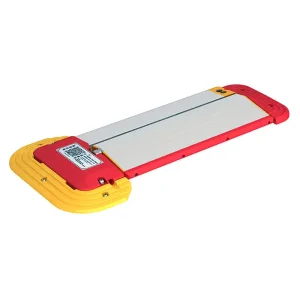
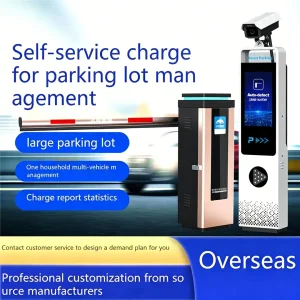
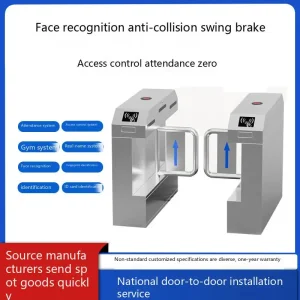
Deploying unified hardware ecosystems: precision barrier gates, ANPR surveillance, biometric access turnstiles, and automated vehicle space management.
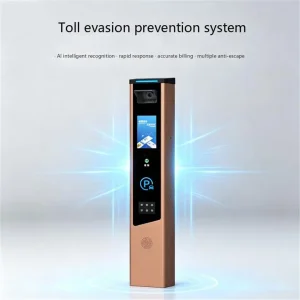
Frequently Asked Questions (FAQ) for General Contractors & Specifiers
Clear technical insights addressing structural certification, coastal metallurgy, drainage solutions, and international shipping logistics.