
Specialized ANPR/LPR Hardware for Hamburg Infrastructures
High-speed edge processing hardware built to accommodate standard European alphanumeric formats, hazardous material ADR placards, and intermodal transport containers across northern Germany.
-
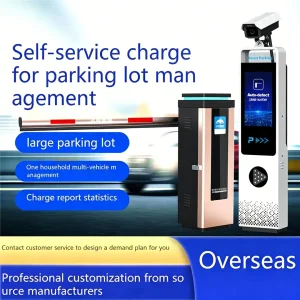 Hamburg Heavy-Logistics LPR Terminal (Dolphin-I High-Definition Model)
Durable High-def license plate recognition machine Dolphin I model Supplier, Exporters
-
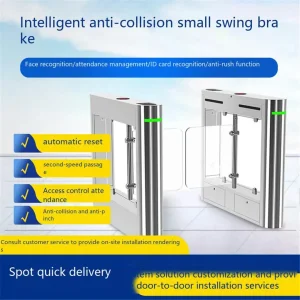 Hamburg Port Commercial Pedestrian & Cyclist Speed Gate
-
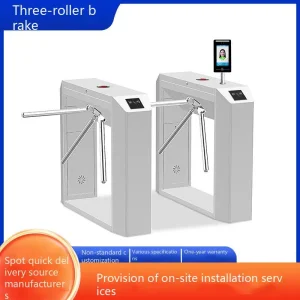 Hamburg High-Frequency Freight Hub Fast Industrial Speed Gate
-
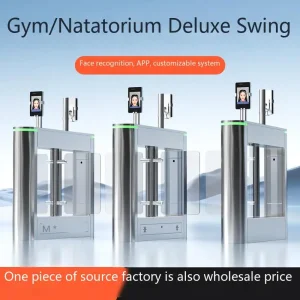 Hamburg HafenCity Executive Corporate Access Control Barrier
Hamburg’s Smart Mobility Reality: Navigating River Elbe Port Hubs & Urban Density
The Free and Hanseatic City of Hamburg represents Europe’s third-busiest container transshipment hub and Germany’s powerhouse of maritime trade. The intricate convergence of maritime logistics along the Hamburger Hafen, expansive multi-tier warehouses in Altenwerder, and high-density commercial clusters like HafenCity imposes extraordinary demands on access automation.
Urban freight corridors feeding off the BAB A7 (Elbtunnel) and BAB A1 encounter chronic bottlenecks. Gate processing friction ripples through supply chains, generating downstream drayage delays, demurrage surcharges, and elevated carbon footprints conflicting with Hamburg's stringent Klimaplan (Climate Plan).
Deploying optical edge AI plate reading reduces vehicle ingress stop-time from an industry median of 22 seconds down to under 1.8 seconds. This acceleration mitigates idle-engine CO₂ emissions and establishes verifiable end-to-end chain-of-custody tracking across intermodal depots, distribution nodes, and inner-city corporate parkings.
The Demanding North Sea Climate Benchmark
Hamburg's coastal-adjacent weather is characterized by heavy maritime saline drizzle, dense morning river fogs, persistent driving rain, and winter surface freezing. Generic consumer-grade optical sensors suffer severe accuracy degradation under these conditions.
- ✓ C5-M Marine Anti-Corrosion: Electrostatic powder-coated cold-rolled steel and SUS316 surgical-grade chassis withstand prolonged Elbe salt mist.
- ✓ 850nm Stroboscopic Infrared: Overcomes wet reflective retroreflective license plates without driver-blinding white glare.
- ✓ Hydrophobic Front Optics: Integrated heating defrosters and oleophobic nanocoatings eliminate condensation and ice sheets.
Deep Neural Optical Architecture: The Anatomy of >99.6% Accuracy
Traditional Optical Character Recognition (OCR) template matching consistently fails under dirt, odd angles, or European typography variances. Our deep learning inference pipeline executes entirely at the local edge.
Dual-Sensor Spatial Imaging
Equipped with a synchronized dual-lens configuration: an ultra-wide sensor for context spatial vectoring and dynamic vehicle trajectory detection, paired with a motorized 2.8–12mm varifocal starlight telephoto sensor exclusively capturing high-contrast plate bounding boxes at speeds up to 120 km/h.
Embedded NPU Multi-Layer Inference
A native 4-TOPS Neural Processing Unit executes multi-stage convolutional pipelines: Plate Localization → Angle Deskewing (Perspective Correction up to 45°) → Character Segmentation → Recurrent Neural Network (RNN) sequence prediction trained explicitly on German DIN 1451 font standards.
Multi-Modal Recognition
Beyond standard passenger car plates, the system extracts critical commercial data: ADR Hazard Classification diamonds, IMO Dangerous Goods codes, and intermodal shipping container identification sequences conforming to ISO 6346 (BIC / ILU prefixes) for port automation.
Engineered for Germany: Absolute Adherence to GDPR (DSGVO) & BSI Baselines
Deploying visual surveillance or vehicle tracking technology in the Federal Republic of Germany requires strict adherence to legal frameworks, overseen by bodies such as the Hamburgische Beauftragte für Datenschutz und Informationsfreiheit. Off-the-shelf cameras that upload raw unencrypted video to cloud silos create substantial regulatory liability.
Dynamic Edge Cryptographic Anonymization
The camera’s firmware automatically executes facial redaction on non-involved drivers, front-seat passengers, and pedestrians in the peripheral visual field prior to image persistence or downstream transmission.
Zero-Trace Whitelist & Rolling Ring Buffering
Authorized employee or logistics access relies on cryptographic hash tokens (SHA-256). Transient passage imagery is buffered exclusively in volatile RAM and overwritten after transaction verification, meeting strict data minimization mandates.
End-to-End Enterprise Encryption
All external telemetry, MQTT control triggers, and REST API calls communicate through TLS 1.3 tunnels with 802.1X network port authentication, preventing physical tap intrusions at outdoor access pedestals.
Standardized European Protocol Stacks
We do not lock Hamburg systems integrators into brittle proprietary ecosystems. Our edge controllers natively expose industrial interfaces for rapid integration into municipal and private SCADA setups:
- Wiegand & OSDP v2: Direct hardware-level interoperability with access control panels (Siemens, Honeywell, Bosch).
- JSON / MQTT / Webhooks: Event streaming directly to cloud platforms, SAP ERP, or fleet yard management servers.
- CE & RoHS Certified: Full conformity with Low Voltage Directive (LVD) and Electromagnetic Compatibility (EMC) norms.
- Relay Isolation: Onboard optocouplers protecting internal electronics against high-voltage lightning surges in outdoor terminal yards.
Shenzhen Smart Manufacturing Meets German Industrial Rigor
Combining Shenzhen’s rapid prototyping and optoelectronics component ecosystem with rigorous ISO 9001/14001 quality matrices to deliver unmatched price-performance without compromising engineering durability.
Vertically Integrated R&D
Unlike assemble-to-order brokers, our 8,000 m² Shenzhen facility controls brushless DC (BLDC) motor winding, precision CNC planetary gear machining, high-frequency SMT surface mounting, and optical calibration tunnels under a unified roof.
Strict 72-Hour Burn-In Stress
Every LPR camera board and barrier gate motor core undergoes full-load thermal cycling (-30°C to +75°C) and vibration profiling before factory discharge, securing field failure rates strictly below 0.12% across hundreds of global project consignments.
Direct OEM/ODM Customization
We provide full white-label hardware tailoring for European engineering brands: customized RAL powder coatings matching corporate corporate designs, customized laser branding, custom boom lengths up to 6 meters, and tailored software API payloads.
Designing an Access Control Facility in Hamburg?
Provide our technical engineering desk with your lane dimensions, expected daily transshipment traffic, and protocol specifications for a rapid hardware bill-of-materials and project quotation.
Synchronized Barriers, Bollards & Space Access Terminals
Comprehensive vehicle lane barriers, bollards, and parking management equipment designed for seamless plug-and-play integration with our license plate recognition nodes.
-
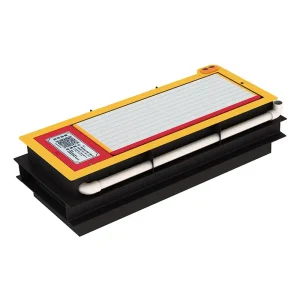 Hamburg City Center Integrated Smart Parking Station
-
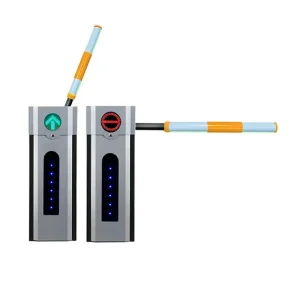 Hamburg Commercial Heavy Traffic Barrier Gate Model D11S
Newest Intelligent Barrier Gate Model D11S Factory, Factories
-
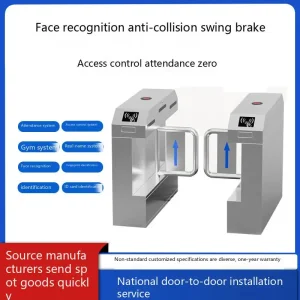 Hamburg Port Maritime Building Sloped Bridge Turnstile Gate
-
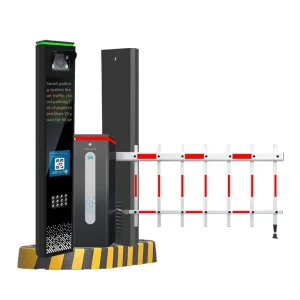 Hamburg Low-Clearance Underground Parking Articulated DC Barrier
-
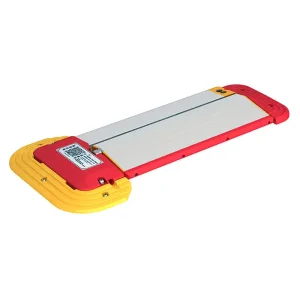 Hamburg EV-Fleet Reserved Charging Space Smart Parking Lock
-
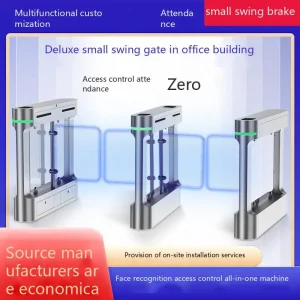 Hamburg Logistics Warehouse Heavy Duty Pedestrian Speed Barrier
-
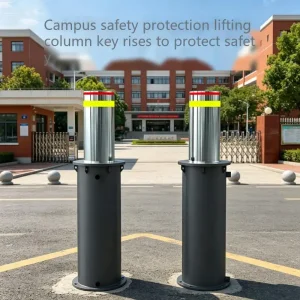 Hamburg Port Secure Freight Perimeter Hydraulic Rising Bollard
Discount Rising Bollard Instruction Manual Manufacturer, Quotation
-
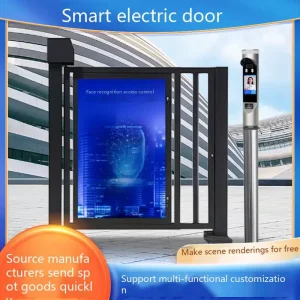 Hamburg Retail Multi-Storey Car Park Advertising Pedestrian Gate
OEM Intelligent pedestrian advertising gate Factories, Price
Frequently Asked Technical & Operational Questions
Clear engineering answers addressing the specific regulatory, functional, and logistics concerns of Hamburg and European procurement managers.