
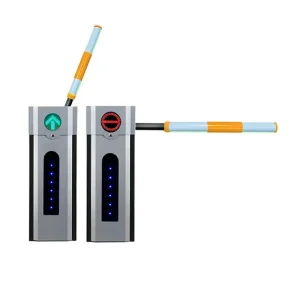
Core Automated Hardware Fleet
High-Throughput Barrier Solutions Engineered for Tokyo Lanes
Pre-configured for rapid deployment across underground commercial ramps, logistics bays along Tokyo Bay, and high-frequency residential developments.
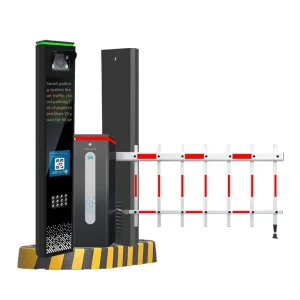
Industrial Whitepaper Analysis
Macro Commercial Realities: Vehicle Access Control Across Greater Tokyo (Shutoken)
The Greater Tokyo Area, encompassing Tokyo Metropolis, Kanagawa, Saitama, and Chiba prefectures, represents one of the world's most concentrated urban economic landscapes. Managing vehicular ingress and egress within this hyper-dense environment presents logistical and engineering constraints not typically found in conventional suburban architectures. Commercial real estate in prime business wards such as Chiyoda (Marunouchi, Otemachi), Minato (Roppongi, Toranomon), and Chuo (Ginza, Nihonbashi) commands extraordinarily high land valuations, necessitating multi-level underground parking facilities and compact mechanical parking stackers.
Consequently, automated barrier gate deployment across Tokyo requires a dual operational paradigm: extreme physical compactness coupled with uncompromising duty cycles. Traditional AC induction motor barriers suffer from thermal degradation when operating under peak rush-hour volumes—such as the continuous morning cycle observed in Shinjuku commercial centers where barrier arms must cycle every 4 to 8 seconds. Shenzhen Anrui delivers brushless DC (BLDC) motor technology engineered directly to counteract these friction-induced thermal limits, ensuring that corporate office hubs and multi-story shopping complexes operate without mechanical throttling.
Micro-Footprint Constraints and Low-Clearance Engineering
Underground commercial parking structures throughout Tokyo frequently feature structural clearance limitations ranging between 2.1 meters and 2.4 meters due to strict subterranean seismic retaining wall designs. Standard straight-arm barrier gates of 3 to 4 meters cannot operate within these vertical envelopes. Shenzhen Anrui addresses this structural friction by supplying custom-engineered 90-degree and 180-degree articulated folding boom mechanisms. Constructed from high-tensile 6063-T6 aluminum extrusion alloys, our folding barrier linkages eliminate ceiling collision hazards while maintaining a full 3.5-meter drive aisle obstruction.
Furthermore, curb width within downtown Tokyo vehicle entrances is tightly constrained by pedestrian sidewalk access mandates. Our barrier chassis footprint has been optimized down to an ultra-compact 330mm × 280mm profile, allowing system integrators and general contractors (Zenekon) to integrate our barriers into narrow traffic islands without impeding pedestrian walkways or encroaching into mandatory building setback zones.
Kanto 50Hz 100V/200V Native
Direct compatibility with Eastern Japan's 50Hz electrical supply without external power condition chokes or step-down phase converters.
40%–60% CAPEX Reduction
Disrupting domestic Japanese monopoly pricing structures by exporting factory-direct Industry 4.0 barrier systems to Tokyo contractors.
10,000,000 MTBF Cycles
Planetary precision reduction gears delivering frictionless operation, eliminating belt wear and hydraulic fluid leak risks.
Next-Gen Core Technology
Brushless DC Architecture, Radar Telemetry & Deep-Learning LPR
Transitioning from legacy mechanical limits to precision-controlled digital motion profiles.
BLDC Servo Drive & Programmable Motion Curve
Traditional access gates rely heavily on mechanical limit switches and belt-driven torque motors that wear prematurely under high-frequency loading. Shenzhen Anrui integrates a permanent magnet brushless DC (BLDC) motor coupled with a 32-bit ARM Cortex digital signal processing core. This architecture utilizes a high-resolution 14-bit magnetic encoder that continuously samples the boom arm's angular trajectory at 1,000Hz.
This closed-loop motion profiling ensures silky smooth acceleration, mathematically calculated deceleration curves, and zero mechanical bounce at the terminal 0° and 90° points. The direct result for Tokyo facility managers is whisper-quiet acoustic emissions (<50 decibels at 1 meter), satisfying strict Japanese municipal indoor environmental acoustic regulations for luxury residential developments in Shibuya and Minato wards.
79GHz mmWave Radar vs. Inductive Loops
In Tokyo, municipal road works, asphalt saw-cutting, and trenching for inductive ground loop detectors involve extraordinarily high civil engineering labor costs and rigorous street permit requirements from local Public Safety Commissions (Kouan Iinkai). Cutting concrete slabs in existing commercial properties also risks piercing post-tensioned structural seismic cables.
Shenzhen Anrui eliminates civil ground excavation by bundling 79GHz high-frequency microwave radar vehicle and pedestrian detectors. Mounted flush onto the barrier chassis, the radar creates a 3D volumetric detection cone up to 6 meters out, accurately distinguishing between passenger vehicles, Kei-cars, motorcycles, and pedestrians, completely eliminating boom strikes while reducing site installation labor by up to 70%.
| Performance Specification | Anrui BLDC Series (Tokyo Export Model) | Legacy AC Induction Barriers | Hydraulic Heavy-Duty Toll Gates |
|---|---|---|---|
| Motor Technology | 24V/140W Brushless DC (BLDC) Servo | 220V/150W Single-Phase AC Induction | Electro-Hydraulic Piston Pump |
| Operating Lifecycle (MTBF) | 10,000,000 Continuous Cycles | 1,500,000 – 2,500,000 Cycles | 5,000,000 Cycles (Fluid Changes Req.) |
| Acoustic Decibel Rating | < 48 dB (Ultra-Quiet Precision Planetary) | 65 – 72 dB (Belt & Spring Resonance) | 58 – 65 dB (Motor Whine / Valve Hiss) |
| Speed Dynamic Range | 0.6s to 6.0s (Field Programmable via Digital UI) | Fixed (1.5s, 3.0s, or 6.0s by Pulley Size) | 0.8s to 2.5s (Needle Valve Adjusted) |
| Safety Sensor Integration | Integrated 79GHz Radar + Electronic Overcurrent | External Loop Detector Only | External Loop + Safety Pressure Edge |
| Kanto (Tokyo) 50Hz Adaptation | Universal Inverter SMPS (85V–264V 50/60Hz) | Requires Dedicated 50Hz Pole Windings | Requires 50Hz Motor Impeller |
Application Matrix
Tailored Deployment Archetypes Across Tokyo Sectors
Purpose-engineered access control ecosystems solving targeted logistical bottlenecks.
Tokyo Bay Logistics Corridors
Heavy-duty barrier gates with 6-meter straight aluminum arms and long-range UHF RFID antennas built for maritime container depots in Shinagawa, Oi Container Terminal, and Koto-ku logistics complexes.
Underground Commercial Plazas
High-speed 0.9s articulated barrier systems paired with high-definition LPR cameras for Ginza, Roppongi, and Otemachi subterranean parking towers with continuous non-stop ticketless egress.
Government & Critical Perimeter
Multi-layered interlock systems connecting automatic rising road bollards and anti-ram barrier systems for government ministry zones in Kasumigaseki and sensitive data centers in Inzai (Chiba perimeter).
Supply Chain Resilience
China Industry 4.0 Efficiency: Unlocking Wholesale Export Pricing for Tokyo Contractors
Procuring commercial access equipment within the Japanese domestic market has historically been constrained by multi-tier trading cartels (Shosha) and legacy domestic manufacturers who maintain high margins on hardware with limited architectural innovation. Typical Japanese domestic brand automated barrier gates retail to contractors between ¥450,000 and ¥950,000 JPY per lane for baseline mechanical units, with lead times frequently extending from 8 to 16 weeks.
Shenzhen Anrui Intelligent Equipment disrupts this procurement friction by offering a factory-direct exporter model. Operating an 8,000 m² Industry 4.0 production facility in Guangming District, Shenzhen, Anrui maintains an end-to-end integrated manufacturing workflow: from precision CNC chassis milling, laser cutting, automated robotic welding, electrostatic outdoor thermoset powder coating, to surface-mount technology (SMT) assembly of proprietary BLDC controller PCBA boards.
By bypassing multiple tiers of middlemen and shipping directly to the Port of Tokyo or Port of Yokohama, Japanese general contractors, parking management firms (such as Times24 or Mitsui Repark concessionaires), and electrical subcontractors can acquire high-reliability, export-grade barrier systems at 40% to 60% below domestic wholesale price points. Containerized consignments depart Shenzhen/Yantian ports weekly with a transit time of only 4 to 6 days to Tokyo harbor terminals, ensuring tight construction milestones are never compromised.
Comparative Export Price Matrix Serving Tokyo (FOB Shenzhen / CIF Tokyo Port)
The following engineering pricing structure provides procurement directors with transparent, factory-direct wholesale tiers. All models feature universal 100V/200V 50Hz power units tailored for Tokyo metropolitan installation:
| Hardware Configuration | Standard FOB Unit Price (USD) | Estimated Landed Tokyo (JPY Equiv.) | Typical Tokyo Domestic Retail | Wholesale Volume Margin (10+ Units) |
|---|---|---|---|---|
| Model D11S Brushless Commercial Barrier (0.9s–3s, straight 3m–4m arm) | $320 – $480 / set | ¥48,000 – ¥72,000 | ¥420,000 – ¥580,000 | Additional 12% Volume Rebate |
| Low-Clearance 90° Articulated Barrier (BLDC servo motor, 24V backup support) | $390 – $560 / set | ¥58,500 – ¥84,000 | ¥550,000 – ¥750,000 | Additional 15% Volume Rebate |
| Integrated HD LPR ANPR All-in-One Pillar (Japanese Plate Recognition Core) | $450 – $680 / set | ¥67,500 – ¥102,000 | ¥680,000 – ¥980,000 | Additional 10% Volume Rebate |
| Commercial Louver Advertising Gate (AR-GGD04) (Dual-sided display for malls) | $520 – $750 / set | ¥78,000 – ¥112,500 | ¥850,000 – ¥1,200,000 | Custom Silk-screen Included |
| Heavy-Duty Hydraulic Rising Bollard (Crash-rated, IP68 immersion) | $650 – $920 / set | ¥97,500 – ¥138,000 | ¥950,000 – ¥1,600,000 | Full Group Controller Included |
Japanese Regulatory Framework
Engineering Compliance: JIS, VCCI & Coastal Typhoon Resilience
Every exported unit incorporates mechanical, electrical, and structural design standards tuned for the Kanto Plain.
Seismic Base Anchor Testing
Chassis base mounting arrays engineered to absorb shear and tensile seismic acceleration up to Shindo 7, complying with Building Standard Act of Japan foundation anchor requirements.
VCCI Class B EMI Filtering
Controller motherboards feature high-density optocoupler isolation and ferrite suppression chokes, guaranteeing zero electromagnetic interference with building automation and fire alarm systems.
IP65 Salt-Air & Typhoon Armor
2.0mm galvanized steel housings subjected to a 1,000-hour neutral salt spray test, preventing coastal corrosion in Tokyo Bay waterfront districts like Toyosu, Odaiba, and Yokohama Port.
Complete Integrated Catalog
Full-Spectrum Vehicle & Pedestrian Access Hardware for Tokyo Port Import
Harmonized hardware ecosystem connecting perimeter vehicle boom barriers, pedestrian security turnstiles, and automated license recognition nodes.
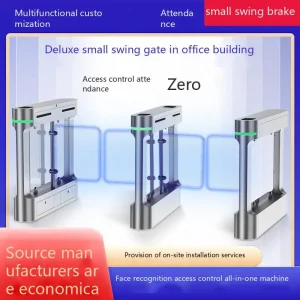
Tokyo Commercial Lobby Swing Turnstile Barrier
View Swing Turnstile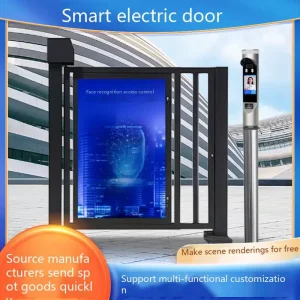
Tokyo Commercial Advertising Pedestrian Gate
Request OEM Quotation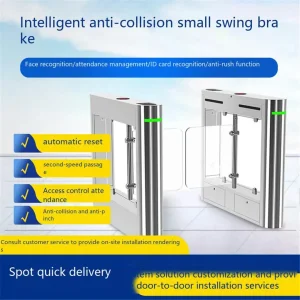
High-Traffic Transit Pedestrian Swing Gate System
Get Swing Gate Price
Heavy Commercial Barrier Gate Model D03 for Tokyo
View D03 Specifications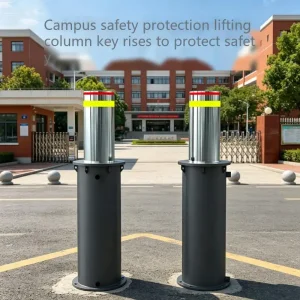
Hydraulic Retractable Anti-Ram Rising Bollard System
Download Bollard Manual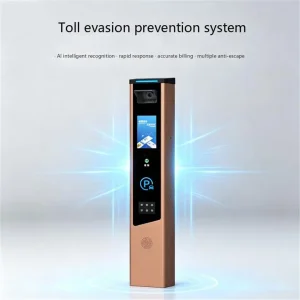
Tokyo Automated ANPR Smart Camera Terminal
Order LPR System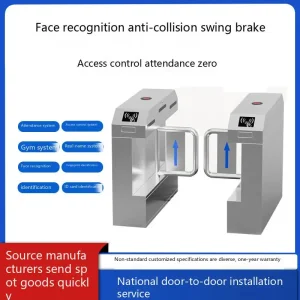
Bridge-Type Architectural Sloped Swing Turnstile
Inquire Sloped Swing Gate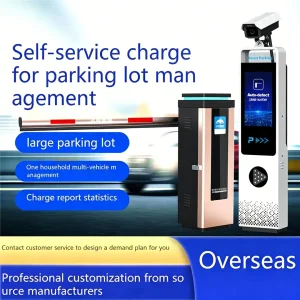
Tokyo Urban Parking Dolphin I LPR Dispenser Unit
View Dolphin I Specs
Technical & Procurement Q&A
Frequently Asked Questions: Importing Barrier Gates to Tokyo
Authoritative technical guidance for Japanese importers, facility managers, and electrical system contractors.
Are Anrui barrier gates fully compatible with Tokyo's 50Hz single-phase electrical supply?
Yes, absolutely. Japan's national power grid is uniquely split: Eastern Japan (including Tokyo, Kawasaki, Yokohama, and the entire Kanto region) operates strictly at 50Hz, whereas Western Japan (Osaka, Nagoya) operates at 60Hz. Standard AC motor barrier gates designed for 60Hz will overheat, lose torque, or burn out when installed in Tokyo. All Anrui export models built for the Tokyo market feature universal wide-voltage switch-mode power supplies (85V–264V AC, 50Hz/60Hz autosensing) that internally step down input power to ripple-free 24V DC. The brushless DC servo motor runs entirely decoupled from line frequency, ensuring identical torque, speed, and thermal stability in Tokyo without requiring external frequency stabilization transformers.
How does the landed CIF cost in Tokyo compare with domestic Japanese barrier brands?
Procuring directly from Shenzhen Anrui typically reduces total landed equipment costs by 40% to 60% compared to purchasing comparable commercial hardware from traditional domestic Japanese brands. A standard domestic Japanese commercial barrier system often retails between ¥450,000 and ¥850,000 JPY excluding software licensing. Anrui's FOB Shenzhen export prices range from $320 to $560 USD (approx. ¥48,000 to ¥84,000 JPY equivalent). Even after factoring in maritime shipping (LCL or FCL into Port of Tokyo/Yokohama), customs clearance, and Japan Consumption Tax (JCT at 10%), contractors achieve substantial margin enhancements on commercial development bids.
Can the LPR recognition engine process Japanese license plates (Kanji and Kana)?
Yes. Our integrated license plate recognition cameras (such as the AnRuitong II and Dolphin I series) run a specialized deep-learning neural network trained extensively on Japanese Vehicle Inspection Certificate registration characters (Jidousha Toroku Bangouhyo). This includes precise optical character recognition for Kanji regional issuing office marks (e.g., 品川 - Shinagawa, 練馬 - Nerima, 足立 - Adachi), 3-digit vehicle classification codes, Japanese Hiragana syllabary characters, and the primary 4-digit numeric sequence. Recognition accuracy exceeds 98.5% at vehicle approach speeds up to 40 km/h, even under adverse rain or nighttime glare conditions.
What is the typical shipping lead time from Shenzhen factory to Tokyo Port?
Production lead time for standard export orders (1 to 20 units) is typically 7 to 10 working days at our Shenzhen facility. Maritime ocean freight from Shenzhen (Yantian or Shekou port) directly to the Port of Tokyo (Oi Container Terminal or Aomi Container Terminal) requires only 4 to 6 transit days on scheduled direct container carrier services (such as SITC, OOCL, or ONE). Including export customs processing and local clearance via your designated Japanese customs broker (Otsu-shu), total delivery from factory dispatch to your Tokyo warehouse or job site is routinely accomplished within 14 to 18 calendar days.
How do articulated boom barrier gates perform in low-ceiling underground Tokyo garages?
Articulated (folding) boom barrier gates are the industry-standard solution for Tokyo's subterranean car parks, where ceiling heights are frequently restricted to 2.1m to 2.3m due to low-hanging HVAC ductwork, sprinkler pipes, and seismic building crossbeams. Our articulated mechanism employs a high-precision internal linkage rod connected to a central alloy pivot hub. When the barrier commands to open, the vertical boom segment swings upward while the horizontal extension folds at an exact 90-degree angle, maintaining complete lane clearance without any risk of overhead structure contact.
What third-party parking software protocols are supported by Anrui controllers?
All Anrui barrier gate controller motherboards provide open, non-proprietary communication interfaces. We support TCP/IP Ethernet networking, RS485 Modbus RTU, standard Wiegand (26/34-bit) inputs, and dry-contact optocoupled I/O trigger relays. We provide full RESTful API documentation and SDKs for software developers and Japanese parking systems integrators, allowing effortless bridging into proprietary ticketing kiosks, mobile QR code parking payment platforms (PayPay, Line Pay), and automated mechanical car stacker PLC control systems.
How are warranty replacements and technical support handled remotely for Tokyo projects?
Every barrier gate exported to Tokyo comes backed by an authoritative 3-year factory warranty on the brushless DC motor and planetary reduction gear assembly, along with a 2-year warranty on electronic PCBA control boards. We supply critical modular spare parts (plug-and-play controller boards, power supplies, radar sensor units, and remote keyfobs) packaged with bulk consignments to ensure zero operational downtime. Our bilingual engineering team provides 24/7 real-time remote diagnostic support via video link, WhatsApp, WeChat, or email to assist your local installation technicians.
Ready to Optimize Your Tokyo Project's Access Budget?
Receive comprehensive technical specification sheets, CAD lane layout drawings, and a direct CIF Tokyo quotation within 24 hours.