
High-Priority Access Automation Hardware for Metro Manila
Engineered to deliver high-duty cycle perimeter defense and parking flow management under high ambient heat and monsoon runoff environments.
-
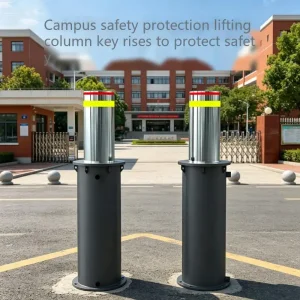
Heavy-Duty Hydraulic Rising Bollard System (Manila Commercial Grade)
View Specifications & Quote -
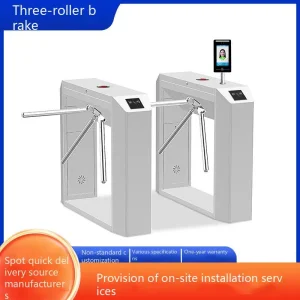
High-Flow Pedestrian Speed Swing Gate for Manila Corporate Lobbies
View Specifications & Quote -
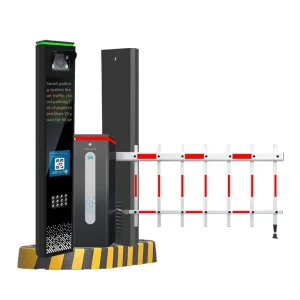
Articulated DC Servo Boom Barrier Gate with Long-Range RFID Reader
View Specifications & Quote -
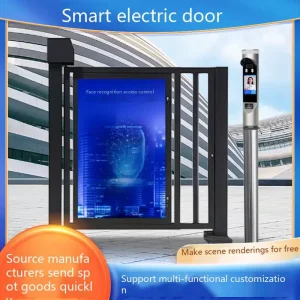
Intelligent Commercial Entrance Display & Pedestrian Advertising Gate
View Specifications & Quote
Perimeter Security Architecture in the Philippines & Global Shifts
Analyzing structural physical access control demands across central business districts and high-risk logistical hubs.
Manila's High-Density Security Realities
The Metropolitan Manila landscape—encompassing dense hubs such as Bonifacio Global City (BGC), Makati Central Business District, Ortigas Center, and the Bay City gaming and entertainment corridor—presents distinct engineering challenges for vehicle mitigation and site defense.
Rising security protocols in government offices, BPO hubs, foreign embassies along Roxas Boulevard, and multimodal logistics centers in Manila Port require physical anti-ram devices capable of stopping hostile vehicle entry (HVE). Crucially, localized engineering must counter the capital's severe monsoon flooding, high humidity, and coastal salt-mist corrosion along Manila Bay through IP68 electro-hydraulic sealing and marine-grade stainless steel finishes.
The Global Paradigm: ASTM, PAS 68 & IWA 14-1
Globally, the hostile vehicle mitigation (HVM) market is moving away from static structural barriers toward automated kinetic counter-measures. International physical perimeter standards—notably ASTM F2656/F2656M in North America, BSI PAS 68 in the UK, and IWA 14-1—dictate strict kinetic energy absorption ratings.
Modern projects mandate that rising bollards withstand impacts from a 7,200kg (medium-duty truck) or 7,500kg vehicle traveling at 80 km/h (M50/K12 level) with zero penetration into protected asset footprints. Global supply chains now integrate real-time PLC diagnostics, high-pressure brushless DC hydraulic pumps, and IoT automated fail-safe ascent routines to ensure constant physical operational readiness.
Rising Bollard Pricelist & Tier Breakdown in Manila (PHP / USD)
Comprehensive cost projections including manufacturing, shipping landed duty, trench excavation, subsurface drainage, and control PLC integration.
| Bollard Classification | Actuation Mechanism | Impact / Duty Class | Subsurface Requirement | Indicative Price per Unit (PHP) | Lead Time to Manila |
|---|---|---|---|---|---|
| Light Commercial Automatic Retail strips, residential clubs |
Pneumatic / Low-Pressure Hydraulic | Non-rated / 30-50kJ impact Medium Duty |
800mm Depth Standard Soakaway |
₱85,000 - ₱135,000 | Stocked / 2-3 Weeks |
| Heavy-Duty Commercial (Stainless 304) Corporate BPO towers, hotels |
Integrated Hydraulic Power Unit (HPU) | 150-250kJ kinetic limit High-Frequency Cycle |
1,100mm Depth Sump Pump Connected |
₱140,000 - ₱220,000 | 3-4 Weeks |
| Crash-Rated Anti-Ram (ASTM M30 / K4) Embassies, datacenters, banks |
External or High-Speed Integrated HPU | ASTM F2656 M30 (P1 Zero Pen.) Continuous Duty |
1,300mm Depth Engineered Rebar Cage |
₱230,000 - ₱310,000 | 4-6 Weeks |
| High-Security Anti-Terror (ASTM M50 / K12) Ports, military bases, critical power |
Heavy Industrial Hydraulic + EFO Surge | ASTM F2656 M50 / PAS 68 Anti-Hostile Vehicle |
1,600mm Depth or Shallow-Mount Reinforced C35 Concrete |
₱320,000 - ₱480,000+ | 5-7 Weeks |
| Semi-Automatic Gas-Strut Retractable Emergency access lanes, pedestrian plazas |
Internal Mechanical Gas Piston | Structural Stop Low Frequency Manual Key |
900mm Depth Gravity Drain Tube |
₱45,000 - ₱75,000 | Stocked / 1-2 Weeks |
High-Yield Application Scenarios Across Metro Manila
Configured specifically to mitigate local traffic congestion, severe environmental weathering, and distinct institutional safety mandates.
BGC & Makati IT Park High-Rise Lobbies
Protecting Grade-A LEED corporate headquarters and multinational BPO centers. Hydraulic rising bollards sync directly with Automated Number Plate Recognition (ANPR) systems and RFID credentials to deliver frictionless entry for VIP vehicles while stopping tailgating and unauthorized access at vehicular drop-offs.
Embassies, Government & Diplomatic Zones
Deployments along Roxas Boulevard, Malacañang complex perimeters, and Department of Foreign Affairs facilities require certified ASTM M50 (K12) bollards with Emergency Fast Operation (EFO) valves, lifting the bollards from zero to full extension in under 1.5 seconds during alert conditions.
High-Density Retail & Entertainment Plazas
Mixed-use complexes like SM Mall of Asia, Bonifacio High Street, and Newport World Resorts transition large public plazas between pedestrian walkways during peak visiting hours and authorized logistics loading lanes during early morning operations via centralized keycard scheduling.
Integrated Ecosystem Design & Technological Roadmap
A unified approach linking bollards, barriers, license recognition, and cloud analytics into a singular building management system.
Turnkey Security & Traffic Network Architecture
Modern metropolitan access protection cannot treat perimeter security as a series of disparate hardware elements. A truly secure compound ties rising bollards into a tiered defense network: long-range RFID and ANPR cameras identify approaching registered traffic; high-speed boom barriers manage routine high-volume vehicle ingress; while hydraulic crash bollards remain dormant flush to the pavement, activating only during threat escalation, facility lockdowns, or after-hours closure.
This holistic integration reduces operational strain on local physical security personnel and prevents manual inspection delays that cause traffic spillover onto congested Manila arterials such as EDSA, C-5, and Ayala Avenue.
Monsoon & Saline Mitigation Engineering
Because subsurface bollard casings in Manila routinely encounter high water tables and typhoons, standard drainage sumps can easily become submerged. Our heavy-duty bollards feature sealed IP68 electro-hydraulic motor units directly inside the moving cylinder, or remote external HPUs elevated above ground level.
Constructed from 316-grade marine stainless steel or hot-dip galvanized and electrophoretic-coated steel cylinders, each unit is shielded against aggressive atmospheric oxidation. Redundant internal sump pumps with float-triggered activation guarantee reliable mechanical operation even under severe tropical deluge conditions.
Technology Evolution: 2026 - 2030 Roadmap
Edge-AI Safety Arrays
Transition from standard ground induction loop coils to dual-spectrum LiDAR and 3D radar profiling, eliminating false triggers caused by motorcycles and low vehicles.
Brushless DC Electromechanical
Replacing high-maintenance hydraulic fluid systems with sealed, low-noise BLDC roller-screw mechanisms, decreasing power consumption by up to 60% per actuation cycle.
Predictive Maintenance Over Cloud
Real-time telemetry tracking pressure variance, cycle counters, and oil thermal profiles via 4G/5G edge gateways to resolve mechanical issues prior to hardware failure.
C-V2X Smart City Interlock
Emergency vehicle priority systems communicating directly with city ambulance and fire department navigation systems to drop bollard rows automatically upon approach.
Frequently Asked Questions on Manila Bollard Projects
In-depth responses covering engineering requirements, maintenance cycles, and procurement specifications.
What are the civil excavation requirements for installing rising bollards in Manila?
How do hydraulic and electromechanical rising bollards perform in coastal and flood environments?
Can automatic rising bollards interface with existing building management and parking systems?
What happens during a power failure or municipal blackout?
What preventive maintenance is required in tropical Southeast Asian climates?
Integrated Physical Security & Automated Gate Catalog
Direct manufacturer supply for Philippine perimeter engineering, toll automation, parking hubs, and commercial complexes.
-
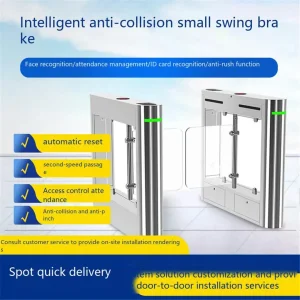
Stainless Steel Optical Speed Barrier Swing Gate for Manila Commercial Lobbies
View Specifications & Quote -
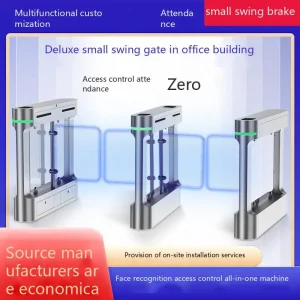
Heavy-Duty Pedestrian Access Swing Barrier with Facial Recognition Bracket
View Specifications & Quote -
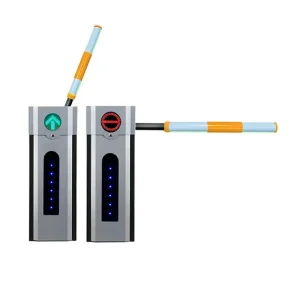
Model D11S High-Speed Intelligent Parking Barrier Gate (0.9s to 3s Fast Open)
View Specifications & Quote -
Factory Direct Automatic Rising Bollard with Complete Engineering Documentation
View Specifications & Quote -
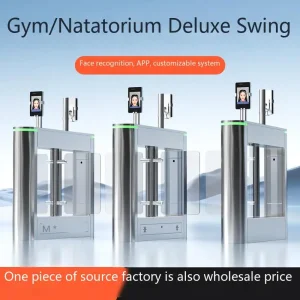
Enterprise Office Attendance & Flap Speed Gate for High-Density Manila Towers
View Specifications & Quote -

Model D03 Brushless DC Heavy-Traffic Parking Boom Barrier Gate
View Specifications & Quote -
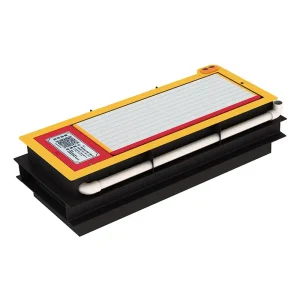
Commercial Metropolitan Smart Parking Lock & Automated Vehicle Space Controller
View Specifications & Quote -
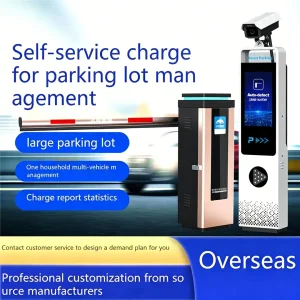
High-Definition Dolphin-I ANPR Camera Unit with LPR Smart Parking Algorithm
View Specifications & Quote
Request Engineering Support & Manila Direct Quotation
Connect with our technical design office for project layout blueprints, wiring schematics, foundation excavation drawings, and comprehensive landed CIF Manila price schedules.
Send Inquiry Now