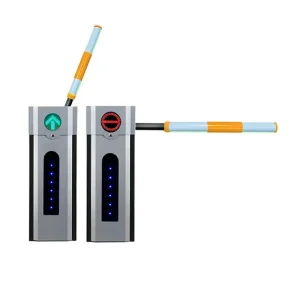
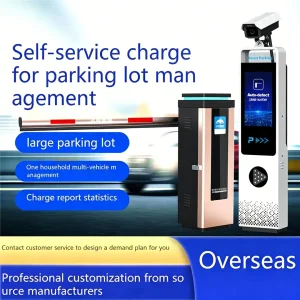
Primary Access Control & Bollard Solutions for Saudi Arabia Projects
Engineered for mission-critical access gates, commercial mega-developments, and governmental checkpoints across Saudi Arabia requiring high-cycle hydraulic resistance and environmental sealing.
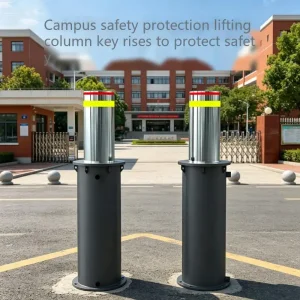
Rising Bollard Market Dynamics in Saudi Arabia
A high-velocity macro shift propelled by the Giga-Projects of Saudi Vision 2030, critical infrastructure protection mandates by HCIS, and the urbanization demands of smart logistics corridors.
HCIS Security Directives
The High Commission for Industrial Security (HCIS) enforces rigid physical safety mandates across Saudi Arabia's oil, gas, water, and power installations. Facilities require crash-rated bollards engineered to PAS 68 or ASTM F2656 standards, capable of surviving severe vehicular impact threats.
Giga-Project Implementations
Mega initiatives such as NEOM, The Red Sea Project, Qiddiya, and Diriyah Gate demand architecturally unobtrusive vehicle mitigation systems. Retractable hydraulic bollards blend perimeter defense with pedestrian open spaces without the visual hostility of concrete Jersey barriers.
Harsh Climate Resilience
Desert environments in Riyadh and the Eastern Province expose systems to fine dust, sand infiltration, and ambient temperatures exceeding 50°C. Bollard actuators must use synthetic hydraulic fluid with wide viscosity ranges and double-lip Viton seals to prevent leakage and seizure.
Rising Bollard Price Benchmarks for Saudi Arabia (2025-2026 Forecast)
Comprehensive price breakdown across tiers, drive technologies, impact ratings, and import logistics parameters for EPC contractors and systems integrators in the GCC region.
| Classification Tier | Drive Mechanism | Impact / Crash Rating | Standard Dimension | Est. Unit Cost (USD) | Est. Price (SAR) | Primary Saudi Application |
|---|---|---|---|---|---|---|
| Commercial Semi-Automatic | Gas-Spring Assist | Low (Traffic Management) | Dia: 168mm / H: 600mm | $450 – $850 | 1,690 – 3,190 SAR | Residential driveways, pedestrian zones |
| Standard Electro-Hydraulic | Integrated Micro-Hydraulic | Medium (300J Resistance) | Dia: 219mm / H: 600mm | $1,200 – $2,400 | 4,500 – 9,000 SAR | Commercial office towers, mall entrances |
| Heavy Duty Perimeter | External Hydraulic Pump (HPU) | High (600J Impact) | Dia: 273mm / H: 800mm | $2,200 – $3,800 | 8,250 – 14,250 SAR | Government buildings, logistic hubs |
| Crash Rated ASTM M30 / K4 | High-Pressure Central HPU | Stopping 7.5T Truck @ 48 km/h | Dia: 273mm / H: 900mm | $3,900 – $6,500 | 14,600 – 24,375 SAR | Embassies, energy sub-stations, banks |
| Hostile Vehicle Mitigation M50 / K12 | Heavy-Duty Hydraulic / EFO Ready | Stopping 7.5T Truck @ 80 km/h | Dia: 324mm / H: 1000mm | $7,200 – $13,500 | 27,000 – 50,600 SAR | Aramco facilities, military sites, royal zones |
Key Factors Driving Saudi Arabia Rising Bollard Price Variations:
1. Drive Unit Integration: Self-contained hydraulic bollards reduce civil trenching costs, whereas external Hydraulic Power Units (HPU) provide higher cycle lifespans and facilitate Emergency Fast Operation (EFO) systems (1.5-second lift).
2. Material Specification: 304 vs. 316 Marine-Grade Stainless Steel sleeves dictate price variances of 15%–25%, essential for high-salinity coastal areas like Jeddah, Dammam, and Yanbu.
3. Custom Civil Pit Requirements: Foundation excavation depths ranging from 900mm to 1800mm directly influence civil works expenditure, particularly in hard limestone soils of the Najd plateau.
Technical Roadmap: IoT, AI & Smart City Integration
Perimeter protection is transitioning from isolated mechanical barricades into cloud-managed, edge-computed entry control ecosystems linked directly to city-wide surveillance.
Edge ANPR & LPR Automated Interlocking
Bollard controllers interface directly with Deep-Learning License Plate Recognition (LPR) cameras tailored for Saudi private and commercial plates (supporting bilingual Arabic and Western characters). Edge units process whitelist authorizations in under 300 milliseconds, initiating pre-cleared bollard retraction without manual guard intervention.
Emergency Fast Operation (EFO) Protocols
For high-threat threat postures, systems deploy hydraulic accumulator banks delivering EFO capabilities that raise bollards in under 1.5 seconds. The system overrides safety loop detectors via manual duress buttons or automated perimeter tripwires, sealing the lane during hostile vehicle intrusion scenarios.
Predictive Telemetry & Remote Diagnostics
Modern PLC controllers feature integrated 4G/5G/NB-IoT modules transmitting oil temperature, pressure levels, cycle counts, and piston alignment data to a centralized command facility. Early warnings signal seal degradation or fluid contamination from desert dust before lane blockages occur.
Civil Engineering Optimization: Shallow Mount
Urban streetscapes often conflict with underground utilities like gas mains, power ducts, and telecommunication conduits. Shallow-mount rising bollards requiring excavation depths as shallow as 400mm-600mm protect the sub-surface while retaining ASTM M30/M50 crash containment capabilities.
Localization, SASO Certification & EPC Contractor Support
Ensuring cross-border compliance with Saudi Standards, Metrology and Quality Organization (SASO), SABER platform registration, and local integration partnerships.
SABER & SASO Conformance
All imported barrier gate and rising bollard hardware complies with SASO IEC 60335-2-103 mechanical drive standards. Electrical control cabinets feature CE, UL, and SASO COC certificates required for streamlined clearance at Jeddah Islamic Port and King Abdulaziz Port in Dammam.
IK10 & IP68 Sealing Standards
Bollard cylinders feature an IK10 impact enclosure rating for physical resilience and IP68 submersible certification for the cylinder assembly. This ensures continuous operation during rare but severe seasonal flash floods in urban depressions and road underpasses.
Local EPC & Systems Partnership
We work alongside Tier-1 Saudi EPC contractors, providing AutoCAD foundation templates, wiring schematics, hydraulic line calculations, and 24/7 technical dispatch. We ensure smooth integration with Milestone, Honeywell, Genetec, and LenelS2 security systems.
Frequently Asked Questions: Saudi Market Focus
Key technical, commercial, and operational insights for security directors, project engineers, and procurement specialists.
What is the standard delivery lead-time to Saudi Arabian ports?
Standard commercial units ship within 10–14 days. Crash-rated units (M30/M50) with customized external hydraulic power units typically require 20–25 days production. Maritime transit to Dammam or Jeddah Islamic Port averages 18–22 days from our Shenzhen manufacturing plant.
How do hydraulic bollards perform during extreme heat waves in Riyadh?
Our units use multi-grade synthetic hydraulic oil rated for continuous ambient conditions up to 70°C, combined with integrated forced-air cooling in central HPU cabinets. Thermally isolated solenoid coils prevent overheating during continuous peak-hour duty cycles.
What is the recommended spacing between bollards to stop vehicle intrusion?
Under international PAS 69 and ASTM standards, the clear distance between bollard cylinders must not exceed 1,200mm (measured center-to-center, usually 1.0 meter to 1.1 meters) when fully deployed. This prevents small passenger vehicles from passing through the array.
Can bollards be synchronized with automatic fire alarm systems?
Yes. The central PLC controller integrates a dry-contact emergency fail-safe input. Upon receiving a building fire alarm signal or manual emergency drop command, hydraulic line pressure releases automatically, retracting the bollards flush to the ground via counterweights or spring drives.
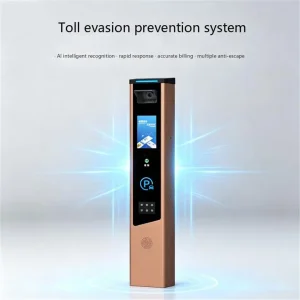
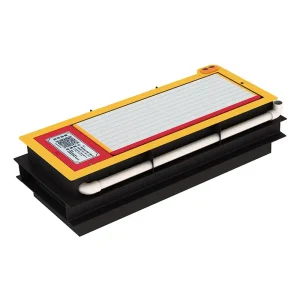
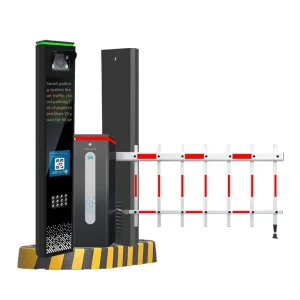
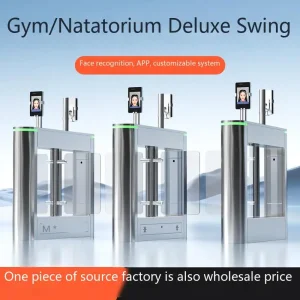
Complete Entrance Automation & Parking Control Range
Complementary access hardware systems deployed across Saudi logistics hubs, industrial compound checkpoints, and residential master plans.