
Engineered Perimeter Systems & Physical Access Control Solutions
Explore our certified active barrier systems and speed gates deployed across commercial corporate campuses, transit facilities, and municipal sites throughout Massachusetts.
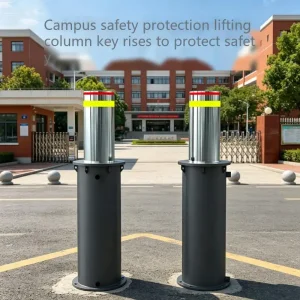
CE Certified Rising Bollard System (Boston Seaport Specification)
Heavy-duty hydraulic rising bollard with rapid emergency deployment, IP68 submersible actuator, and winterized anti-freeze fluid.
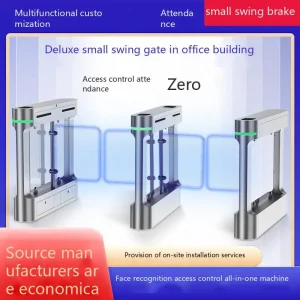
High-Duty Commercial Swing Gate (Kendall Square Edition)
Brushless servo motorized perimeter swing barrier engineered for biopharmaceutical corporate labs and high-throughput campuses.
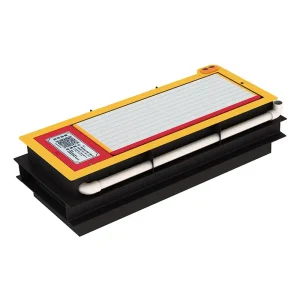
Municipal Smart City Parking Barrier (Downtown Crossing Fleet)
Automated high-cycle toll barrier mechanism tailored for high-density metropolitan multi-level garages and transit interchanges.
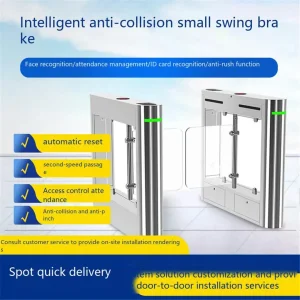
Architectural Fast Pedestrian Swing Gate (Longwood Medical Hub)
Ultra-narrow footprint optical pedestrian speed lane with integrated biometric access control, fire-alarm interlock, and ADA compliance.
Perimeter Security Engineering Across Boston's Complex Urban Topology
The Greater Boston metropolitan area presents an intricate intersection of colonial architectural preservation, dense urban thoroughfares, high-value life-science clusters, and harsh North Atlantic maritime weather. From the historic cobblestone avenues of Beacon Hill to the modern glass-fronted developments of the Seaport Innovation District and the critical biopharma laboratories in Kendall Square (Cambridge), securing pedestrianized zones and restricted vehicle entry portals requires robust Hostile Vehicle Mitigation (HVM).
Modern threat modeling mandates bollards capable of arresting unauthorized vehicles traveling at high approach velocities while accommodating tight spatial envelopes. In Boston, vehicle mitigation measures must integrate seamlessly with local urban design standards guided by the Boston Planning & Development Agency (BPDA), historical preservation covenants, and severe winter salting practices.
| Site Typology (Boston) | Primary Threat Vector | Standard Recommendation |
|---|---|---|
| Seaport / Waterfront | High-speed ramming / Low foundation depth | Shallow Mount K12 / M50 Rising Bollards |
| Kendall Square Biotech | Unauthorized deliveries / Tailgating | Automatic Hydraulic Bollards + ANPR |
| Longwood Medical Area | Ambulance lane blocking / Pedestrian surge | Fast-Retracting Bollards with EFO (1.5s) |
| Downtown Crossing / Back Bay | Pedestrianized vehicle incursions | Architectural Stainless Flush Retractable |
| Logan Airport Perimeter | Heavy truck perimeter breach | ASTM F2656 Crash-Rated Anti-Terror Systems |
Global Standards: CE Compliance, ASTM F2656 & IWA 14-1 Harmonization
Procuring rising bollards for commercial, institutional, and government assets requires rigorous adherence to electromagnetic compatibility, functional machinery safety, and structural impact certitude.
CE Machinery Directive 2006/42/EC
Every automated rising bollard is engineered and verified under strict European Union health and safety directives, guaranteeing operational safety for pedestrians and vehicle operators alike.
- Dual-channel pressure relief fail-safe valve
- EN ISO 13849-1 functional safety architecture
- Manual override hand-pump for power-loss states
EMC Directive 2014/30/EU
In high-EMI environments such as medical imaging facilities, university cyclotron labs, and subways in Boston, electromagnetic compatibility is non-negotiable to prevent control board interference.
- Galvanically isolated optocoupler logic lines
- Heavy industrial transient immunity (EN 61000-6-2)
- Zero interference with municipal emergency bands
ASTM F2656 & IWA 14-1 Ratings
Physical crash verification protocols ensure complete kinetic energy absorption, stopping medium-duty trucks and hostile vehicles before they breach structural facility perimeters.
- M30 / K4 Ratings (15,000 lbs @ 30 mph / P1 penetration)
- M50 / K12 Anti-terror ratings (1,852 kJ energy absorption)
- Finite Element Analysis (FEA) certified weldment
Boston Code Compliance: NFPA 101, ADA & MassDOT Standards
Deploying automated physical security in Massachusetts requires navigating stringent state building codes and municipal guidelines. Our Boston field support network provides turnkey engineering documentation to ensure effortless approvals during site plan reviews.
ADA (Americans with Disabilities Act) Compliance: Rising bollard arrays deployed across public rights-of-way in Boston maintain a minimum clear walkway opening of 36 inches between bollards, accompanied by audible buzzers (75dB) and high-luminosity 360-degree LED top rings with reflective 3M diamond-grade banding to protect visually impaired pedestrians.
NFPA 101 Life Safety Interlocking: In the event of a fire alarm trigger or primary grid failure, our intelligent control logic interfaces directly with municipal fire alarm panels (FACP), initiating immediate emergency descent via gravity counterweight and high-pressure dump valves within 2.0 seconds.
Sub-Surface Utility Constraints: In legacy downtown Boston streets characterized by shallow utility ducting (gas, steam, fiber optic), our Shallow Mount foundation designs achieve full crash certifications with excavation depths as low as 400 mm (15.7 inches), avoiding multimillion-dollar utility relocations.
Greater Boston Turnkey Project Support
We work hand-in-hand with Boston-based general contractors, MEP engineering consultancies, and access system integrators:
- Stamped PE (Professional Engineer) structural calculations for MA
- CAD/BIM models (Revit format) for BPDA architectural filing
- Dedicated local warehouse stocking for valves, seals, and boards
- Factory field technician commissioning and annual SLA coverage
Hydraulic vs. Electromechanical Actuation in Cold Climates
Selecting the optimal bollard drive architecture determines total cost of ownership (TCO), emergency response velocity, and long-term winter reliability in New England's harsh winters.
| Performance Parameter | Integrated Hydraulic Drive (O-HPU) | Centralized Hydraulic Pump (C-HPU) | Brushless Electromechanical |
|---|---|---|---|
| Boston Sub-Zero (-20°F) Performance | Excellent (Built-in heating cartridge) | Excellent (Indoor insulated power unit) | Moderate (Gearbox grease thickening risk) |
| Cycle Frequency / Duty Rating | 100% Continuous Duty (2,500+ ops/day) | Intense Industrial (5,000+ ops/day) | Medium to High (600 ops/day max) |
| Emergency Fast Operation (EFO) | 1.5 – 2.0 Seconds with Accumulator | 1.2 – 1.5 Seconds (High Flow Rate) | 2.8 – 3.5 Seconds (Motor governed) |
| Flood & Water Submersion | IP68 Rated (Completely sealed system) | IP68 Bollard / Dry Vault for HPU | IP67 (Electronics sensitive to saline moisture) |
| Trenching & Piping Distance | Power & signal wiring only (Up to 150m) | Hydraulic high-pressure hoses required (<30m) | Low voltage wiring only (Up to 100m) |
| Recommended Boston Application | Commercial office towers & university hubs | Port of Boston cargo & airport secure gates | Low-traffic VIP residential & private alleys |
Turnkey Urban Applications Across Greater Boston
Customized perimeter control frameworks mapped to specific architectural, security, and traffic control demands across Massachusetts.
Life Sciences & High-Tech Campuses
Protecting intellectual property, cleanrooms, and loading bays across Kendall Square, Watertown, and Route 128 technology corridors against vehicular surveillance or ramming threats.
- Automated RFID long-range badge authorization
- Under-vehicle surveillance system (UVSS) integration
- Silent intruder alert transmission to SOC
High-Density Commercial & Tourism Havens
Shielding millions of annual pedestrians traversing Faneuil Hall, Newbury Street, and Boston Common during special festivals, sporting events, and weekend shopping.
- Flush-mount stainless finish preserving historic aesthetics
- Scheduled automated lowering for morning sanitation fleets
- Zero vehicle rebound design preventing secondary pedestrian injury
Intermodal Freight, Transit & Airports
Continuous-duty physical access control for logistics checkpoints at Massport Conley Container Terminal, South Station bus terminals, and Logan International perimeter gates.
- High-speed ANPR plate recognition and USDOT OCR
- Heavy tandem steel construction resisting heavy tractor axles
- Redundant PLC control architecture with dual power bus
Next-Generation Smart Perimeter Roadmap
The convergence of edge AI, IoT sensor diagnostics, and sustainable hydraulic fluid chemistries represents the future of automated hostile vehicle mitigation.
1. AI-Driven Predictive Edge Telematics
Embedded vibration, pressure, and thermal sensor arrays transmit real-time telemetry over secure MQTT/TLS protocols to facility management platforms, detecting seal degradation or hydraulic aeration before cycle failures occur.
2. Biodegradable Synthetic Esters for Marine Protection
To safeguard Boston Harbor and the Charles River watershed from accidental fluid leaks during ground settlement, our systems utilize non-toxic, readily biodegradable ISO VG 32 synthetic ester fluids that maintain low viscosity at -35°C.
3. Optical Wave LiDAR & 3D Anti-Entrapment Safety
Replacing legacy induction loops vulnerable to freeze-thaw asphalt shifting, solid-state micro-LiDAR scanners generate continuous point-cloud curtains over the bollard pit, eliminating accidental vehicle underside strikes or pedestrian entrapment.
Direct Procurement & In-Sales Advantages for Boston Projects
By cutting out multiple intermediary markups and dealing directly with our engineering manufacturing facilities, Boston developers, institutional planners, and security integrators realize measurable commercial gains:
- 30% - 45% Capital Cost Savings: Direct factory wholesale pricing compared to domestic repackagers.
- Custom Architectural Finishes: 316 Marine Stainless, RAL powder coatings, or bronze cladding matching Boston Landmarks Commission requirements.
- Air & Ocean Logistics to Port of Boston: Direct container delivery to Boston Conley Terminal or rapid airfreight via Logan Airport.
Frequently Asked Questions: Rising Bollards in Boston
In-depth responses to critical technical, regulatory, and logistical queries posed by Boston architects, general contractors, and facility security directors.
QHow do your rising bollards survive Boston's harsh winters and road salt?
Our rising bollards utilize heavy-wall AISI 316 stainless steel cylinders rather than lower-grade 304 or painted carbon steel, offering exceptional resistance to deicing salts (calcium chloride and sodium chloride). Internally, each unit features an automated internal thermostat and 200W heating cartridge around the hydraulic cylinder, paired with Mil-Spec anti-freeze hydraulic oil (rated down to -40°C) to prevent freezing and sluggish operation during polar vortex events.
QWhat drainage systems are required in Boston's high water table zones?
In coastal Boston zones like the Seaport or East Boston, water tables can be shallow. We mandate a dual-approach: gravity gravel sumps where sub-base permeability permits, or integrated automatic submersible IP68 bilge pumps fitted directly into each bollard pit foundation. The pump automatically evacuates tidal intrusion or storm runoff directly into the municipal storm line, with built-in non-return check valves.
QAre your rising bollards certified under CE and US crash test standards?
Yes. All units hold full CE compliance documentation covering the Machinery Directive (2006/42/EC), Low Voltage Directive (2014/35/EU), and EMC Directive (2014/30/EU). For impact resilience, our crash-rated series has undergone rigorous physical crash tests and full dynamic FEA simulations conforming to ASTM F2656 M30/M50 and IWA 14-1 certifications, guaranteeing zero vehicular penetration past the datum line.
QHow fast can the bollards deploy in an active hostile vehicle attack?
Under standard operational mode, rising time is between 2.5 to 3.5 seconds. When equipped with our Emergency Fast Operation (EFO) hydraulic nitrogen accumulator system, the bollards can fully erect in as little as 1.0 to 1.5 seconds upon pressing an emergency push-button, tripping perimeter tripwires, or receiving automated signals from high-speed AI tracking cameras.
QCan these bollards tie into Boston facility access control systems?
Yes. Our industrial PLC controllers are engineered for open-architecture interoperability. They accept dry contact, Wiegand, OSDP, RS485, and TCP/IP inputs, integrating seamlessly with Software House C•CURE 9000, LenelS2, Honeywell, Genetec, long-range UHF RFID readers, ANPR cameras, and municipal Boston Fire Department master key boxes.
QWhat is the lead time and delivery schedule for shipments to Boston?
Standard production configurations require 2 to 3 weeks at our factory. Ocean freight shipping directly to the Port of Boston (Conley Terminal) typically takes 24 to 30 days. For mission-critical emergency projects or expedited replacements, air freight delivery directly to Boston Logan International Airport (BOS) can be arranged within 5 to 7 business days.
Comprehensive Vehicle & Pedestrian Access Control Fleet
Complement your perimeter rising bollard array with our fully networked boom barrier gates, license plate recognition cameras, individual parking space locks, and high-speed turnstiles.
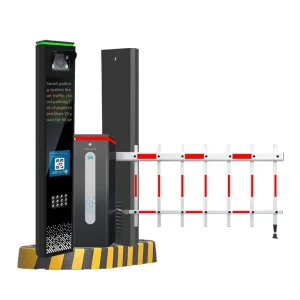
Low-Headroom Articulated Barrier Gate (Boston Underground Garage)
DC brushless articulated boom arm designed specifically for multi-level parking structures with ceiling height limitations.
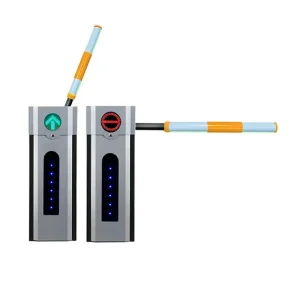
Intelligent High-Speed Barrier Gate D11S (Route 128 Corporate Park)
0.6 to 1.5s rapid speed lane barrier with integrated LED boom and smart anti-collision pressure sensor.
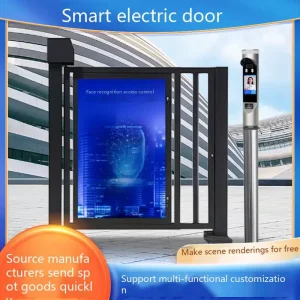
Media Advertising Pedestrian Gate (Fenway Entertainment Zone)
Turnkey pedestrian revenue portal featuring dynamic digital ad casing and automated passage control.
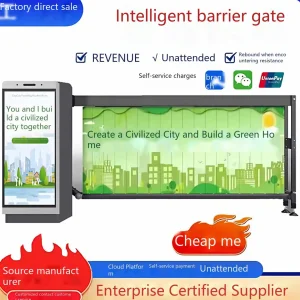
Heavy-Duty Traffic Barrier Gate D03 (Boston Logistics Distribution)
Extreme duty automated toll barrier cabinet equipped with cold-weather gearbox heating and dual-limit switches.
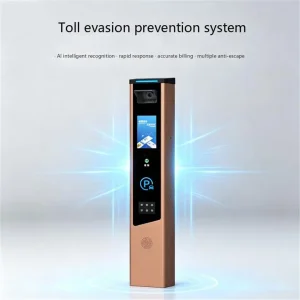
HD Deep-Learning ANPR Camera Unit (AnRuitong II All-in-One)
High-accuracy vehicle plate recognition with integrated strobe light, optimized for Massachusetts license plate typography.
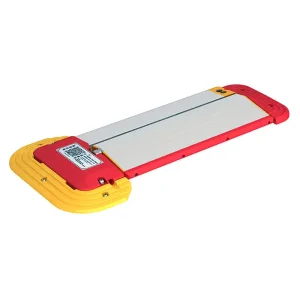
Smart EV Bay Parking Lock & App Sentry (Boston Shared Garage)
Ultrasonic sensing anti-fuel-car parking space protector with seamless scan-to-unlock mobile payment backend.
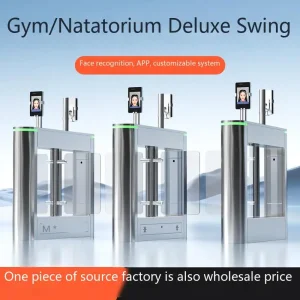
Executive Lobby Speed Gate Turnstile (Financial District Tower)
Sleek brushed stainless steel swing barrier speed lane with infrared optical tailgating detection array.
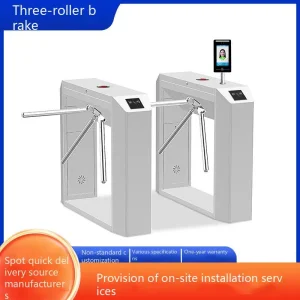
High-Flow Industrial Gym & Campus Swing Gate (Allston Sports Hub)
Compact, high-throughput bi-directional access turnstile for university athletics facilities, gyms, and staff portals.
Initiate Your Perimeter Engineering Project or Request a Quotation
Whether you require standard CE-certified automatic rising bollards, ASTM F2656 anti-ram crash barricades, or a turnkey integrated vehicle-pedestrian entrance system for Boston facilities, our senior technical engineering team is standing by to prepare detailed project submittals.
Send Inquiry Now