
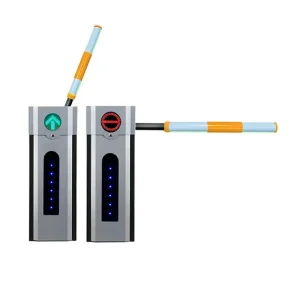
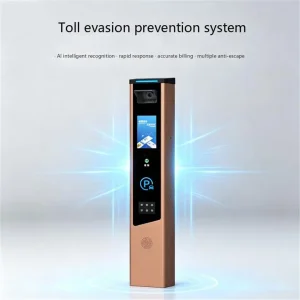
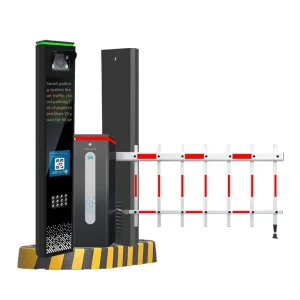
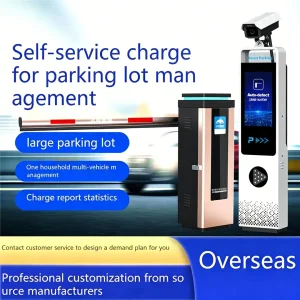
Featured Next-Gen Barrier Gates & Recognition Systems
Engineered for seamless integration into Sri Lankan commercial plazas, expressway toll points, and smart residential hubs.
1. Executive Summary: The Global Transformation of Automated Access Infrastructure
The global automated barrier gate market has transitioned from basic electro-mechanical relay systems to sophisticated, cloud-connected IoT edge nodes capable of handling multi-modal access protocols. Driven by rapid urbanization, smart city initiatives, and the imperative for contactless traffic throughput, vehicle access control systems are now critical assets in commercial, industrial, and municipal infrastructures. Internationally, the shift toward Brushless Direct Current (BLDC) motors and planetary gear reducers has established a new benchmark for Mean Time Between Failures (MTBF), pushing operational life cycles beyond 5 million continuous open-close operations.
Simultaneously, edge-computed Optical Character Recognition (OCR) engines integrated directly into barrier housings have minimized latency to under 200 milliseconds. Global manufacturing ecosystems, predominantly concentrated in advanced industrial automation hubs such as Shenzhen, are deploying IP68-sealed, thermal-regulated barrier cabinets capable of withstanding extreme environmental stressors—ranging from sub-zero European conditions to equatorial high-humidity zones.
2. Macro Analysis of Sri Lanka’s Access & Traffic Infrastructure Market
Sri Lanka’s strategic positioning in the Indian Ocean, coupled with ongoing infrastructure acceleration, has created a specialized demand profile for automated vehicle access hardware. Key macro drivers include the expansion of the Port City Colombo special economic zone, major highway logistics networks like the Southern Expressway (E01) and Katunayake Expressway (E03), and intense commercial re-development within Colombo 03 (Colpetty), Colombo 07 (Cinnamon Gardens), and Rajagiriya.
Urban Density & Commercial Real Estate
In urban centers such as Colombo, Kandy, and Galle, real estate developers face severe spatial constraints in multi-level parking structures. This drives demand for articulated boom barrier gates designed to operate under low-ceiling clearances (2.2m–2.5m) while keeping cycle times under 1.5 seconds to prevent lane tailgating and traffic spillover onto arterial roads.
Tropical Coastal Resilience Challenge
Sri Lanka’s tropical maritime climate exposes hardware to high humidity (frequently exceeding 85%), heavy monsoon precipitation (South-West and North-East monsoons), and airborne sea-salt aerosols. Standard cold-rolled steel cabinets degrade rapidly. Procurement mandates now demand 2.0mm cold-galvanized sheet steel with phosphorized powder coatings, anti-condensation interior heating elements, and stainless-steel internal drive shafts.
Furthermore, the industrial expansion in Free Trade Zones (FTZs) such as Katunayake, Biyagama, and Mirigama has elevated security protocols. Logistics parks require heavy-duty straight-boom barriers capable of driving 6-meter octagonal arms integrated with long-range RFID readers and automated vehicle undercarriage inspection systems (UVIS).
3. Technical Architecture & Component Engineering Roadmap
Selecting an optimal barrier gate system requires evaluating mechanical architecture, motor control electronics, and sensor telemetry. Below is a detailed breakdown of core hardware specifications recommended for Sri Lankan installations:
Brushless DC (BLDC) Servo Drive
Unlike traditional AC asynchronous motors that generate excessive heat during continuous operation, 24V/36V BLDC servo motors offer precise torque control, zero-maintenance carbon-brushless designs, and smooth micro-stepping acceleration/deceleration curves. This eliminates mechanical bouncing of the boom arm.
Dual-Channel Loop & Radar Safety
To safeguard high-value vehicles and pedestrians, state-of-the-art barriers integrate dual-channel inductive loop detectors alongside 79GHz millimeter-wave anti-smashing radar units. Radar sensing eliminates the need for extensive asphalt cutting, which is vital on older Sri Lankan roadways.
Sri Lankan License Plate LPR Training
License Plate Recognition (LPR) cameras deployed in Sri Lanka must recognize dual-line formatting, regional province identifiers (e.g., "WP", "CP", "SP"), Sinhala/Tamil script variations, and dark-background commercial vehicle plates under low-light night conditions.
| Component Parameter | Commercial Grade Standard | Heavy-Duty Industrial / Toll Standard | Sri Lanka Field Optimization |
|---|---|---|---|
| Motor Mechanism | AC 220V / 90W Induction | 24V DC Brushless Servo Motor (150W-250W) | BLDC recommended to counter local voltage fluctuations |
| Enclosure Protection | IP54 Powder Coated Steel | IP66 / IP68 Stainless Steel or Galvanized Plate | 2.0mm Galvanized Steel + Anti-Corrosion Marine Paint |
| Operating Temperature | -10°C to +50°C | -35°C to +75°C with Climate Control | Internal thermos-hygrometer fans for monsoon humidity |
| Opening Speed | 3.0s – 6.0s (Adjustable) | 0.6s – 1.5s High-Speed Digital Servo | 1.5s-3.0s for commercial lanes; 0.9s for expressways |
| Interface Integration | Relay Switch / Dry Contact | TCP/IP, RS485, Wiegand 26/34, CAN-Bus | Native SDK integration for local LankaQR payment systems |
4. Sri Lanka Barrier Gate Price Index & Total Cost of Ownership (TCO)
Understanding the pricing architecture for barrier gate systems imported into Sri Lanka requires examining equipment tiering, shipping logistics to Colombo Port (NPT/JCT terminals), import duties (CESS, PAL, VAT), local installation overhead, and ongoing maintenance lifecycle costs.
| Equipment Category | Estimated FOB Price (USD) | Estimated Landed Cost in LK (USD)* | Primary Application Profile |
|---|---|---|---|
| Basic Commercial DC Barrier Gate | $220 - $380 | $400 - $650 | Residential Gated Communities, Private Small Lots |
| High-Speed Servo Boom Barrier (1.2s-2s) | $420 - $750 | $750 - $1,200 | Shopping Malls, Office Complexes in Colombo 01-15 |
| Articulated Boom Barrier Gate (Low Ceiling) | $350 - $600 | $650 - $1,000 | Basement Car Parks, Multi-Level Parking Structures |
| Integrated LPR + Barrier All-in-One Pillar | $850 - $1,600 | $1,400 - $2,400 | Unattended Ticketless Paid Parking, Port City Terminals |
| Advertising Fence Boom Barrier | $550 - $950 | $950 - $1,600 | Commercial Plazas monetization lanes |
*Note: Landed cost includes estimated ocean freight to Colombo, Sri Lanka customs duties, ports authority handling, and inland transport. Subject to prevailing LKR exchange rates and tariff amendments.
Total Cost of Ownership (TCO) Factors for Sri Lankan Buyers:
- Energy Consumption Efficiency: BLDC motors reduce continuous idle power drawdown by up to 45%, reducing operating costs for 24/7 facilities.
- Spare Parts Availability: Factory-direct sourcing ensures replacement control boards, loop cards, and spring balance mechanisms are stocked locally in Sri Lankan distribution centers.
- Preventive Maintenance Cycle: High-grade spring tensioning systems reduce mechanical fatigue, lowering annual service calls from 4 times a year to 1 annual inspection.
5. Sector-Specific Application Blueprints Across Sri Lanka
Deploying barrier gates successfully requires tailoring physical hardware and software integration to regional operational environments. Below are three specialized blueprints engineered for Sri Lankan key market sectors:
Colombo High-Rise & Mall Access
Challenge: Severe peak-hour congestion along major corridors like Galle Road and Duplication Road.
Solution: Fast-acting 1.5s BLDC servo barrier gates linked to dual-camera LPR engines. Automatically cross-references vehicle plates with pre-paid tenant databases or processes instant LankaQR payments, maintaining high throughput without bottlenecking access lanes.
Free Trade Zone (FTZ) Logistics Parks
Challenge: Heavy container truck entry management and perimeter security compliance at Katunayake and Biyagama FTZs.
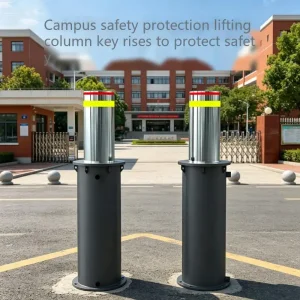
Solution: Heavy-duty 6-meter octagonal boom barriers equipped with internal steel reinforcement ribs, long-range UHF RFID tag readers (8m-12m distance), safety light curtains, and automatic rising bollards at main gate check-points.
Coastal Resorts (Galle & Negombo)
Challenge: High ambient atmospheric salinity leading to rapid internal electronics failure and structural rust.
Solution: SUS304/SUS316 grade stainless steel barrier housing, conformal coated PCB assemblies, IP68 sealed cabling glands, and silent hydraulic drive arm movements to preserve resort ambience.
6. Future Outlook: Edge AI & Smart Access Evolution (2026–2030)
The next decade will transform vehicle access infrastructure in South Asia from localized mechanical gates into dynamic intelligent nodes within urban smart city meshes. Key innovations reshaping the market include:
1. AI Edge Vision & Multi-Modal Sensor Fusion
Traditional loop detectors are being augmented by 3D LiDAR and stereo vision sensors integrated directly into the barrier control unit. Deep learning models evaluate vehicle classification (car, tuk-tuk, motorcycle, heavy truck) in real time, adjusting boom arm trajectory and clearance timing automatically.
2. National Cloud Interoperability & Mobile FinTech
Future deployments across Sri Lanka will feature native integration with centralized smart city platforms. Unattended parking payments will seamlessly link with mobile banking applications, automated tolling systems, and municipal parking networks through standardized API gateways.
3. Solar-Assist Off-Grid Capabilities for Rural Infrastructure
To ensure uninterrupted operation during power grid instability or in remote agricultural and mining zones across North Central and Eastern provinces, next-generation barrier gates operate on ultra-low-power 24V DC systems. These connect directly to localized solar PV panels and lithium iron phosphate (LiFePO4) battery banks, providing up to 48 hours of continuous autonomous operation.
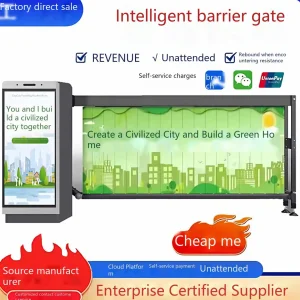
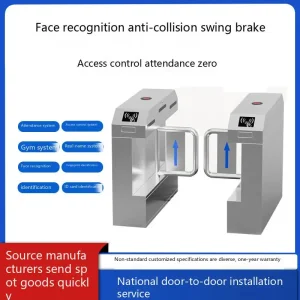
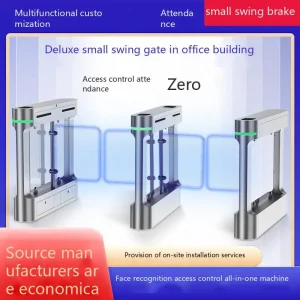
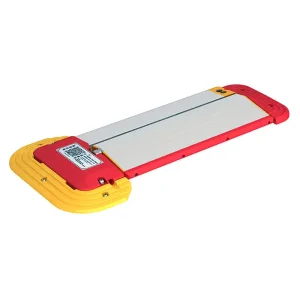
Full Access Control & Barrier System Solutions
Browse our complete OEM lineup of intelligent barrier gates, turnstiles, rising bollards, and parking locks available for direct factory shipment to Sri Lanka.
7. Frequently Asked Questions (FAQ) for Sri Lankan Buyers
Essential insights for system integrators, civil contractors, and commercial developers importing barrier gate systems into Sri Lanka.
Factory manufacturing lead times typically range from 7 to 12 business days depending on order volume and custom cabinet branding requirements. Direct ocean freight from Shenzhen/Guangzhou ports to Colombo Port (JCT/SAGT/CICT terminals) takes approximately 10 to 14 days in transit. Air freight options are available for urgent spare parts or demo units with a 3-to-5-day delivery window.
Our barrier gate controllers are designed with wide-voltage industrial power supplies (AC 110V–264V input) paired with integrated 24V BLDC servo drive systems. This architecture insulates sensitive logic chips from voltage sags and surges. Additionally, units can be fitted with an internal auto-charge battery backup module capable of supporting up to 500 open/close operations during localized power outages.
Yes. Our LPR algorithms feature customized optical character recognition datasets trained specifically on Sri Lankan license plate formats. This includes accurate identification of provincial prefixes (WP, SP, CP, NP, etc.), commercial vehicle plates, vintage black/white plates, and standard modern yellow reflective plates, achieving recognition accuracy rates exceeding 98.5% under clear ambient lighting.
For coastal deployments in Sri Lanka, we utilize 2.0mm thick cold-rolled steel treated with a multi-stage phosphate dip followed by hot-dip zinc galvanizing. The exterior receives a dual-layer outdoor-grade electrostatic powder coating resistant to salt spray test standards (ASTM B117 tested for 1,000+ hours). Internal drive shafts are manufactured from 304 stainless steel.
Absolutely. All control mainboards are equipped with standard TCP/IP, RS485, and Wiegand 26/34 interfaces. We provide complete SDKs, API documentation, and relay protocol guides, allowing Sri Lankan software developers and system integrators to bind barrier commands directly into local payment gateways, ticketing applications, or ERP systems.
Ready to Upgrade Your Access Control Infrastructure in Sri Lanka?
Partner with a trusted factory direct manufacturer. Contact our engineering consultancy team for complete product catalogs, CAD drawings, compliance certificates, and customized pricing for Sri Lanka.
Send Inquiry Now